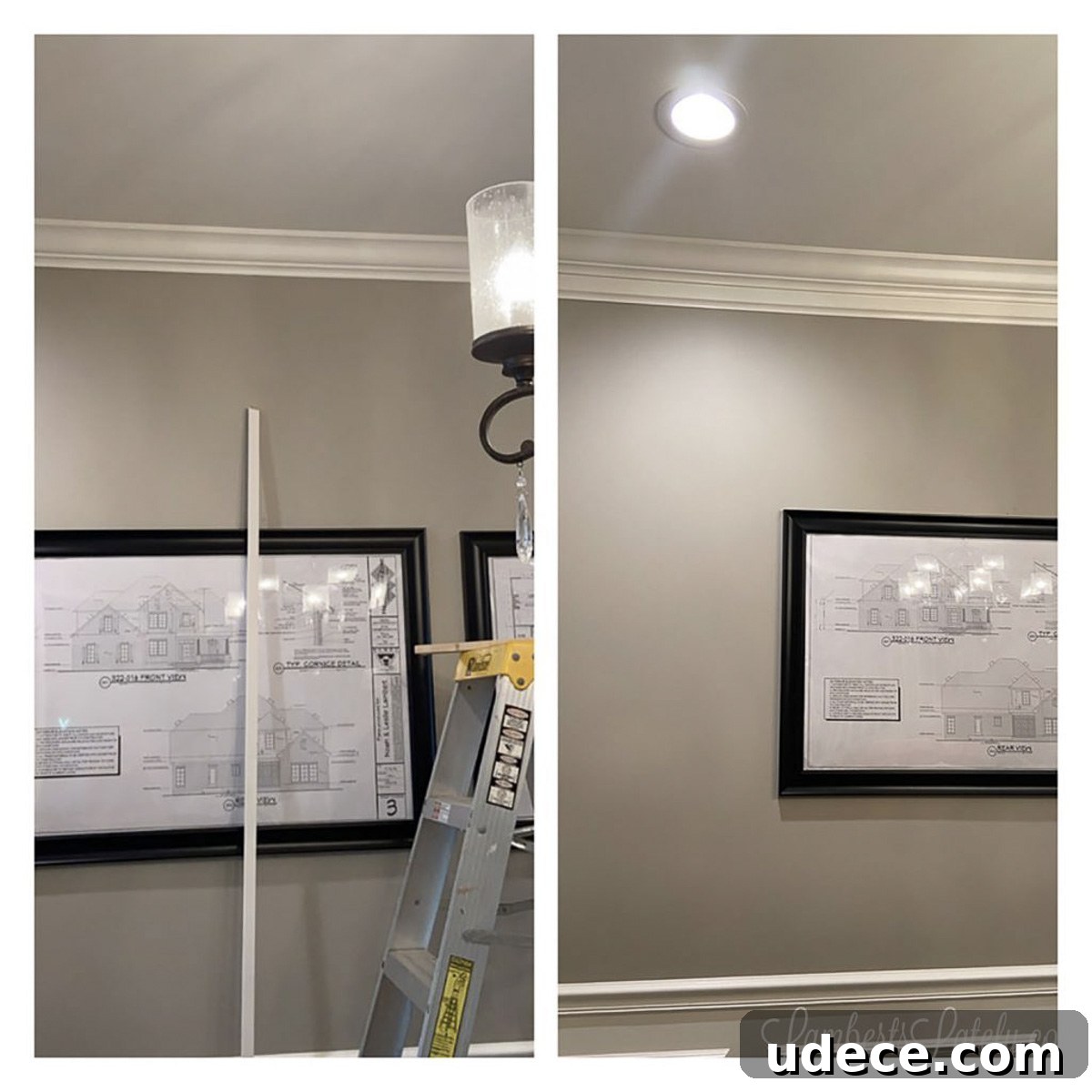
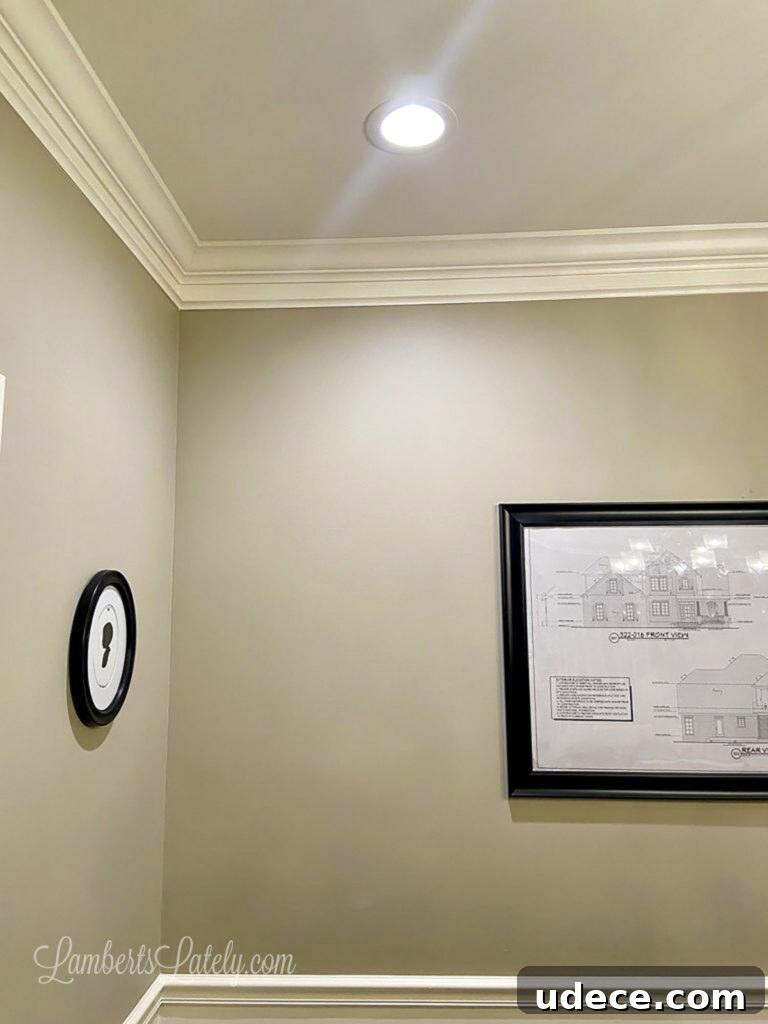
Dreaming of chunky, designer crown molding but on a tight DIY budget? Here’s a favorite faux crown molding hack that delivers the look of a 5–6-inch architectural profile for under $100. No contractor required, no tricky compound miters, and no tears—just smart, simple steps to make your trim read custom.
Paid links used in this post. Read more about my link usage policies.
Why This “Faux” Hack is a Total DIY Game Changer

Have you ever stepped into a model home and been floored by the crown molding? Thick, architectural trim instantly elevates a room, but solid wood options can be prohibitively expensive. This technique creates the same high-end appearance using simple, flat trim layered strategically. It’s faster and much cheaper than installing full-profile crown molding.
Short version: layer a thin bottom trim beneath your existing crown, create a consistent gap, caulk and paint the gap and trim the same finish, and the eye reads one wide, custom piece.
Ready to transform ordinary trim into something that reads custom? Let’s walk through the supplies and the three main steps.

Supplies Needed
- Thin flat bottom molding (look for an 1 1/8″ thick, flat-backed trim rather than angled-back crown). For an 11×12′ room we used seven 8′ pieces.
- Miter saw
- Painter’s tape
- Paintable interior caulk and a caulk gun
- Trim paint (match existing trim color and sheen; Snowbound in semi-gloss was used here)
- Thin trim brush
- 1×2″ scrap wood to use as a spacer
- Pneumatic brad nailer (you can use nails and a hammer, but a brad nailer is cleaner)
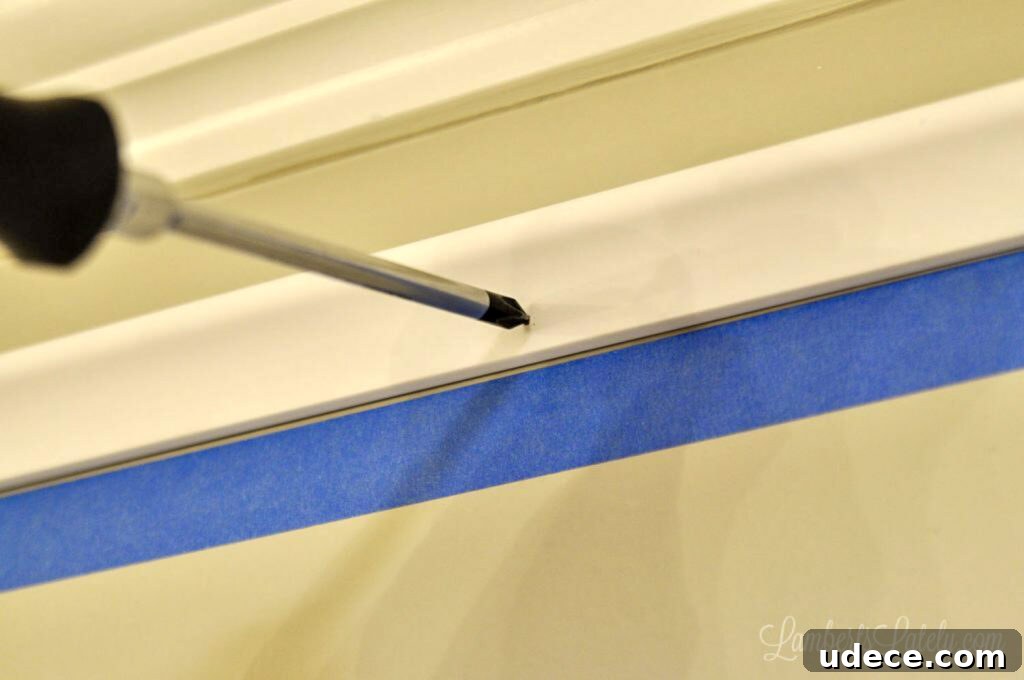
- Phillips screwdriver or hammer for countersinking nails
Step 1: Cutting and Attaching Your Faux Molding
This step adds the perceived height and mass to your walls. It’s easiest if a standard crown is already installed at the ceiling, but you can still achieve the effect without one—layering creates the finished look.
The spacer trick: Use a scrap 1×2 as a spacer to create a consistent gap between the existing moulding and the new lower trim. This saves measuring and keeps the install level.

Cut a 45-degree miter for your first corner so the piece fits snugly into the corner. Keep the boards flat on the saw for simpler, safer cuts.
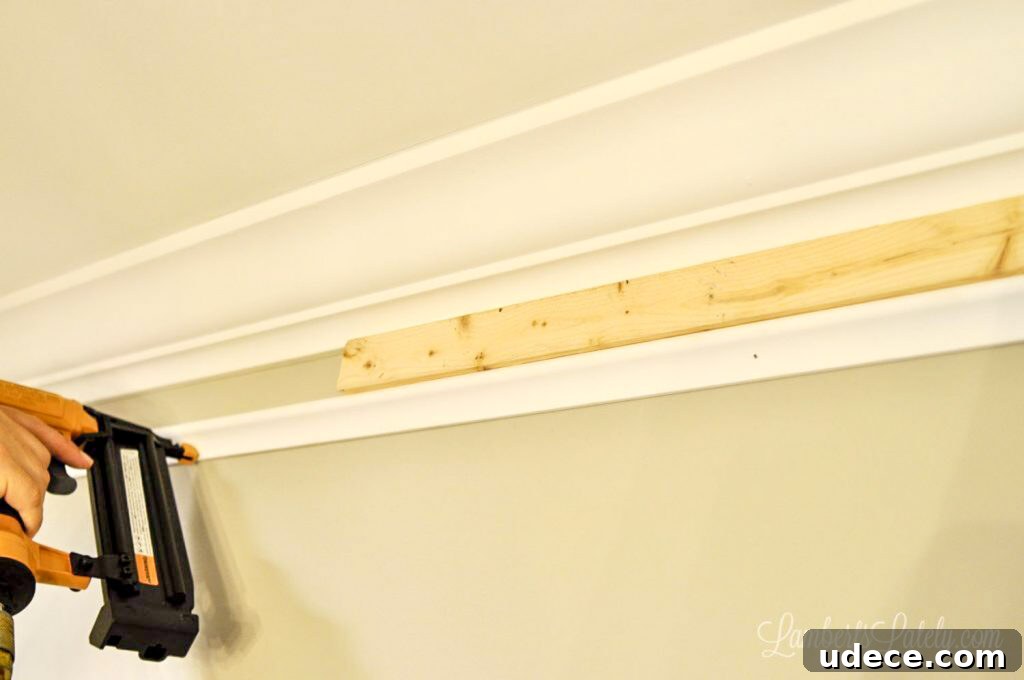
- Position with the spacer: Hold the 1×2 spacer against the bottom of the existing crown and slide the new trim up until it contacts the spacer.
- Tack it: Use the brad nailer to place 2–3 nails in the center to hold the piece.
- Remove the spacer: Pull the scrap wood out before finishing the nails to avoid pinching it; don’t nail too close to the spacer.
Joining long runs: Use a scarf joint for seams—cut the end of one board at a 45-degree angle facing the wall and the start of the next board at a complementary 45 facing you so they overlap cleanly. This reduces visible seams after painting.
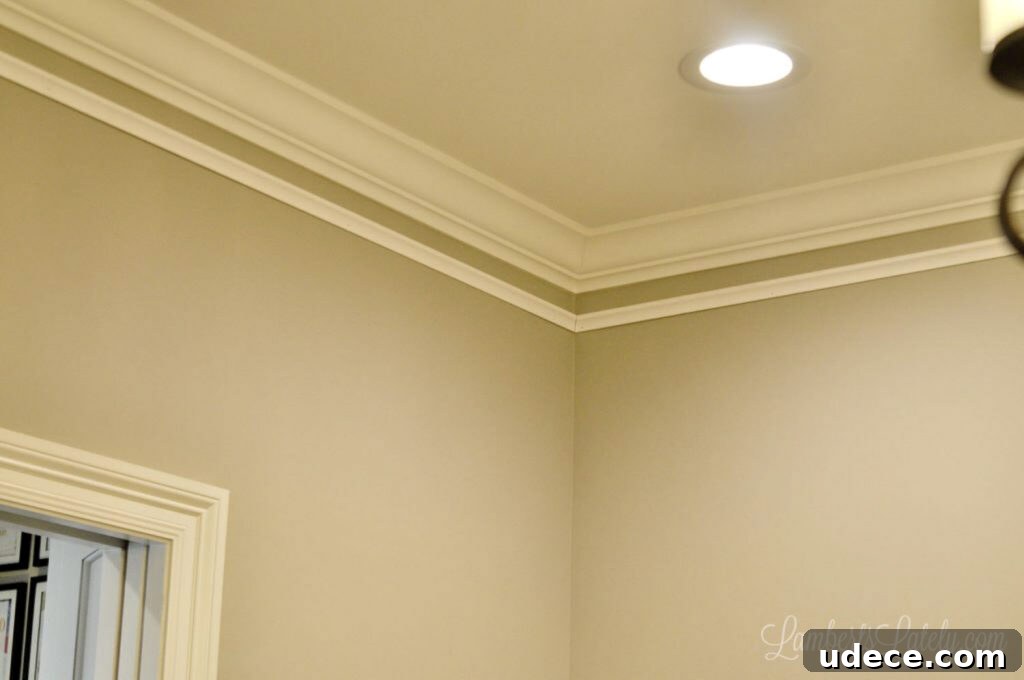
Continue around the room, working in a circle to minimize re-measuring and extra cuts.
Step 2: Prepping for Paint (The Magic of Caulk)
Professionally finished millwork shows no gaps—that’s the caulk. Properly caulking and prepping turns a visible DIY seam into seamless trim.
Pro prepping tips
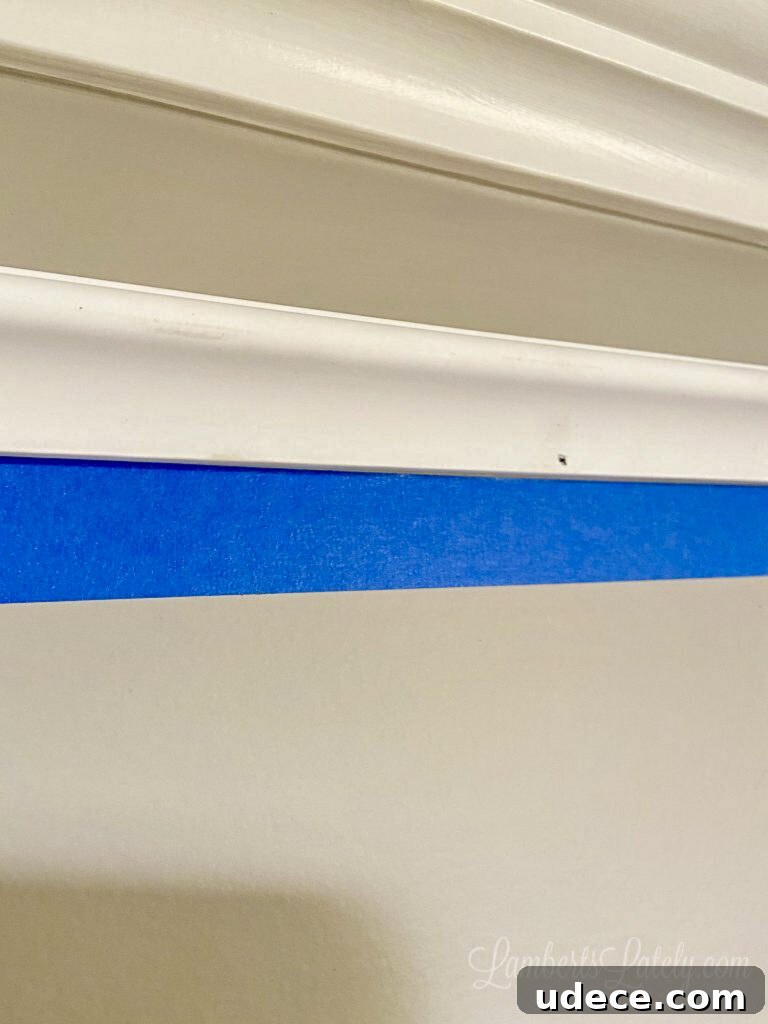
- Countersink nails: Lightly tap nail heads below the surface so caulk can hide them.
- Tape method: Run painter’s tape along the wall under the new molding, leaving a hairline of wall exposed (about 1/16″) so caulk can bridge and seal.
How to get a smooth bead
Run a thin bead of paintable caulk where the trim meets the wall. Smooth it with your finger and keep a damp cloth nearby to wipe excess. You don’t need to caulk the top edge that hides behind the gap, but check corner joints carefully.
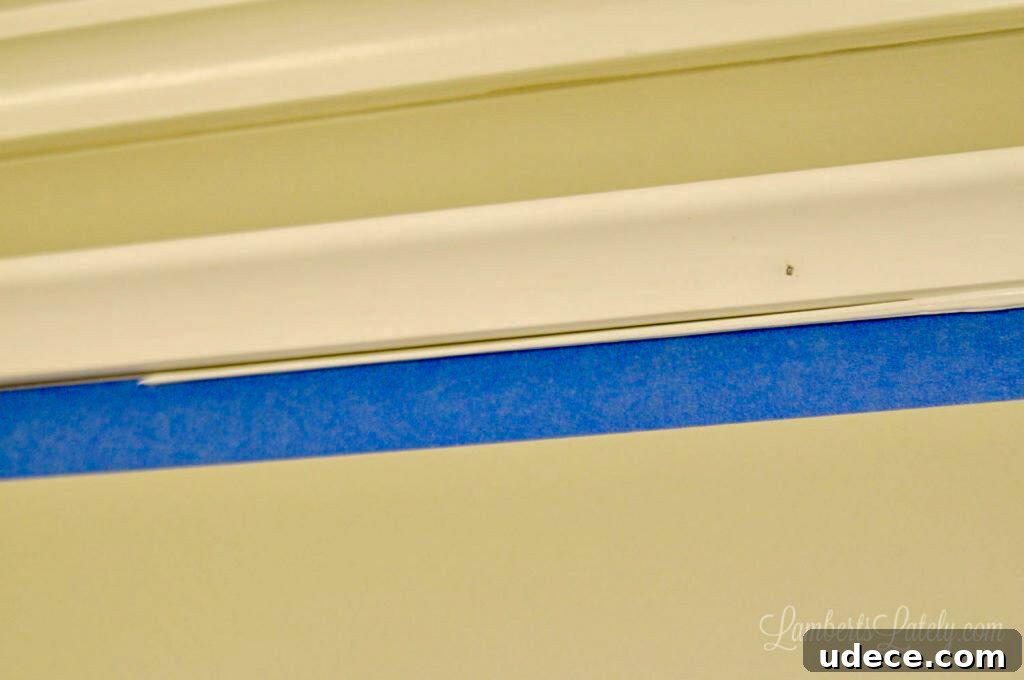
Step 3: Painting the Gap (The Transformation)
This is the reveal. Paint the new trim and the narrow strip of wall between the trims the same color and sheen as your existing trim so the eye reads one continuous, wide crown molding.
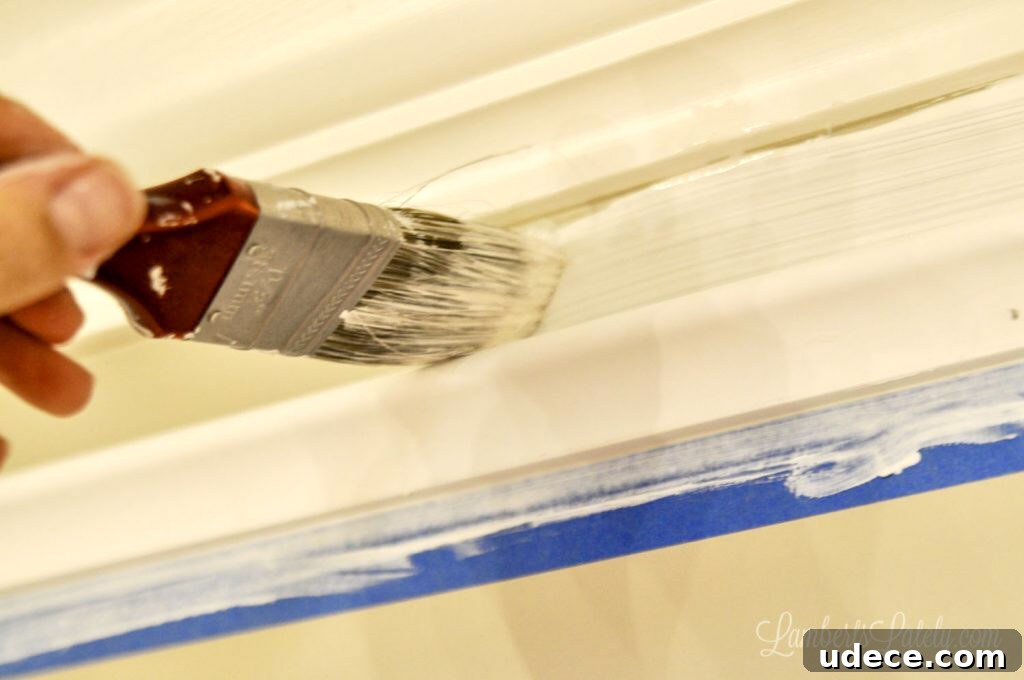
Dry time and coats: Small areas dry quickly—each coat can be ready in around 20 minutes. Expect several light coats rather than one heavy coat to build an even finish.
Prime if needed: If you’re painting over dark walls, prime the strip so your whites match.
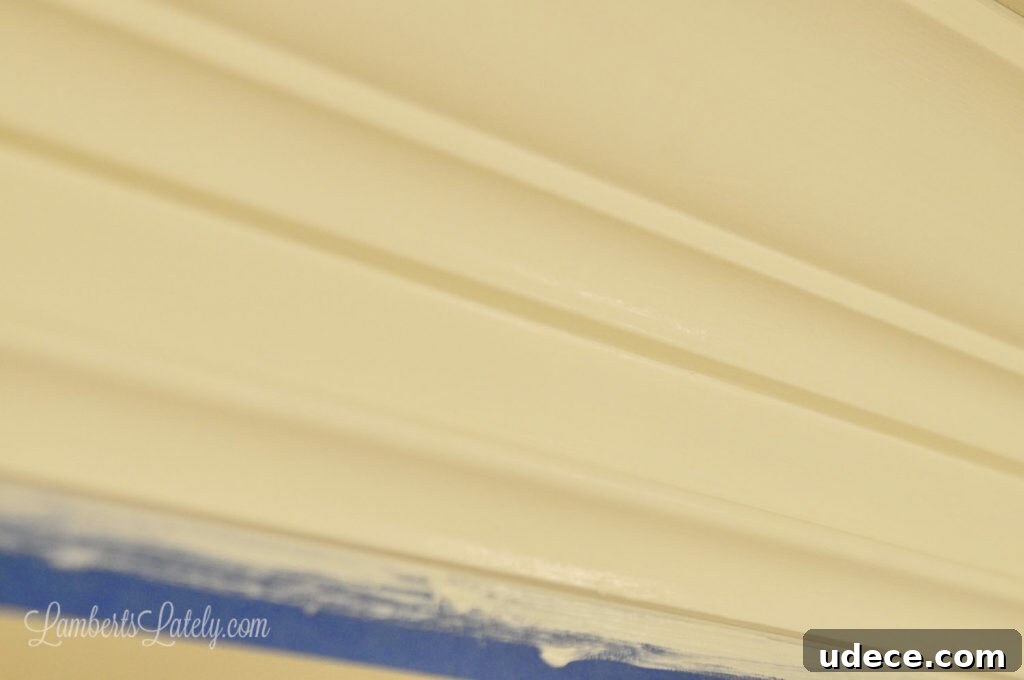
Match sheen: Use the same sheen as your existing trim—semi-gloss was used here. Multiple thin coats will give the best, built-in look.
Design Variations: Make it Your Own
This technique is versatile. A few ideas:
- Modern farmhouse: Stack two squared 1x2s for a clean, chunky profile.
- Traditional: Use a small cove molding as the bottom piece for a subtle curve.
- Grand scale: On tall ceilings, increase the gap for a more dramatic profile—just test it visually first.
Troubleshooting: What If My Walls Aren’t Perfect?
Homes rarely match Pinterest perfection. Here’s how to handle common issues:
- Wavy walls: Nail the board where it sits flat and use caulk to fill gaps behind it.
- Non-90° corners: Small gaps from imperfect miters disappear with wood filler and caulk before painting; larger gaps can be backfilled with a thin sliver of wood or extra caulk.
- Textured ceilings: This method still works—apply a slightly thicker bead of caulk along edges to create a clean line against texture.
FAQs
Yes. Use a heavier bead of paintable caulk where the wood meets the wall to fill the texture valleys and create a smooth, straight line.
Don’t overthink it. Small gaps are easily hidden with wood filler and caulk; for gaps over 1/4″, backfill before finishing. Paint will blend it all together.
Best for flat ceilings. Vaulted ceilings require careful measurement so the gap runs parallel to the ceiling—this is more advanced, so stick to flat ceilings for your first project.
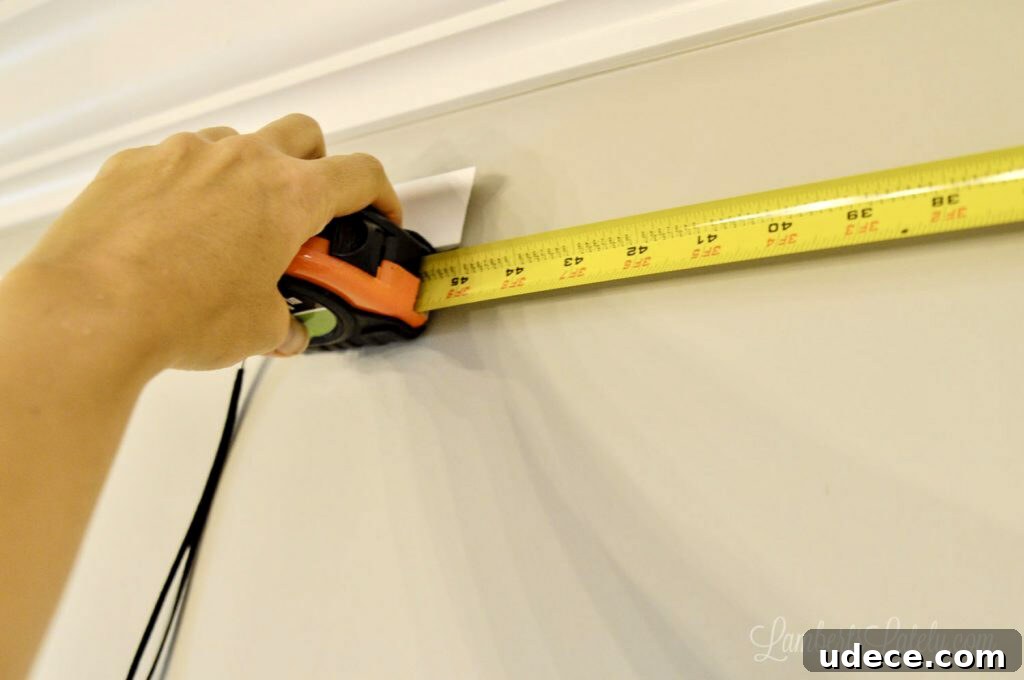
No fixed rule. For 8–9′ ceilings, 3–4 inches is a good sweet spot. Smaller gaps are subtle; larger ones can visually lower ceilings—test with scrap wood first.
Match the sheen of your existing trim. If your trim is semi-gloss, paint the gap semi-gloss so light reflects consistently and the illusion holds.
Inside corners: cut so the long part of the board sits against the wall. Outside corners: the short part faces the wall. Test on scrap before cutting final pieces.
Final Results
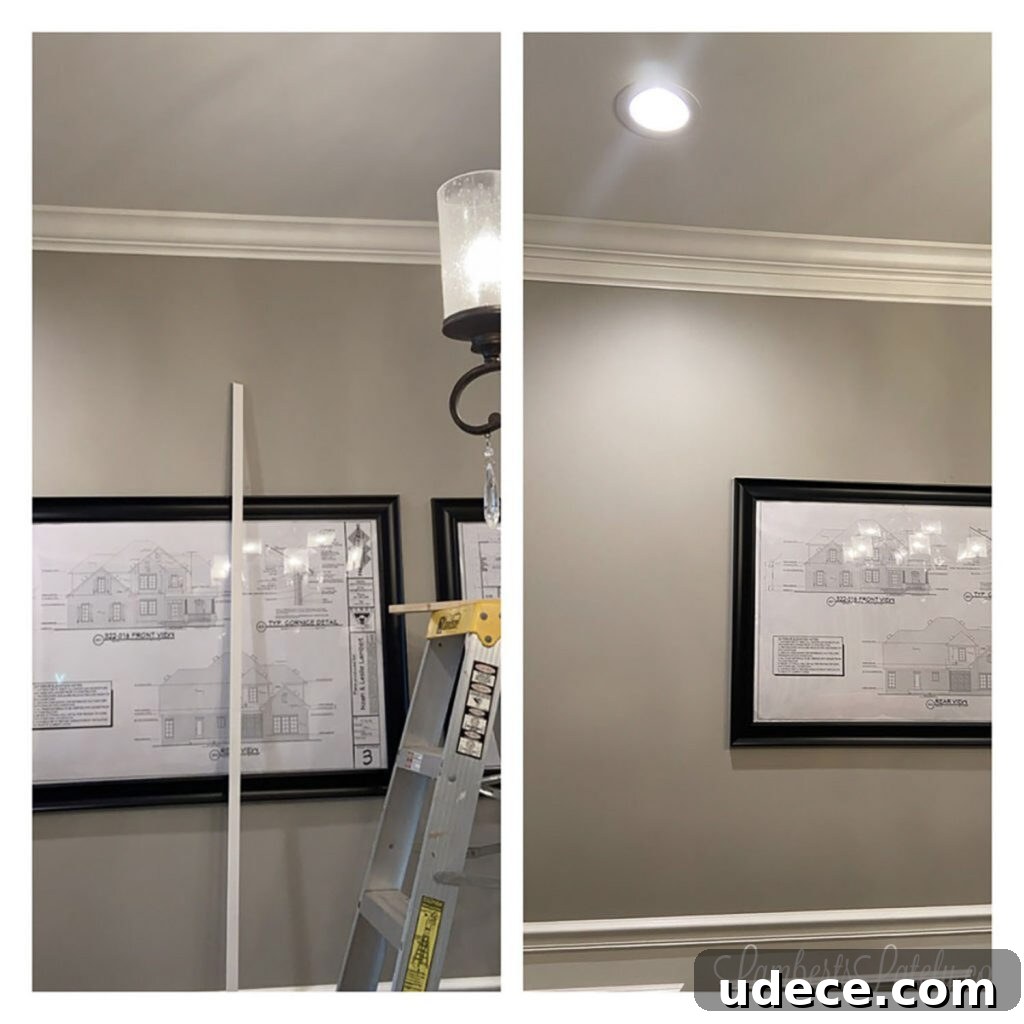
If you’ve hesitated on a trim upgrade because it seemed too complicated or expensive, try this method. For roughly $100 in materials and a few hours of work, the dining room gained a substantial, custom feel. It’s an accessible project that delivers a big visual return.
Explore more easy home improvement projects below for additional budget-friendly upgrades.
More Home Improvement Projects
- DIY Plantation Shutter Installation
- DIY Built-In Refrigerator Trim
- How to Paint Laminate Furniture