Now we’ll prepare the cake batter.
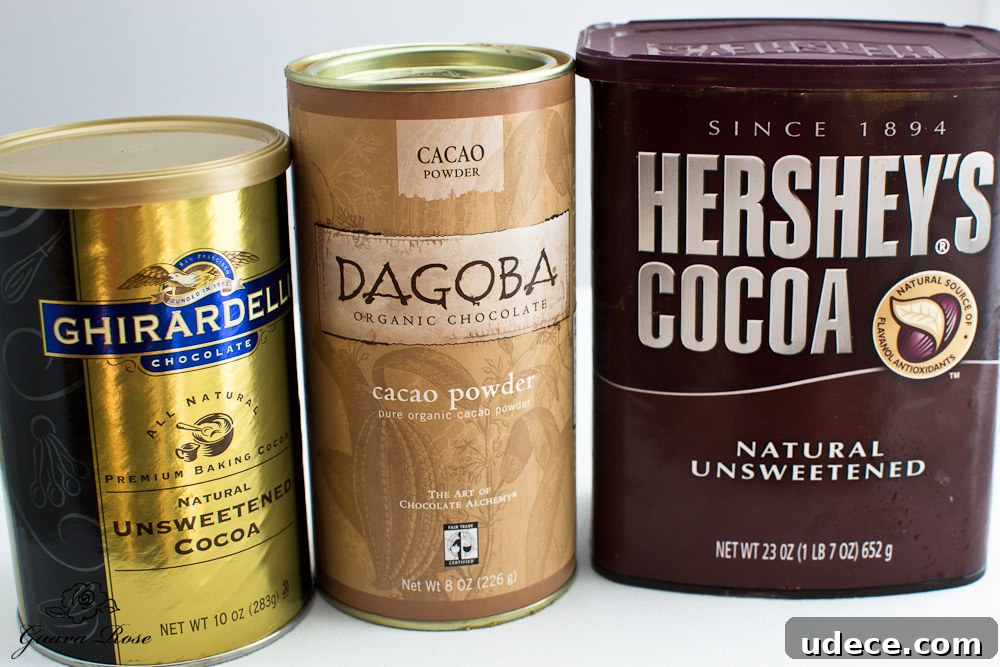
Begin with unsweetened cocoa. Any good-quality cocoa will work; using a higher-quality powder will improve the flavor.
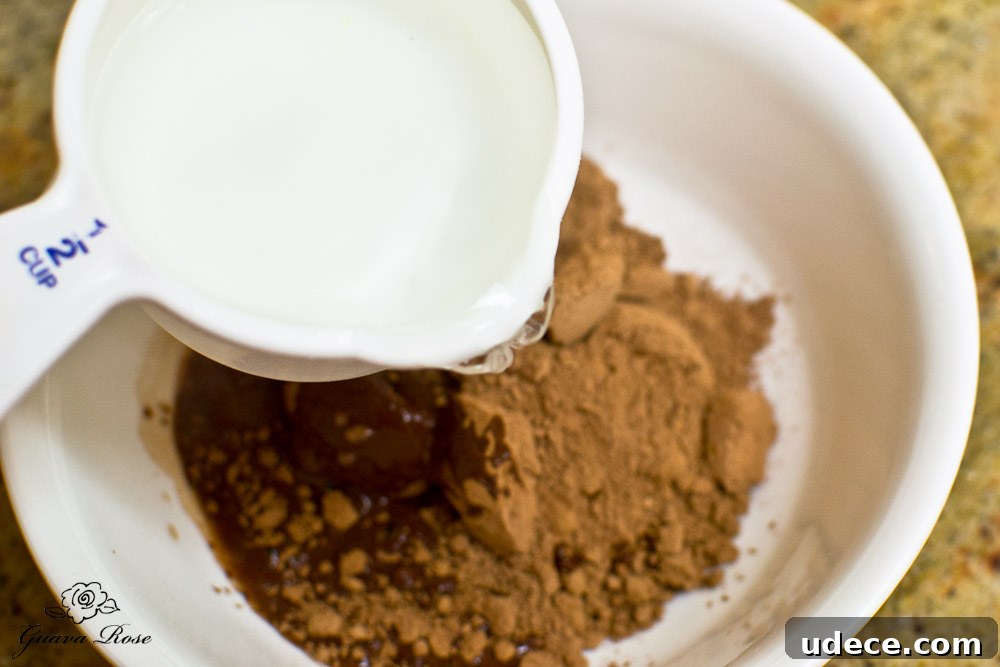
Pour boiling water over the cocoa powder, then stir until smooth and well blended. Set the mixture aside to cool slightly before continuing.
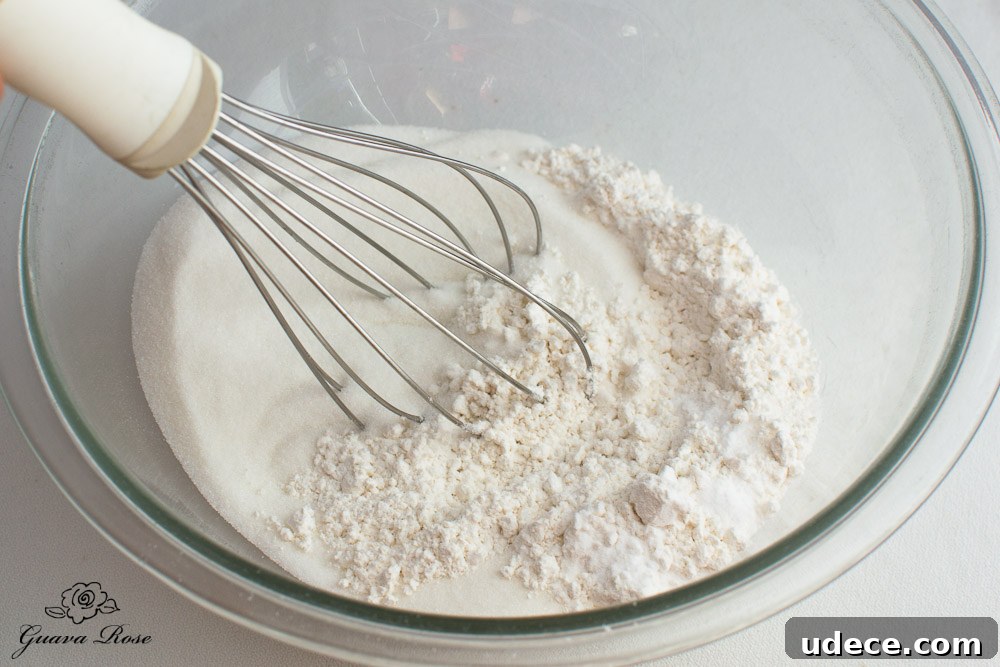
In a separate bowl, whisk the dry ingredients together—cake flour, sugar, baking powder, and salt—until no lumps remain. Sifting is an option for an even finer texture, especially in humid conditions, but a good whisk often suffices.
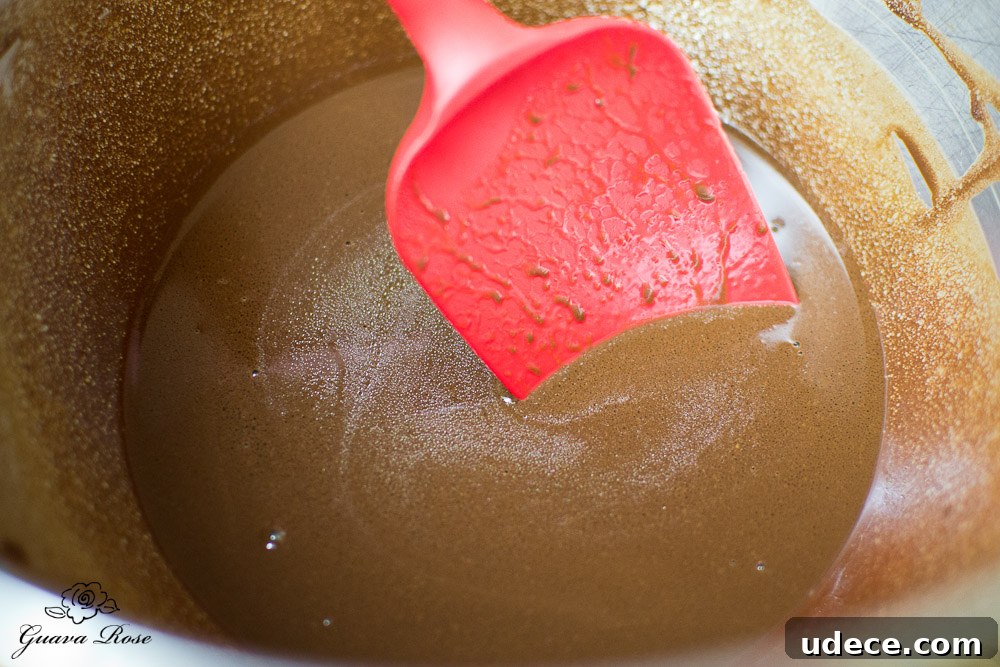
Pour the cooled cocoa mixture into the bowl of a stand mixer and add the melted butter and oil. Mix gently to combine.
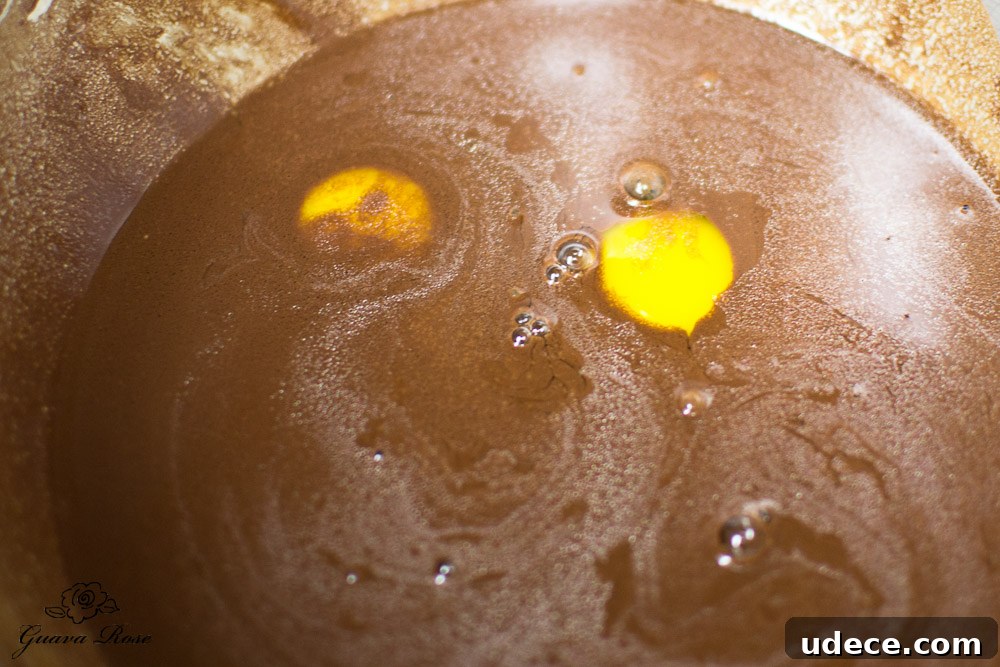
Add the eggs and vanilla and mix until incorporated.
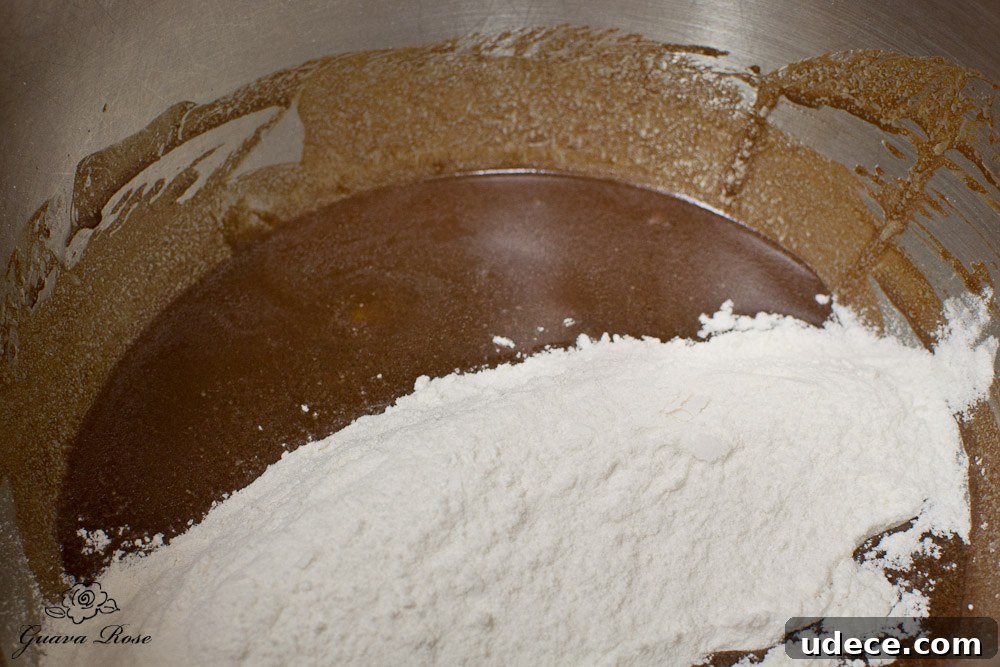
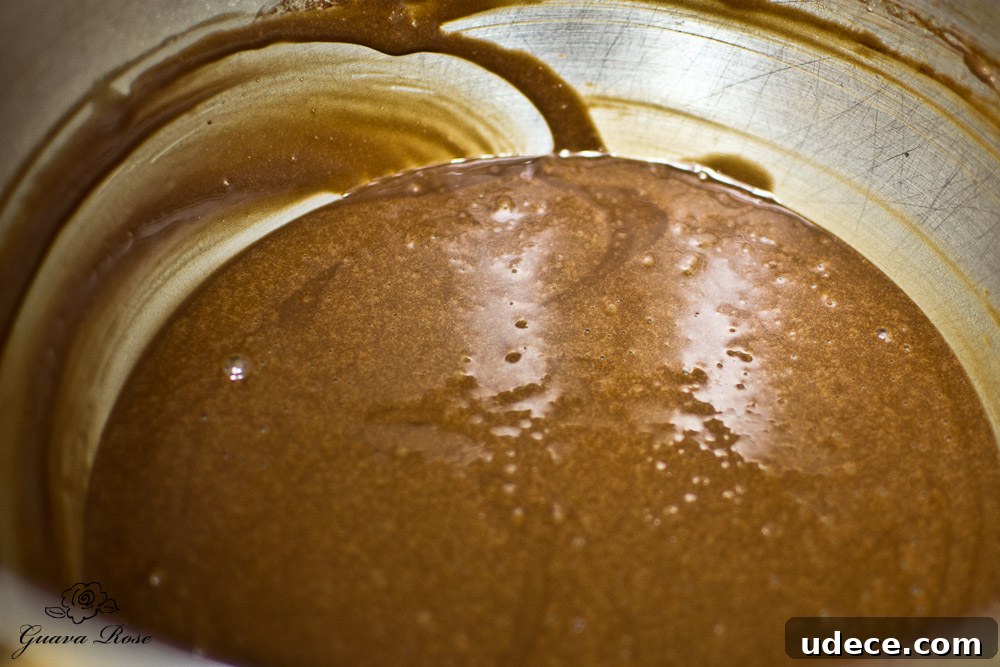
Fold in the flour mixture, then mix on low speed until combined. Increase to medium speed and beat for about 3 minutes until the batter is smooth and aerated.
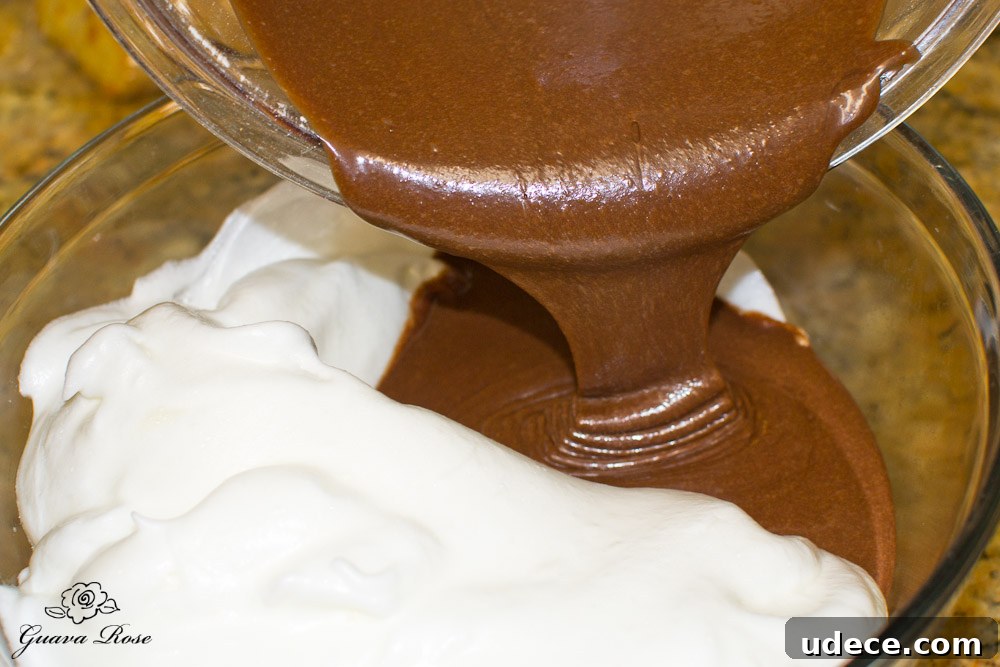
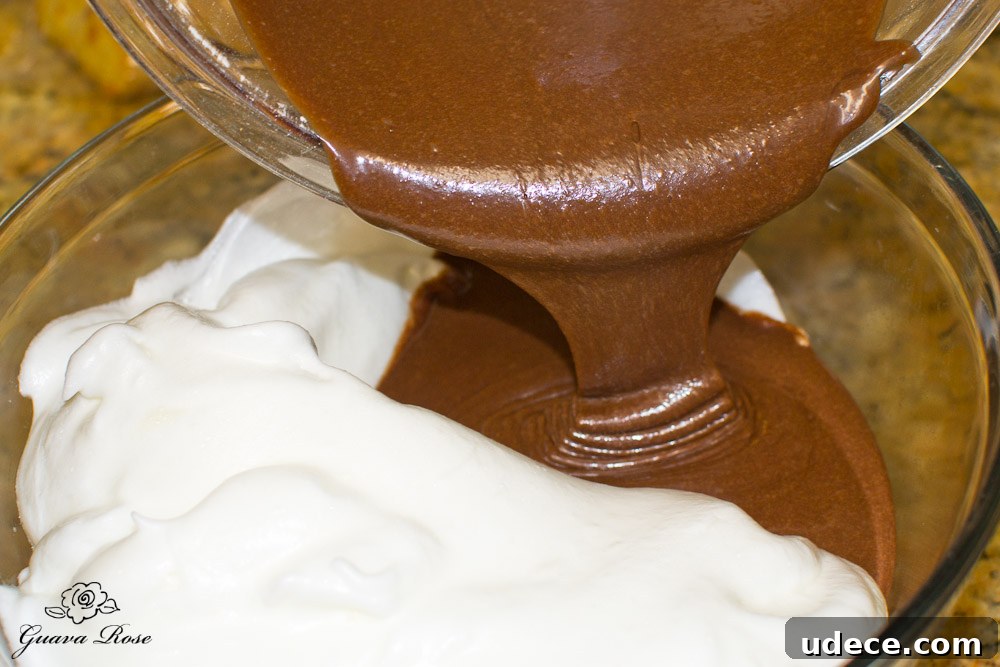
Pour the chocolate batter into the bowl that already contains the whipped egg whites. The batter will sink to the bottom underneath the egg whites—this is intentional and makes folding easier.
Whipping the egg whites first saves you from washing the mixer bowl between steps and ensures they stay light and voluminous.
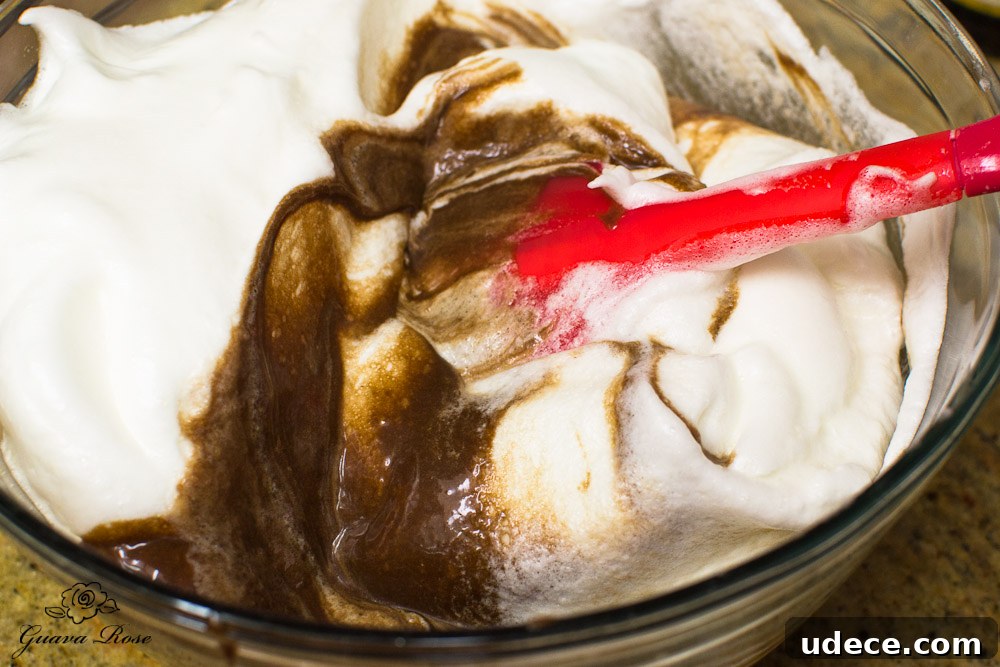
Begin folding the egg whites into the chocolate batter. Use a spatula to push down one side of the bowl to the bottom, scoop the chocolate batter from underneath and lift it over the top, repeating the motion around the bowl.
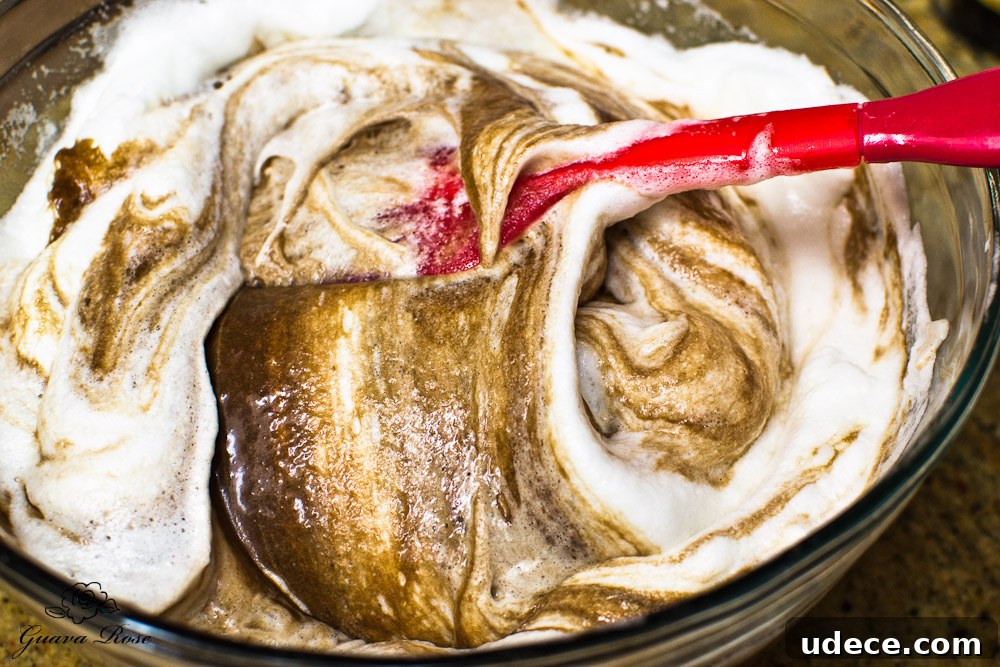
As you fold, you’ll see chocolate and white streaks gradually combine. Rotate the bowl slowly while folding to reach all areas.
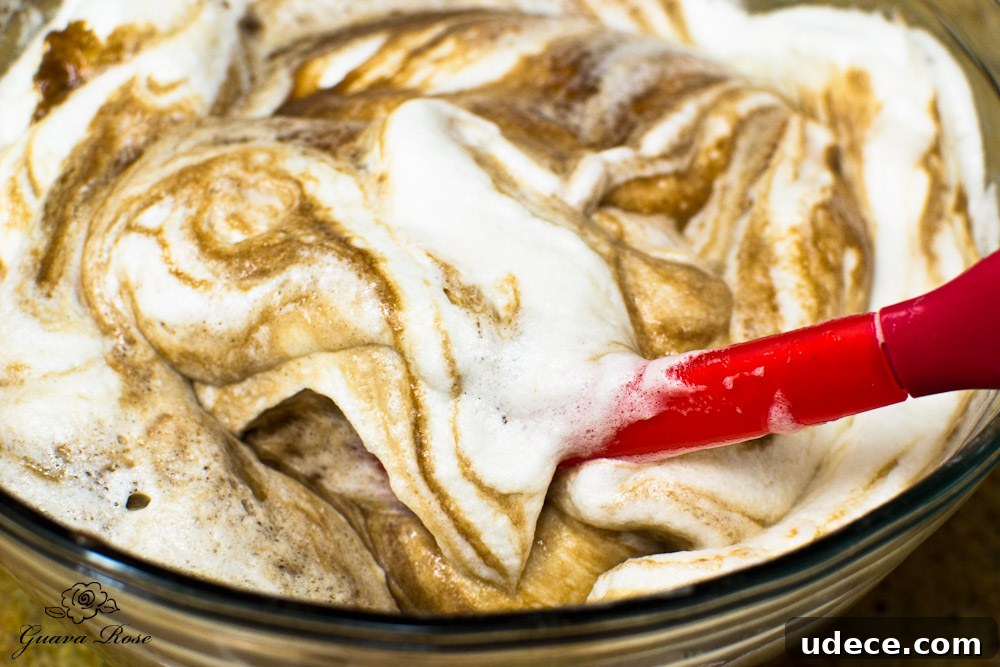
Keep repeating the gentle “down, under, up and over” folding motion. Avoid stirring vigorously or mixing in circles, which will deflate the air and yield a denser cake.
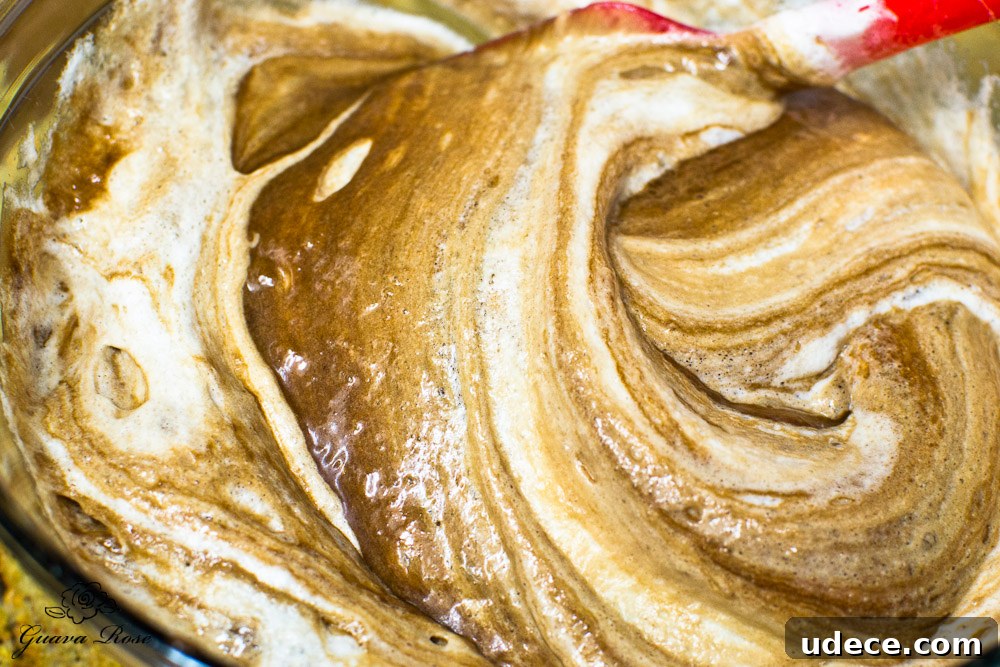
Work carefully until there are no visible white streaks. Use the spatula to gently incorporate any remaining streaks so the batter is uniform.
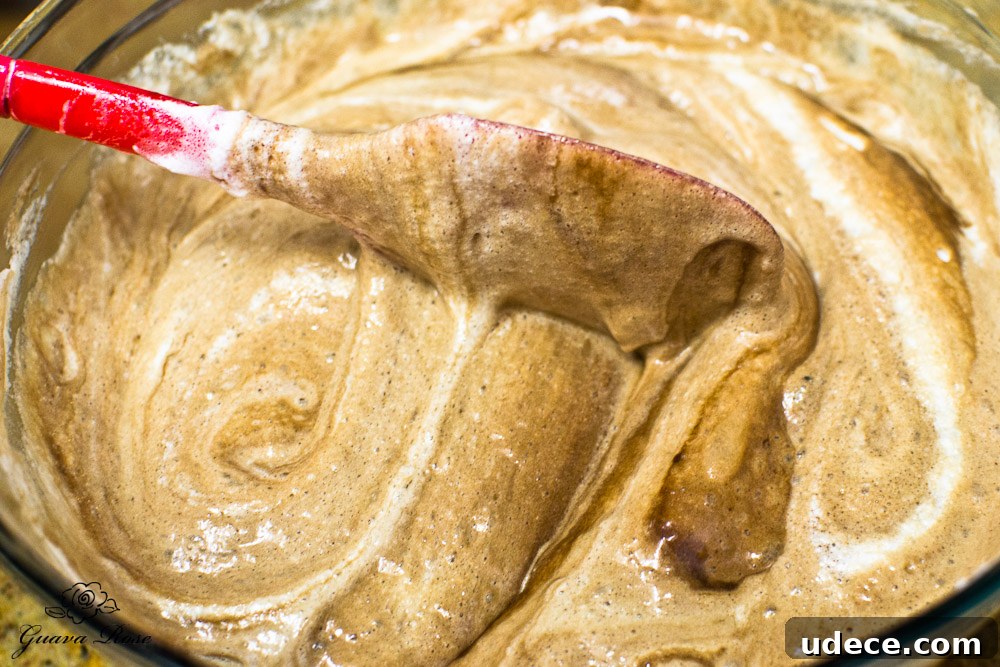
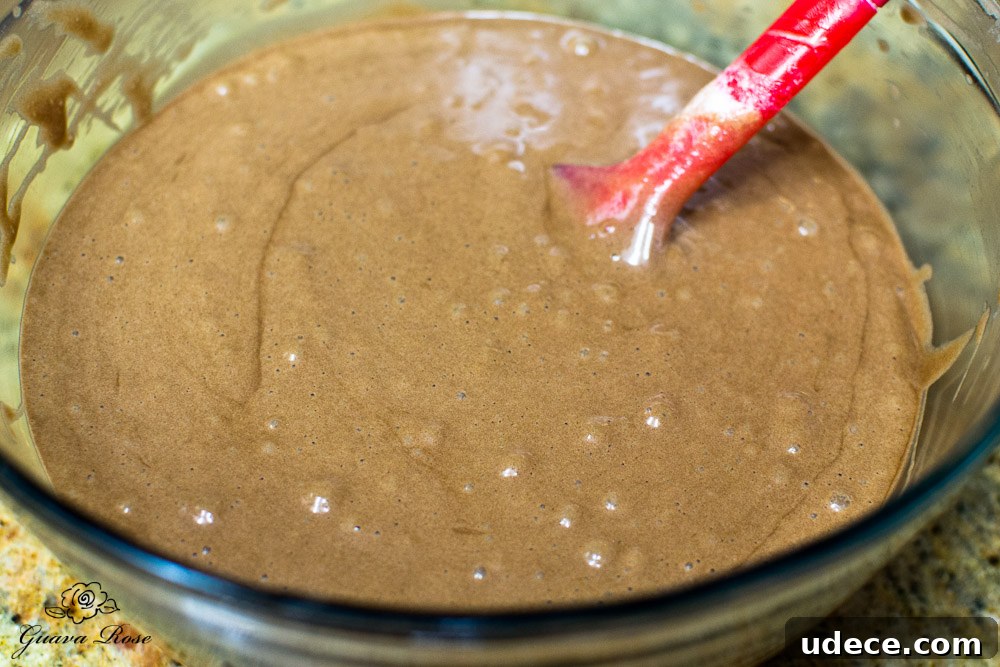
The final batter should be smooth, even in color, and free of lumps or white streaks.
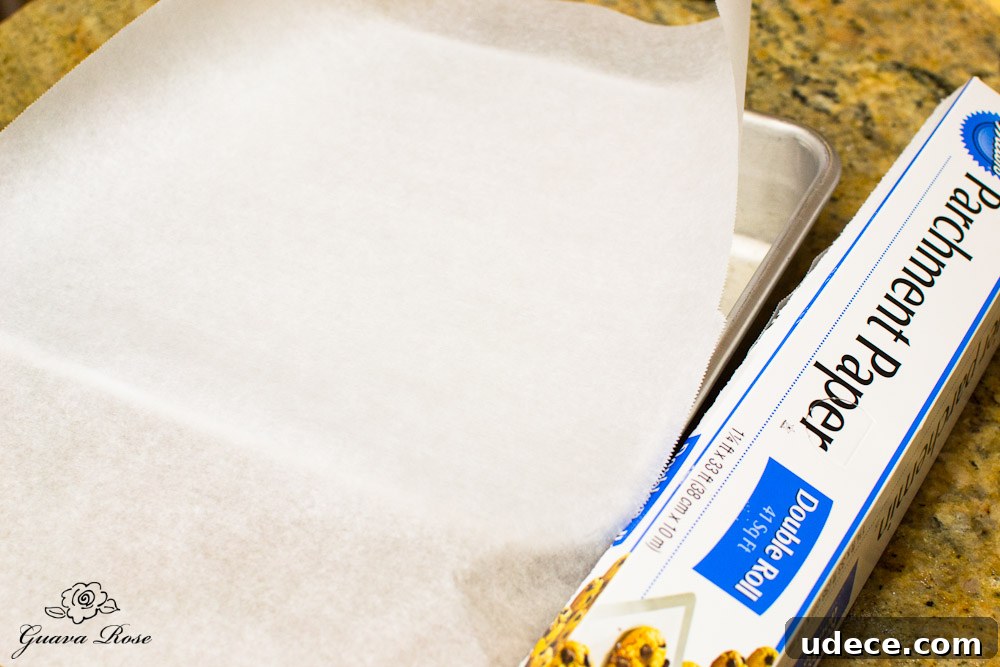
Line a shiny metal cake pan with parchment paper on the bottom only. Do not use a nonstick pan: chiffon cakes need to cling to the pan sides to rise properly. The parchment helps release the cake cleanly after baking.
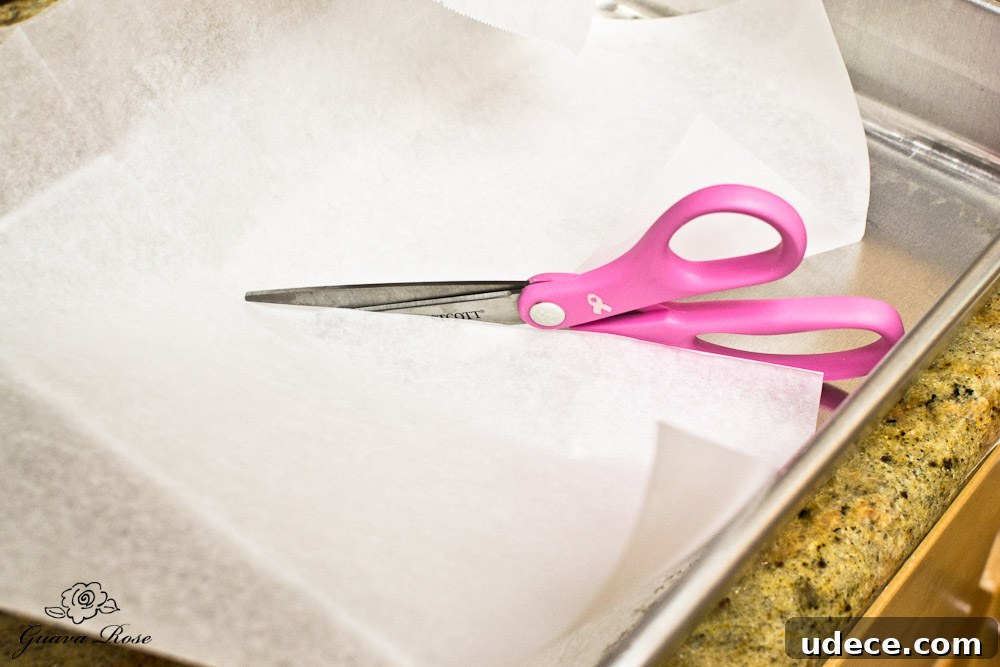
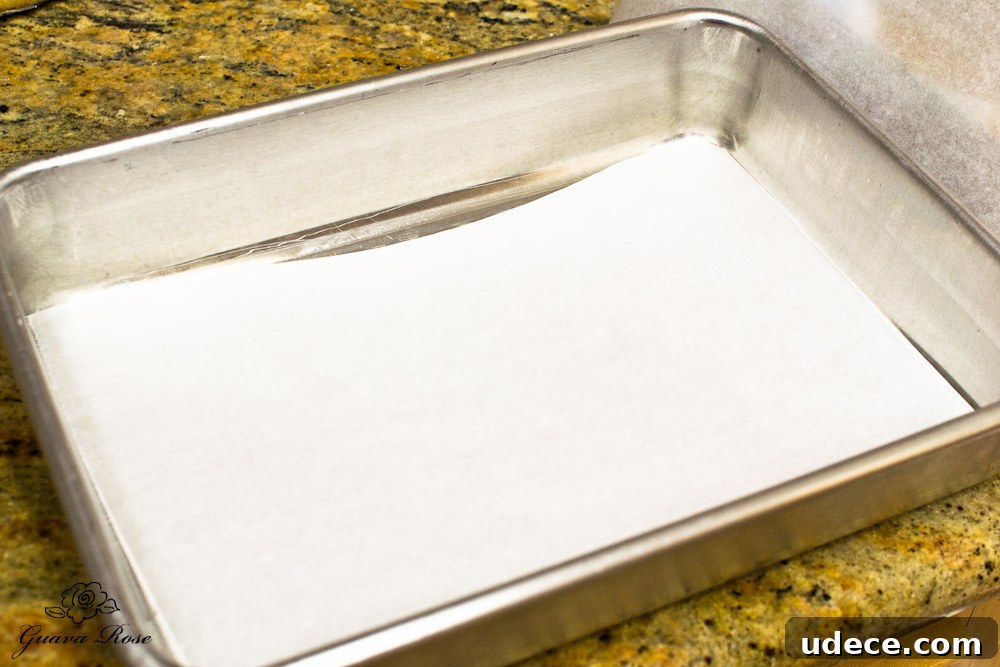
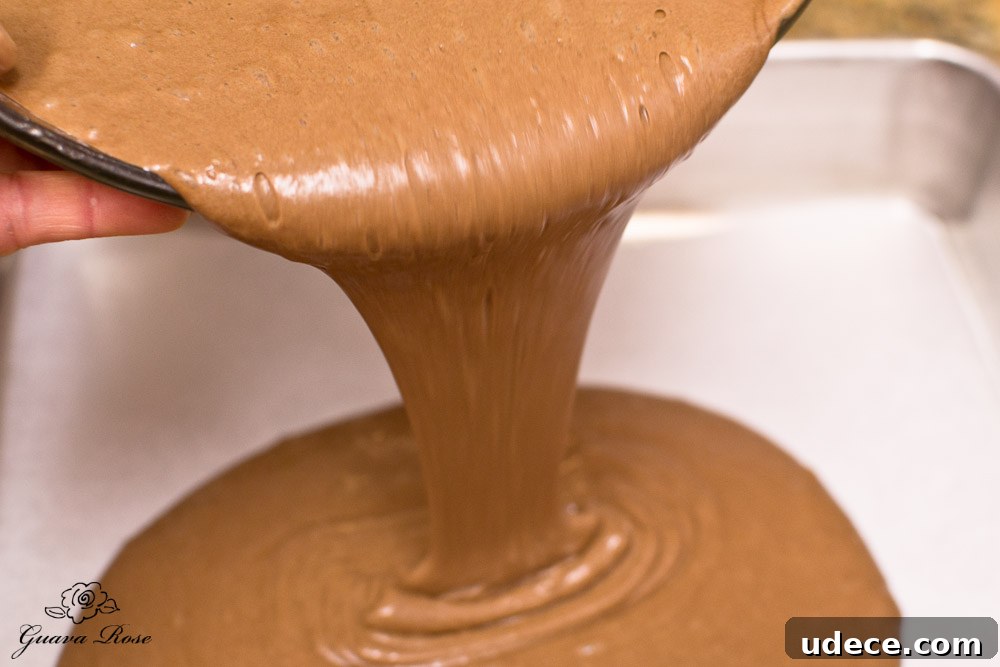
Pour the batter into the prepared pan and smooth the top gently.
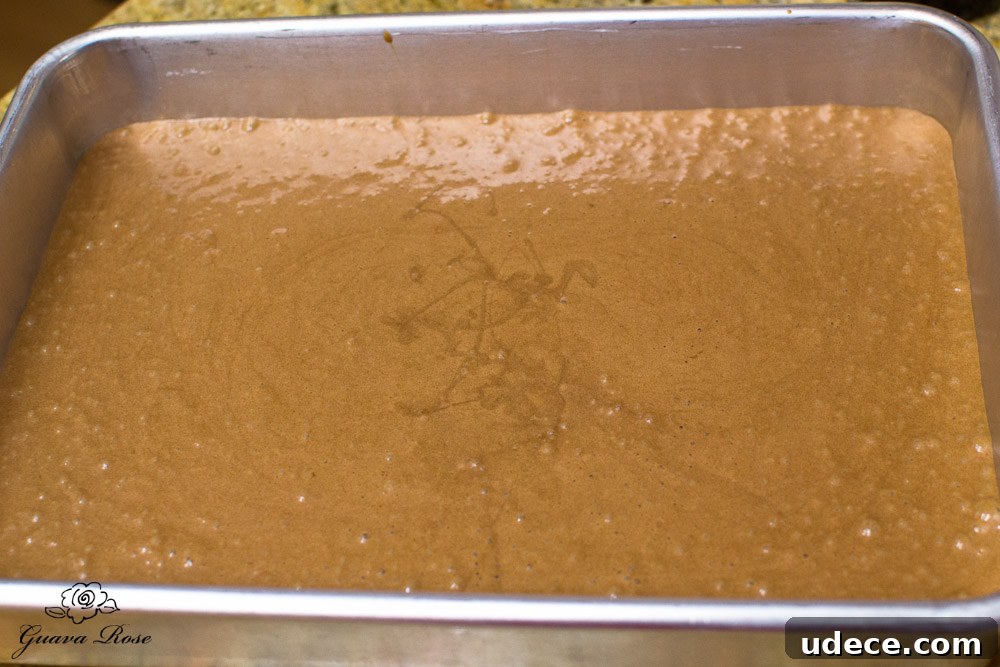
Bake at 350°F (175°C) for about 30–35 minutes, or until a toothpick inserted into the center comes out clean. The cake should be light and springy when done.
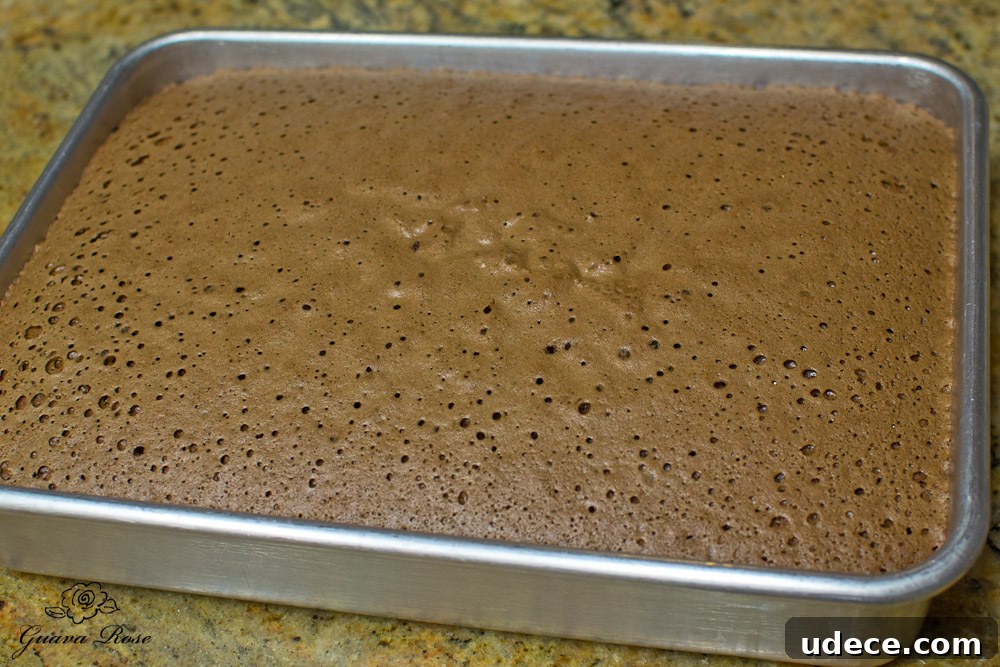
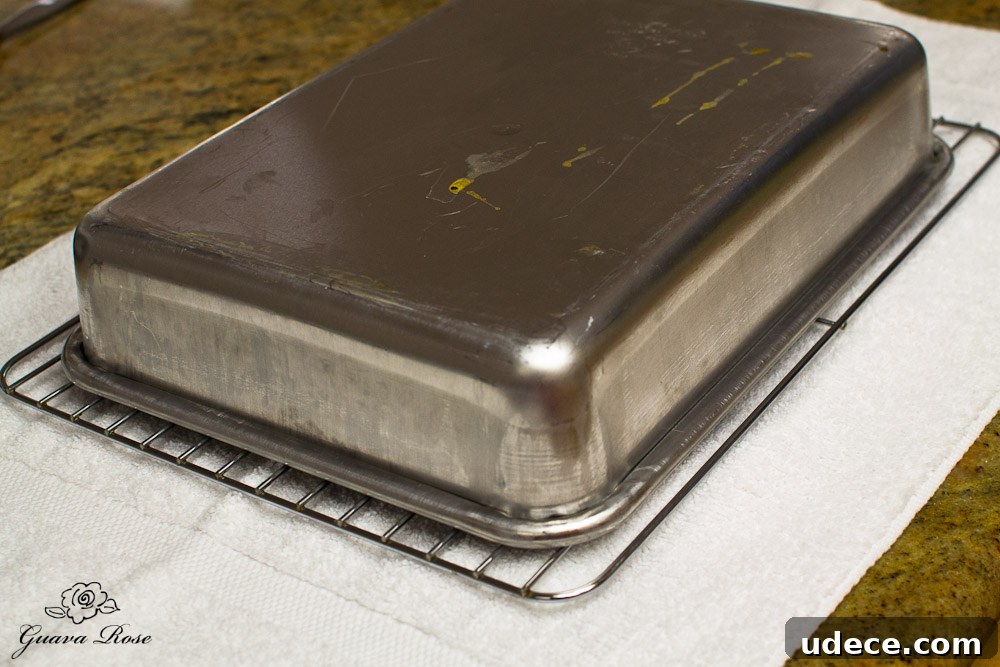
Once baked, place a cooling rack over the pan and quickly invert the pan onto a clean kitchen towel. Allow the cake to cool completely while inverted—this helps maintain its height and prevents collapse.
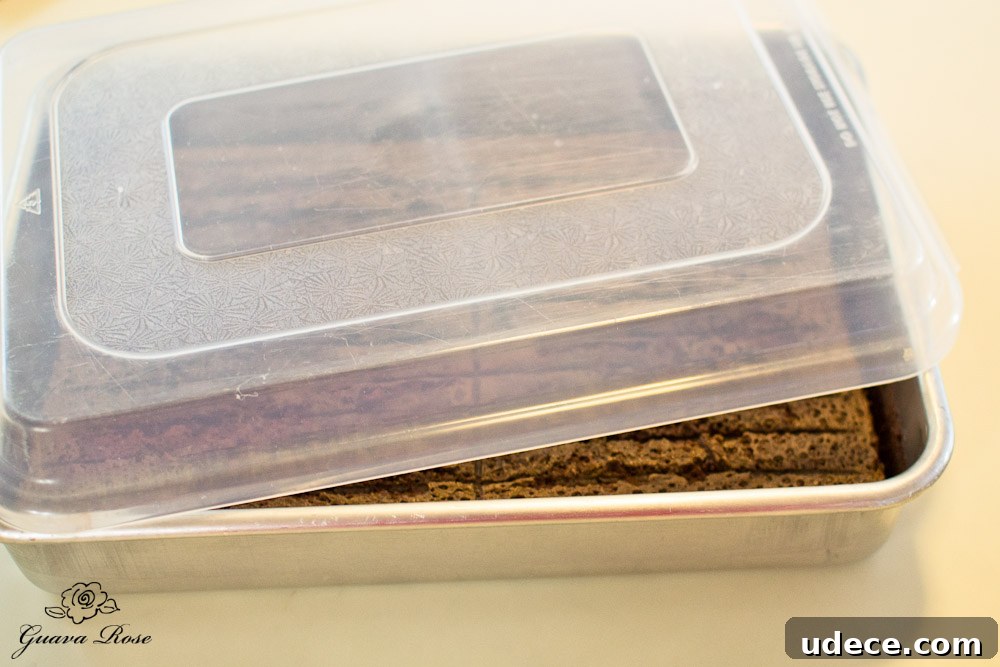
When the cake is fully cooled, flip it right side up in the pan. Proceed to fill and frost the cake as desired, or cover and refrigerate until you are ready to finish assembling.