Arms wrapped around the palm trunk, our guide climbed with the agility of a monkey, shimmying up the slim trunk toward the fronds above. His bare feet found purchase easily, a bolo knife hanging at his hip. We were on the slopes of Mayon Volcano, with my grandfather’s rice fields visible below and a cool ocean breeze drifting to my perch on a fallen tree. That summer, when I was nine, we had escaped Manila’s noise and grime for my mother’s favorite vacation place. She wanted me to see the rivers where she and her siblings had played—searching for freshwater crabs and enjoying the juice and tender meat of buko, the young coconut.
The young coconuts thudded to the ground around us. Our guide returned, sliced them open with his bolo, and fashioned spoons from the shells. We drank the sweet liquid and scooped the soft coconut meat with those homemade spoons.
Mature coconuts were saved for cooking and baking. We were in Sorsogon, Bicol, where coconuts grow in abundance and flavor many of the dishes prepared in open-air kitchens. The food tasted of sea and soil and the presence of a great volcano overhead—simple, fresh, and unforgettable.
[divider]
How to Crack a Coconut
1 Select a Coconut
Now I rarely find coconuts as fresh as those at my grandfather’s place. At the local market, look for fruit that, when shaken, produces the sound of water sloshing inside—that’s a good sign.
2 Find the Face
Rotate the coconut and you’ll notice the three indentations—often called the coconut’s “face.” These are the spots you’ll work with next.
3 Poke Holes
Using an ice pick, screwdriver, or another sharp tool, carefully puncture two or three of the indentations to create holes for draining. Take care not to slip while applying pressure.
4 Drain the Coconut Water
What drains out is coconut water, not coconut milk. It’s especially refreshing from a young coconut and can be enjoyed straight or saved for recipes.
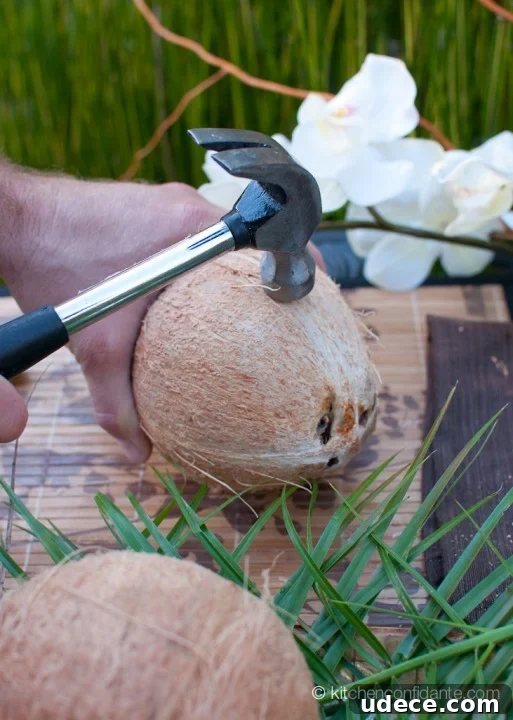
5 Crack the Coconut
Hold the coconut firmly or place it on a stable surface. Using a hammer or the back of a heavy knife, tap firmly around the equator of the shell, rotating as you go. After several taps the shell will crack and split open.
[divider_top]
How to Make Coconut Milk
There are several methods for making coconut milk. Modern approaches often use blenders to extract more milk with less effort, while traditional methods rely on a grater and manual squeezing. The essential principle is the same: use hot water to coax the rich flavors and oils from the white coconut meat.
Growing up in the Philippines I would watch my grandfather sit astride a coconut horse, or kabayo, expertly grating coconuts for my grandmother’s cooking. If you don’t have a coconut horse, a good hand grater will work; it just takes more effort.
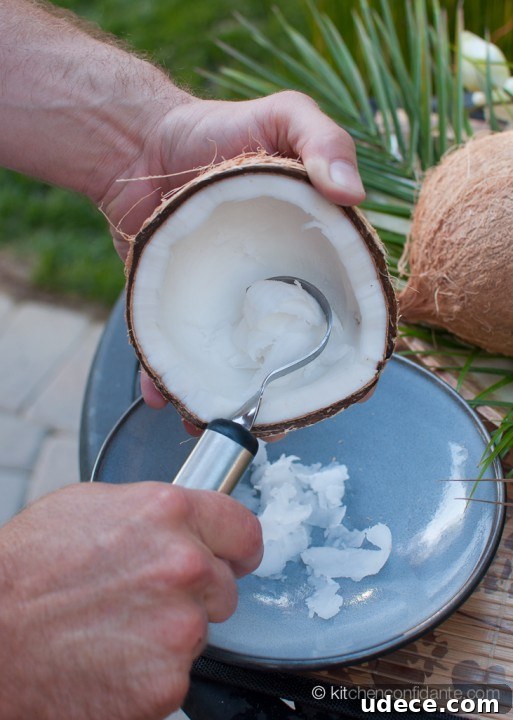
When you squeeze the freshly grated coconut, the first, thick extraction is coconut cream. To extract coconut milk, steep the grated meat in hot water for a few minutes, then squeeze or press it to release more liquid. The first pressing yields the richest cream; subsequent steepings and squeezes produce progressively lighter milk.
Fresh homemade coconut milk is perishable and should be used promptly, even if refrigerated. Given the scarcity of fresh coconuts and the time involved, many people opt for canned coconut milk or frozen and desiccated coconut for convenience. Still, knowing the traditional technique is rewarding and gives you a clearer appreciation for the flavor and texture of truly fresh coconut milk.
If you want to try dishes highlighting coconut, homemade coconut milk adds depth and creaminess that canned versions can’t always match.
[blog count=”15″ posts=”7739,1813,7374,3390,3228,6964,9356,9868,1208″ width=”250″ meta=”false”]