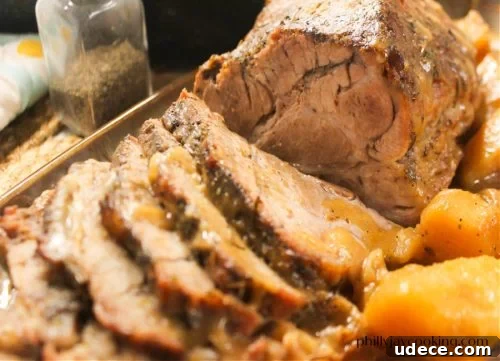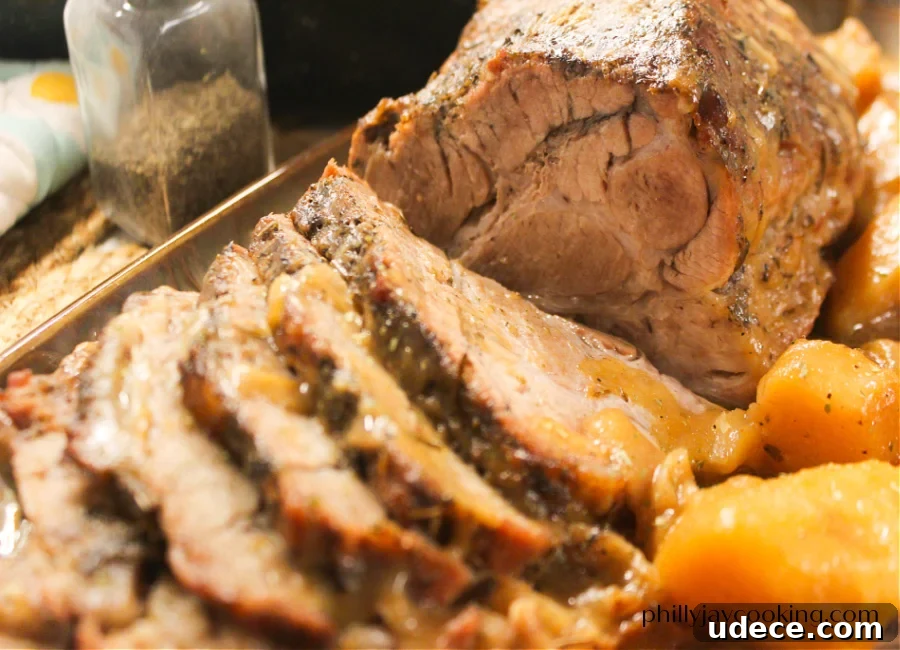
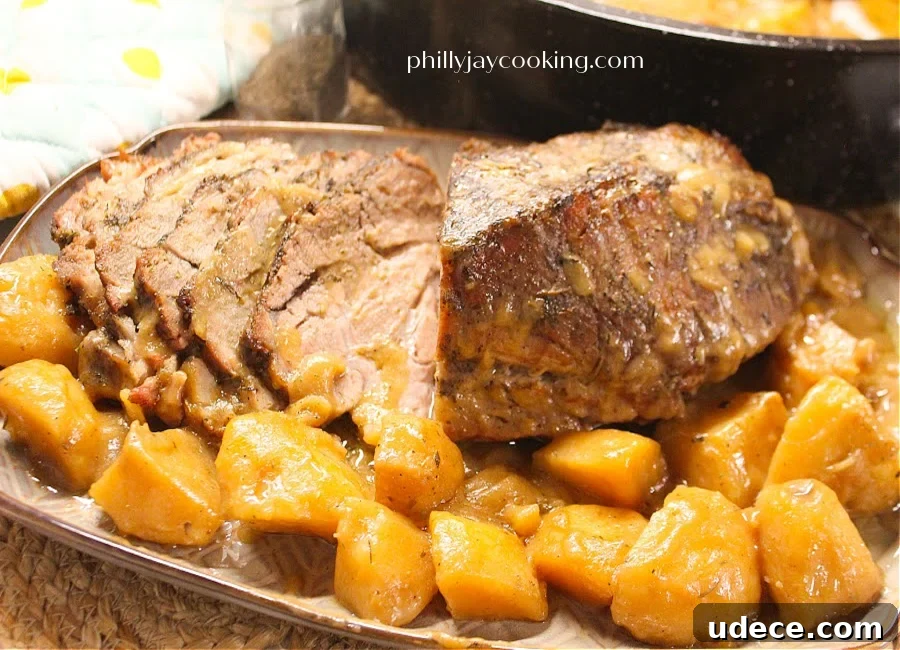
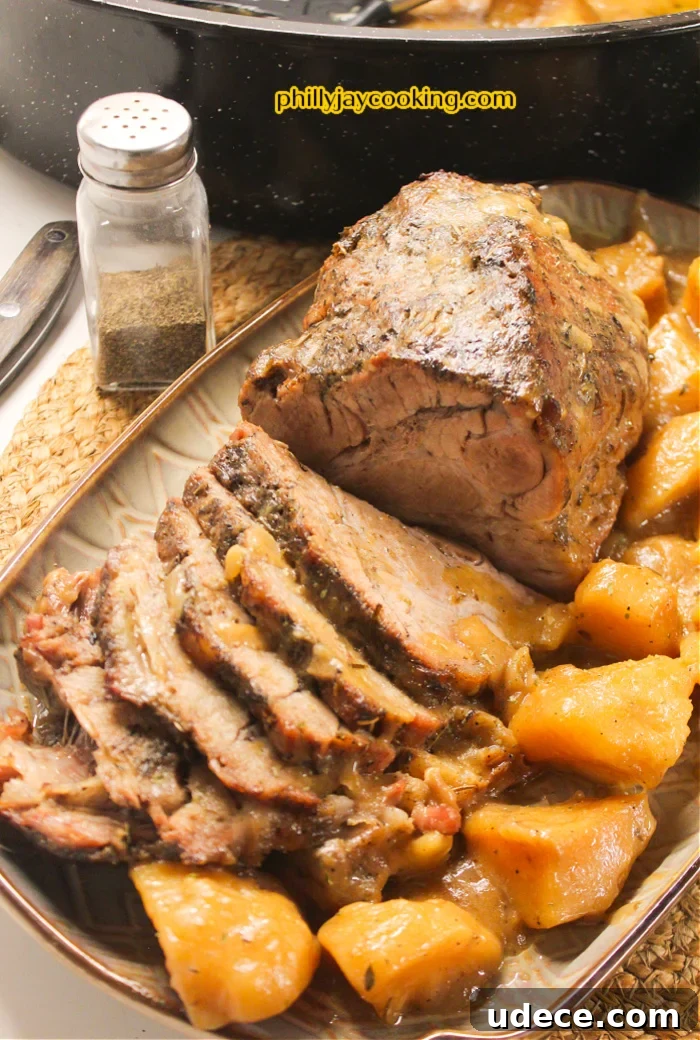
Hello everyone! I’m excited to share my roast pork shoulder recipe—comforting, tender, and perfect for a cozy Sunday dinner. If you enjoy pork, this straightforward roast will become a favorite.
This roast feeds a crowd, keeps well for leftovers, and transforms into pulled pork sandwiches or other dishes. It’s simple to prepare: marinate the pork, roast it low and slow with potatoes and onions, then finish with a savory gravy.
Why this recipe works
- Stretches well: A large roast feeds many and can be shredded for sandwiches, tacos, or salads.
- Lasts as leftovers: The roast keeps well in the refrigerator or freezer and can be repurposed into other meals.
- Easy to make: Most of the time is hands-off roasting. Coat the meat in a simple marinade, arrange vegetables, and let the oven or slow cooker do the work.
Roast Pork for Sunday Dinner
This dish reminds me of childhood Sundays after church. My Grandma Gwen often made roast pork with a thin apple-cider-vinegar gravy—rich with flavor and tender to the bone. I’ve adapted her flavors and techniques into this recipe to capture that same comforting taste and texture.
Ingredients you’ll need
Below are the main ingredients and suggested substitutions where applicable.
- Meat: Boneless pork shoulder (Boston butt) – ideal for tenderness and shredding.
- Vegetables: Red potatoes and yellow onions. Yukon Golds are a good substitute for red potatoes.
- Liquids: Low-sodium chicken broth and water to cook the roast and form the base of the gravy. Vegetable broth or water alone can be used if needed.
- Thickeners: All-purpose flour and a pork gravy mix to create a seasoned gravy. Cornstarch may be used as an alternative—mix into liquid shortly before the roast finishes.
- Fat: Unsalted butter to enrich the gravy (optional) and olive oil for the marinade.
Marinade ingredients
- Liquids: Apple cider vinegar, white cooking wine, and Worcestershire sauce to tenderize and flavor the meat.
- Seasonings: Pork bouillon, salt, garlic powder, onion powder, black pepper, Italian seasoning, thyme, and rosemary for depth.
- Fat: Extra-virgin olive oil to help the marinade penetrate the pork.
Recommended cuts for roasting
This recipe uses pork shoulder (Boston butt). Other roastable cuts can work but will yield different textures and fat levels.
- Pork shoulder / Boston butt: Well-marbled and ideal for shredding and pulled pork.
- Pork loin: Leaner than shoulder, with a milder flavor; best served sliced rather than pulled.
- Pork belly: Very fatty and rich, excellent if you want a melt-in-your-mouth texture but not necessary for this recipe.
Boneless vs bone-in
Both have advantages:
- Boneless: Easier to slice and portion, cooks a bit faster, and is simple to store. Slightly higher cost due to processing.
- Bone-in: The bone adds flavor and moisture. It can take longer to cook but yields very tender meat near the bone.
Marinating the roast
Marinating is optional but recommended when you have time. A typical marinade combines an acid (vinegar, wine), oil, and seasonings. The acid and salt help tenderize the meat by breaking down connective tissue.
- How long to marinate: For a large 4–8 lb roast, marinate 8–24 hours, but avoid going beyond 48 hours to prevent an overly soft texture.
Temperature, timing, and doneness
Slow roasting produces consistently tender results. I roast pork shoulder at 325°F and follow the guideline of 40–60 minutes per pound. For pulled pork, aim for a final internal temperature of 195–205°F so the connective tissue fully breaks down and the meat shreds easily. If you prefer a firmer slice, 145°F is the USDA minimum for safe consumption, though texture will be different.
- Roasting time: At 325°F, plan on up to 60 minutes per pound for a well-done, shreddable roast.
- Doneness by feel: If the meat pulls apart easily with a fork, it’s done for shredding.
How to make roast pork
- Place the pork shoulder in a roasting pan and pierce the surface several times with a sharp knife.
- Combine marinade ingredients: wine, apple cider vinegar, olive oil, Worcestershire sauce, bouillon, and seasonings. Break up the bouillon until smooth.
- Brush the pork with the marinade and refrigerate 8–24 hours.
- Preheat the oven to 325°F.
- Peel and dice the potatoes, then keep them in cold water. Chop the onions into medium pieces.
- Mix broth and water, whisk in flour and pork gravy mix until smooth to form a slurry.
- Place onions and the slurry in the roasting pan, dot the pork with small pieces of butter, then cover with a lid or aluminum foil.
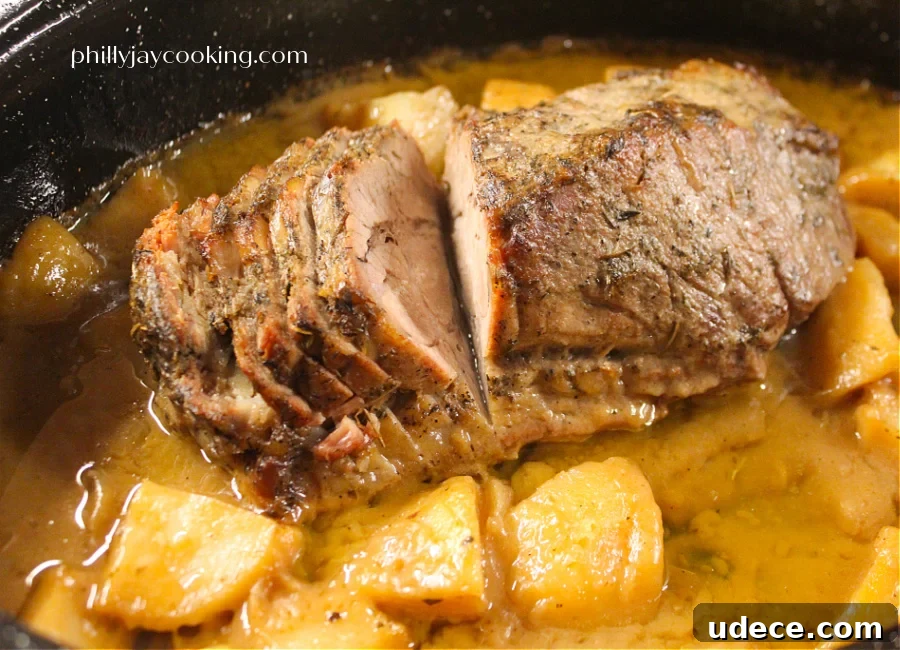
- Bake for approximately 4 hours, or until the roast reaches desired doneness. Add the potatoes to the pan after about 2½ hours so they finish cooking with the roast.
Slow cooker method
To adapt this to a slow cooker, marinate the roast the same way, then transfer the pork to the slow cooker with onions, the slurry (use 1 cup broth + 1 cup water), and butter. Cook on High for about 4 hours or on Low for 6–8 hours. Add potatoes during the final cooking hours (last 2 hours on High, last 4 hours on Low).
Tips for best results
- Poke holes before marinating: This helps the marinade penetrate the meat.
- Don’t over-marinate: Excessive marinating can make the texture too soft or mushy.
- Keep the roast tied: Trussing helps the roast cook evenly and maintain shape.
- Baste periodically: Spoon pan juices over the roast to keep the surface moist and flavorful.
- Let it rest: Allow the roast to rest before slicing so juices redistribute.
Variations
- Add carrots and celery: Common roast vegetables like carrots and celery pair well with onions and potatoes.
Serving suggestions
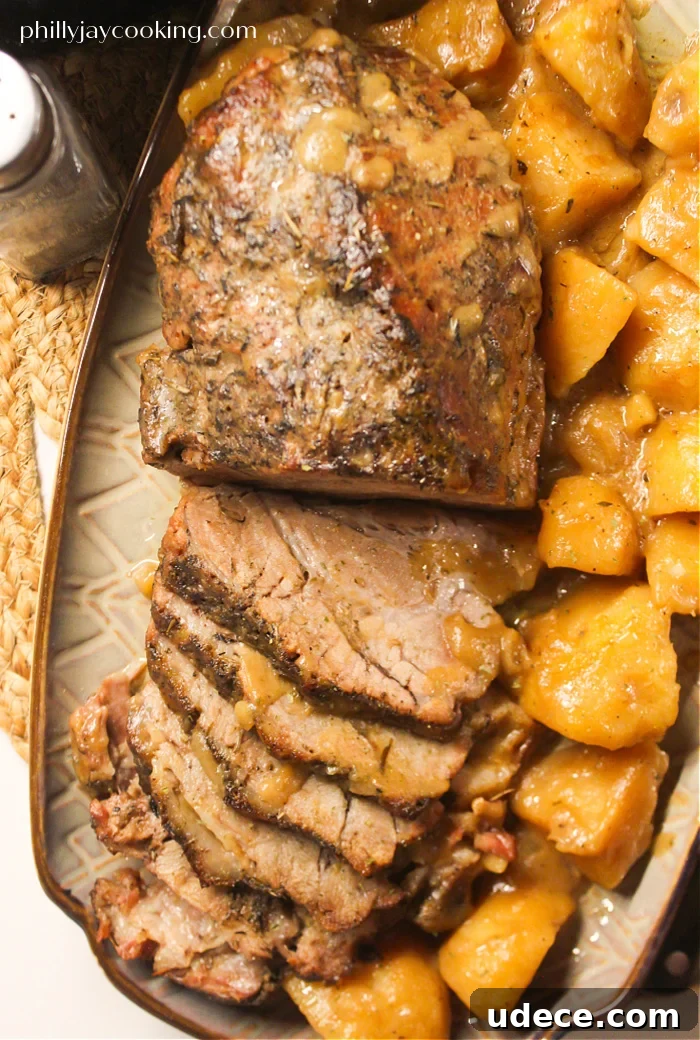
This roast pairs well with starchy sides that soak up gravy and simple vegetables.
- Starch: Mashed potatoes, rice, or egg noodles.
- Vegetables: Green beans, sautéed spinach, or corn.
Leftovers and storage
- Pulled pork: Shred leftover pork and warm in a skillet with your favorite sauce for sandwiches.
- Reheating in oven: Place in a baking dish, cover, and warm at 350°F for 20–25 minutes or until heated through.
- Reheating in skillet: Slice and heat over medium with a splash of water or broth for 15–20 minutes.
- Microwave: Slice and heat in a microwave-safe dish for 2–4 minutes, turning once midway.
- Storage: Refrigerate in an airtight container for several days. Freeze in a sealed bag for up to three months.
Equipment
- Sharp knife: For trimming and cutting vegetables.
- Potato peeler: For peeling potatoes.
- Basting brush or spoon: To coat the roast with marinade and pan juices.
- Roasting pan or slow cooker: A 14-inch roasting pan works well for oven roasting; a standard slow cooker works for the crockpot method.
- Mixing bowls and measuring tools: For the marinade and slurry.
That’s everything you need to make a juicy, savory roast pork shoulder. If you enjoy hearty, comforting meals, give this recipe a try and make extra for delicious leftovers. Enjoy!
Pbj~