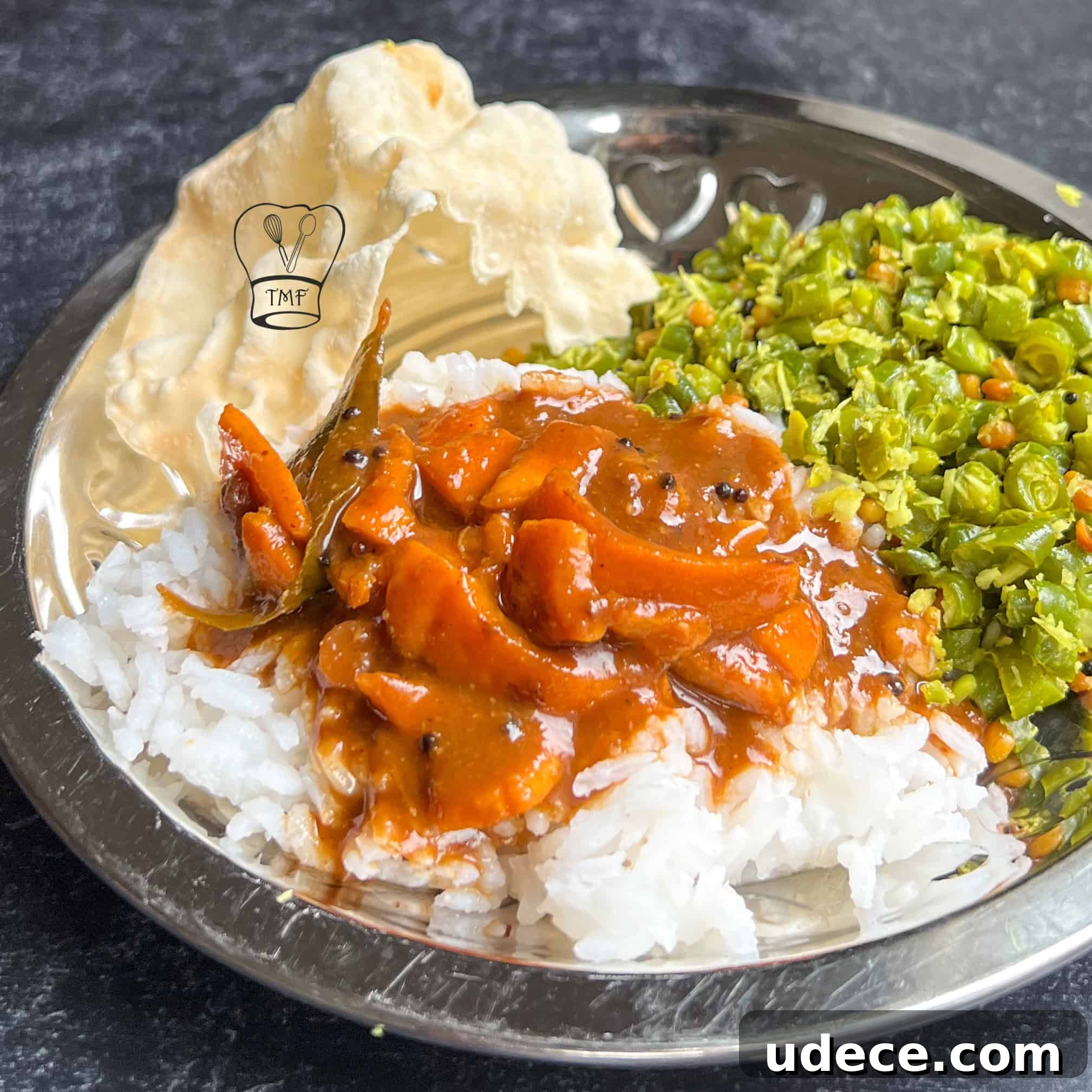
Orange Peel Kuzhambu — also called orange peel vathakuzhambu or orange peel puli kuzhambu — is a flavorful South Indian tamarind-based kuzhambu. This traditional Tamil Brahmin-style kara kuzhambu is quick to prepare, stores well for several days, and pairs beautifully with steamed rice.

Overview
This orange peel vatha kuzhambu highlights dried orange peel combined with a freshly roasted and ground kuzhambu masala. The recipe below follows an authentic Tamil Nadu Iyer/Iyengar style: aromatic, tangy, mildly spicy and balanced with a touch of jaggery for rounded flavor.
How much tamarind (puli) to use?
Adjust tamarind quantity to suit the sourness of your orange peel. If the peel is very tangy, use less tamarind; if milder, increase it slightly. The tamarind should give the kuzhambu a pleasant, balanced sourness without overpowering the spices.
Tips for orange peel
Always use thin, fresh-dried orange peel to avoid chewy or bitter pieces. Cut the peel into small strips for even roasting and cooking.

Can I use sambar powder?
Yes. Sambar powder can substitute for freshly ground kuzhambu masala, but freshly roasted and ground kuzhambu masala (without coconut) provides a more authentic aroma and flavor for this Iyer-style kuzhambu.
Color and consistency
The kuzhambu’s color depends on the chilies, tamarind, and roasted masala used. Consistency is a personal preference — in many homes kara kuzhambu is kept thick. Adjust water to reach your desired thickness.
Shelf life
Tamarind-based kuzhambu typically stays good for 3–4 days at room temperature. Store in a clean, airtight container. It also travels well and is convenient for packed meals.
Can I add garlic?
Yes — if you prefer a garlicky profile, add garlic as in popular hotel-style or Poondu (garlic) kuzhambu variations. Garlic will give the kuzhambu a deeper savory note.
Ingredients
To roast (for masala)
- 1/2 tsp cumin seeds
- 4 dried red chilies
- 1/2 tsp black pepper
- 1/4 tsp fenugreek seeds
- 1/2 tsp chana dal
- a few curry leaves
- 1 tsp coriander seeds
- 1/2 tsp sesame seeds
To temper
- 1 tbsp sesame oil
- 1/4 tsp fenugreek seeds
- 1/2 tsp mustard seeds
- a few curry leaves
- 2 green chilies (slit)
- 1 tsp chana dal
- a generous pinch of asafoetida
For kuzhambu
- 1 1/2 cup thin tamarind water (adjust to taste)
- Salt, to taste
- 2 tsp jaggery (adjust for balance)
- 1 tsp sesame oil (final temper)
Method — step-by-step
- Dry-roast cumin, red chilies, pepper, fenugreek, chana dal, coriander seeds, sesame seeds and a few curry leaves over medium heat until aromatic and slightly browned. Remove from heat and cool.
- Grind the roasted spices with a little water into a smooth paste.
- Heat 1 tbsp sesame oil in a pot. Add mustard seeds, chana dal, fenugreek seeds and curry leaves. When the mustard seeds splutter, add slit green chilies.
- Add the chopped or sliced dried orange peel to the tempering. Roast briefly so the peel releases its aroma and becomes slightly crisp.
- Add jaggery and mix so it melts and coats the peel, balancing the tartness.
- Pour in tamarind water and add salt. Bring to a boil and simmer for about 10 minutes so flavors develop.
- Add the ground masala paste and additional water if needed to reach your preferred consistency. Boil for another 5 minutes so the paste integrates and the kuzhambu thickens slightly.
- Finish with 1 tsp sesame oil, mix well, and turn off the heat. Allow the kuzhambu to rest a few minutes before serving to let flavors meld.

Serving suggestions
Serve hot with steamed rice and a simple vegetable stir-fry, poriyal or a cooling raita. This kuzhambu’s tangy and aromatic profile complements plain rice and makes for a comforting meal.

This recipe is a traditional, easy-to-follow method to turn citrus peel into a richly spiced puli kuzhambu that’s uniquely South Indian. Adjust tamarind, jaggery and chilies to match your taste and enjoy a tangy, aromatic kuzhambu that stores well and tastes even better the next day.