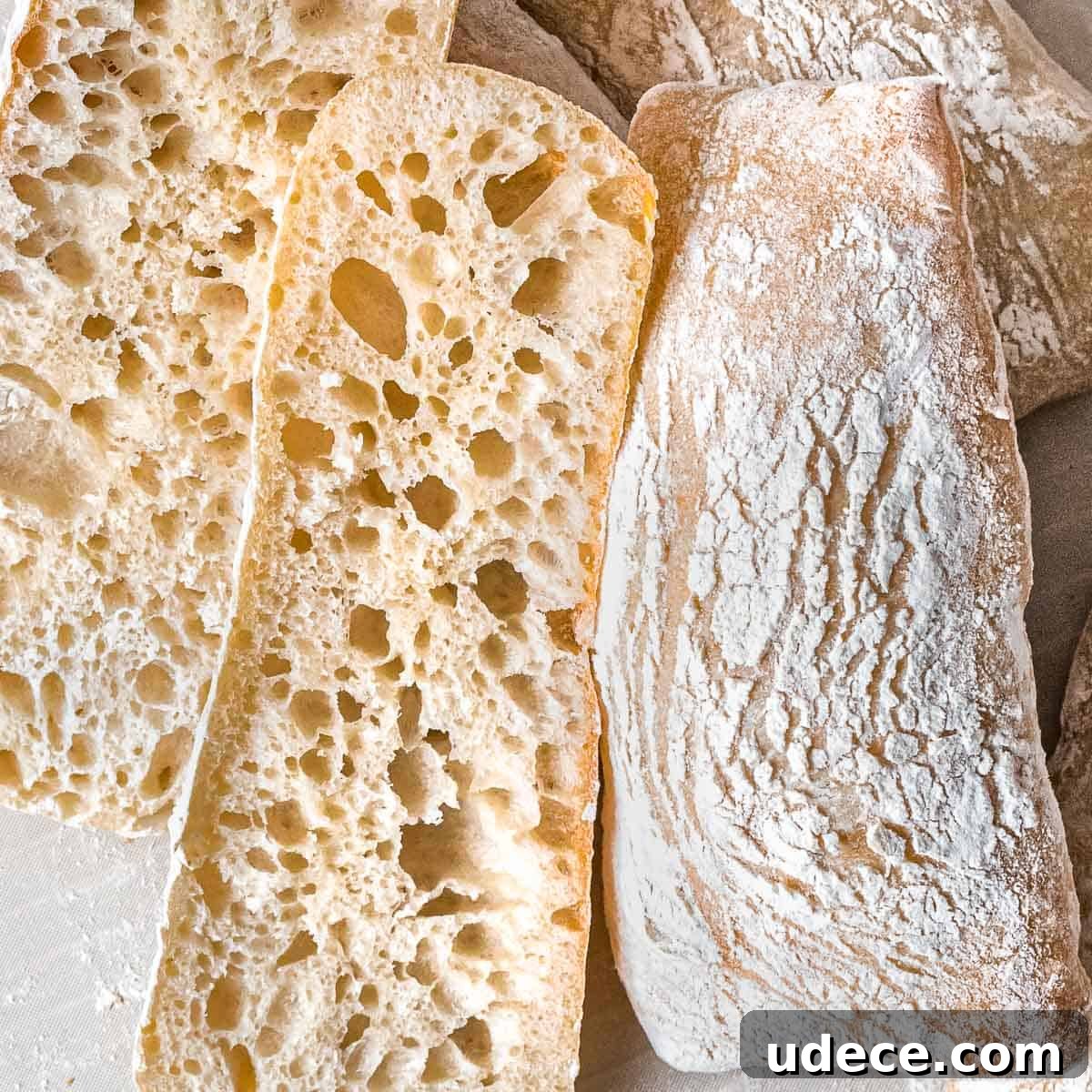
This sourdough ciabatta is an Italian white bread with a thin, crispy crust and a large, open crumb. Made from a high-hydration dough using active starter, flour, water, malt or barley syrup, and olive oil, it’s ideal for paninis and sandwiches.
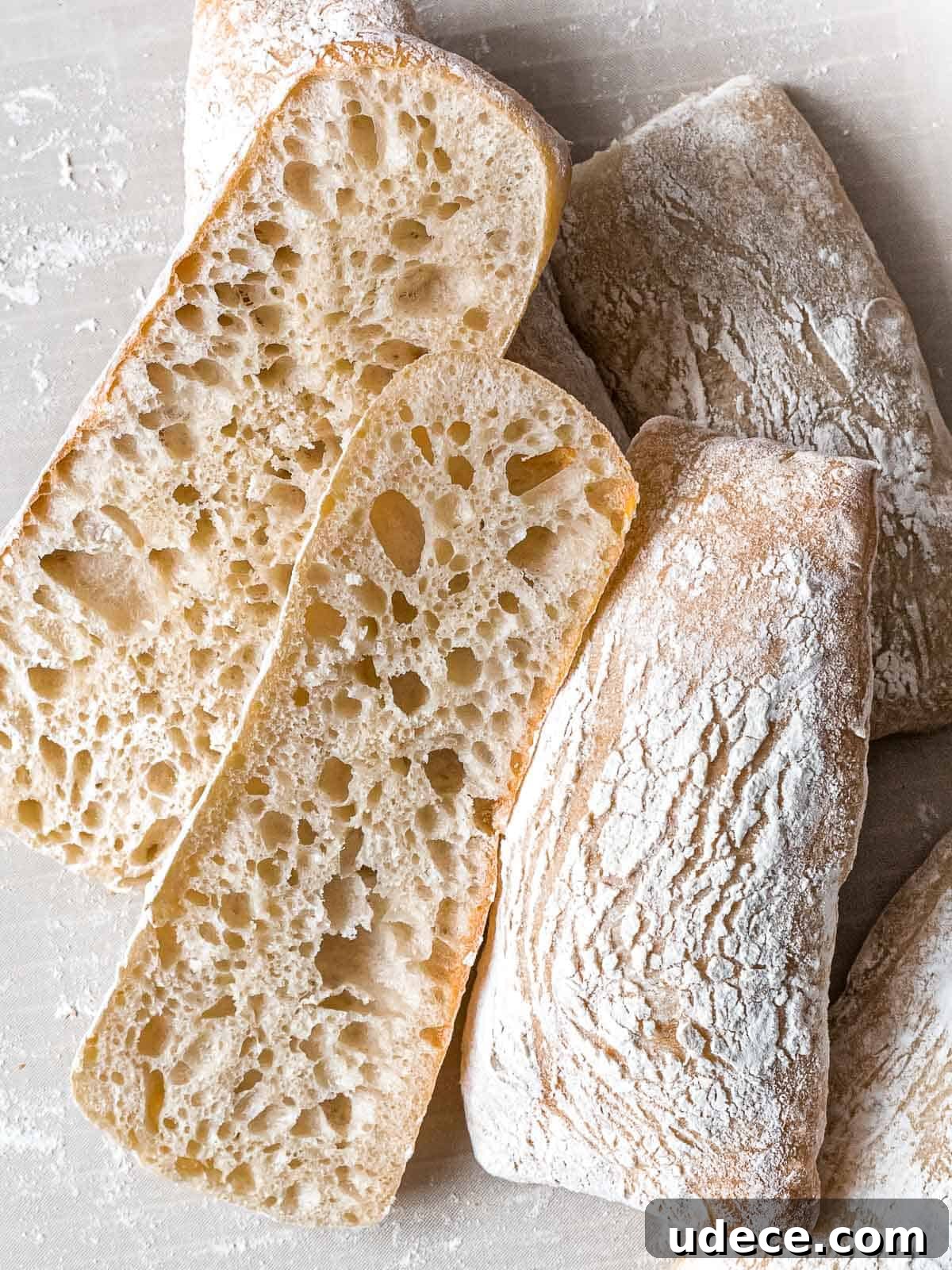
This sourdough ciabatta features an open, airy crumb with irregular holes that soak up sauces and dressings beautifully. The crust is thin and crackly, providing a pleasant contrast to the chewy interior.
I often bake ciabatta with sourdough starter because the starter adds flavor, improved texture, and extended freshness. It’s a versatile loaf for sandwiches, but especially good when pressed into homemade paninis.
Expert Tips: Sourdough Ciabatta
- Sourdough starter – Use your starter at peak activity. A 100% hydration starter fed the night before and showing clear volume increase will give the best results.
- Poolish – Make the poolish 10–14 hours before mixing (adjust for room temperature). This pre-ferment improves flavor and contributes to the open crumb.
- Handle gently – Ciabatta requires high hydration for an open crumb. Avoid aggressive handling or overworking during shaping to preserve air pockets.
- Use a scale – Baking is precise; a digital scale ensures consistent results and accurate baker’s percentages.
- Proofing container – Proof in a clear container with measurement markings to easily monitor volume increase.
Ingredients
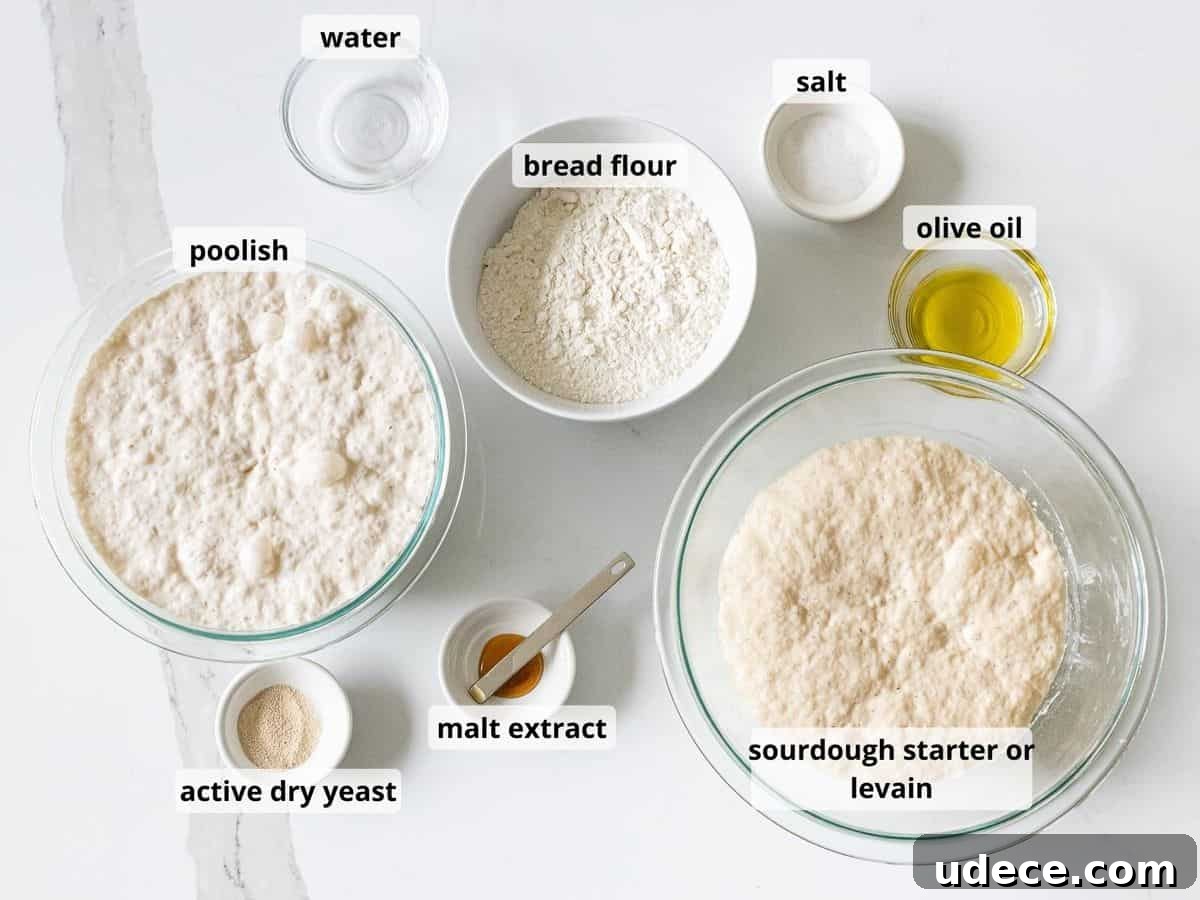
- Sourdough starter – Active, doubled starter (100% hydration).
- Poolish – A high-hydration pre-ferment made with bread flour, water, and a touch of yeast; it enhances flavor and contributes to the open crumb structure.
- Malt or barley syrup – Adds moisture and acts as a yeast nutrient.
- Olive oil – Use extra virgin olive oil for flavor and tenderness.
- Bread flour – Preferable for strong gluten development and an airy crumb.
- Sea salt – For seasoning.
How to Make Sourdough Ciabatta
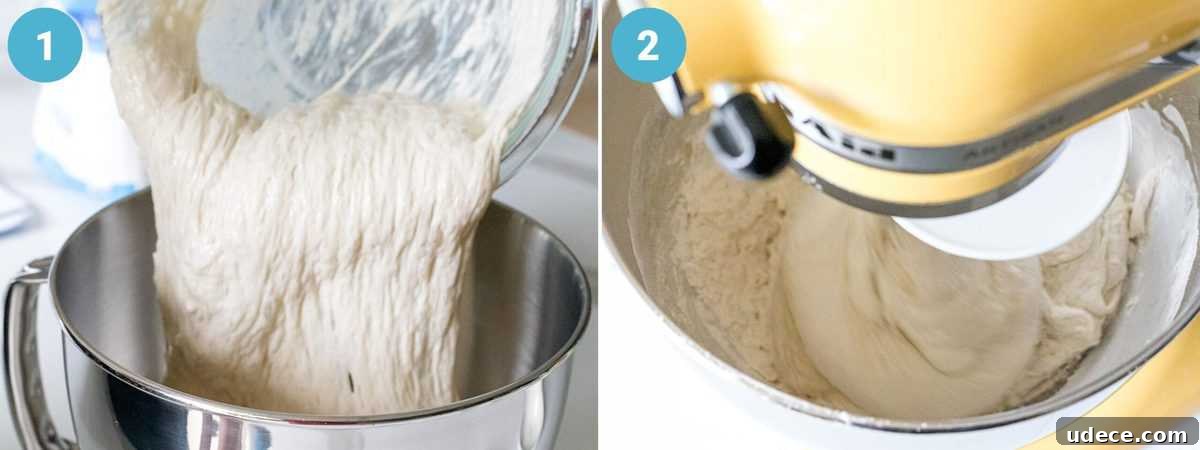
- Combine: Add the poolish, active starter, wet ingredients, and dry ingredients to a large mixing bowl. Keep salt and any active yeast separate until incorporated.
- Mix: Using a dough hook, start on low until the flour is hydrated, then increase speed. Mix until the dough forms a smooth ball with a slight sheen and minimal sticking—about 6–10 minutes.
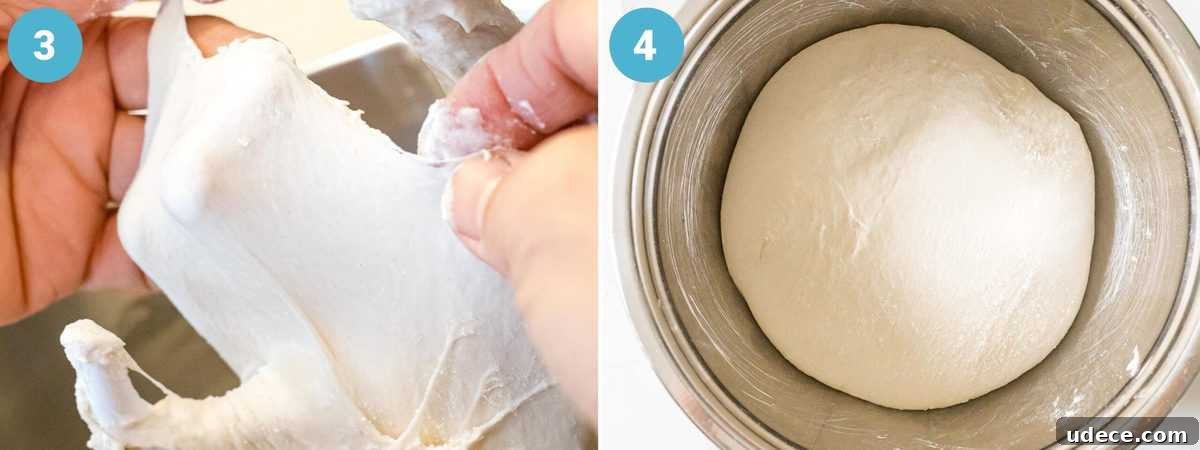
- Windowpane test: Take a small piece of dough and stretch it thin. A successful windowpane is translucent without tearing, indicating sufficient gluten development.
- Bulk fermentation: Transfer the dough to a clear container, shape it into a smooth ball, and proof for 30 minutes in a warm, humid spot. Punch down gently and continue proofing until doubled and showing surface bubbles.
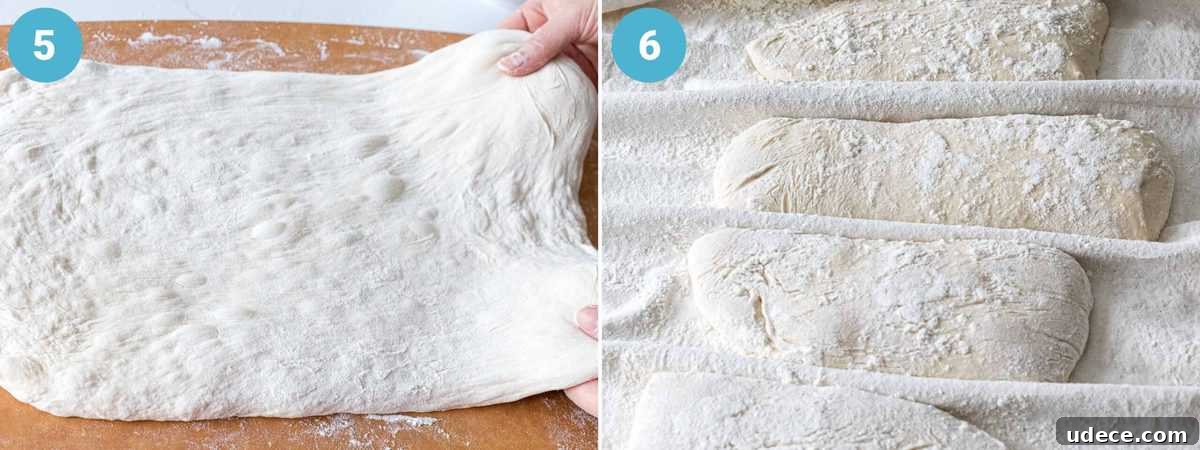
- Bench rest: On a well-floured surface, gently stretch the dough by hand into a rectangle about 1 inch thick. Preserve the gas in the dough—do not use a rolling pin. Rest for 10 minutes.
- Shape and final fermentation: Divide the dough into six even pieces and place them surface-side down on a floured proofing cloth. Cover lightly and proof until nearly doubled.
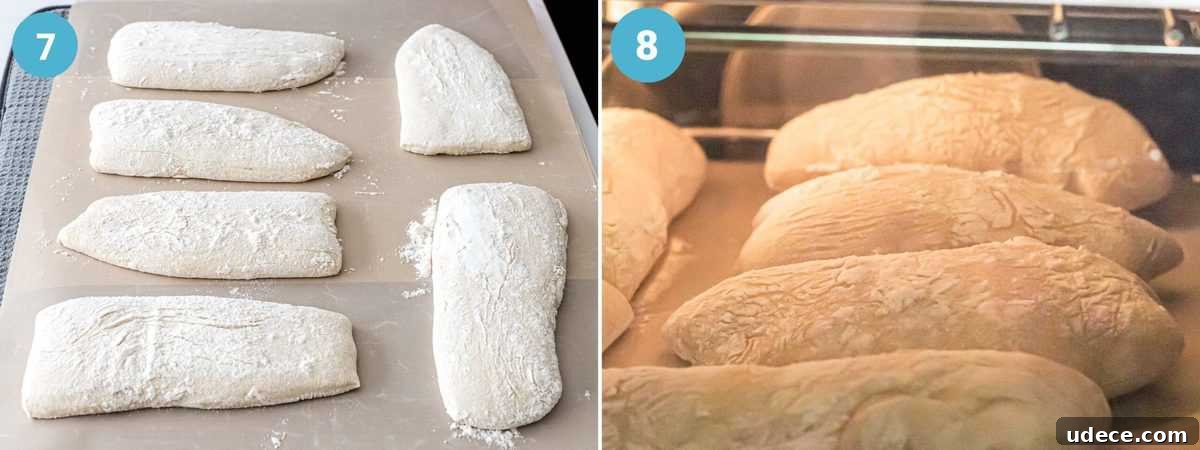
- Flip each piece so the smooth surface is up and transfer them to a heatproof baking mat or perforated surface for baking. Use a large, flat baking sheet or board to move them to the oven rack.
- To create steam, pour about 1/3 cup of water into a preheated pan on the oven floor just before closing the door (use oven mitts). Bake at 356°F (180°C) for about 15 minutes.
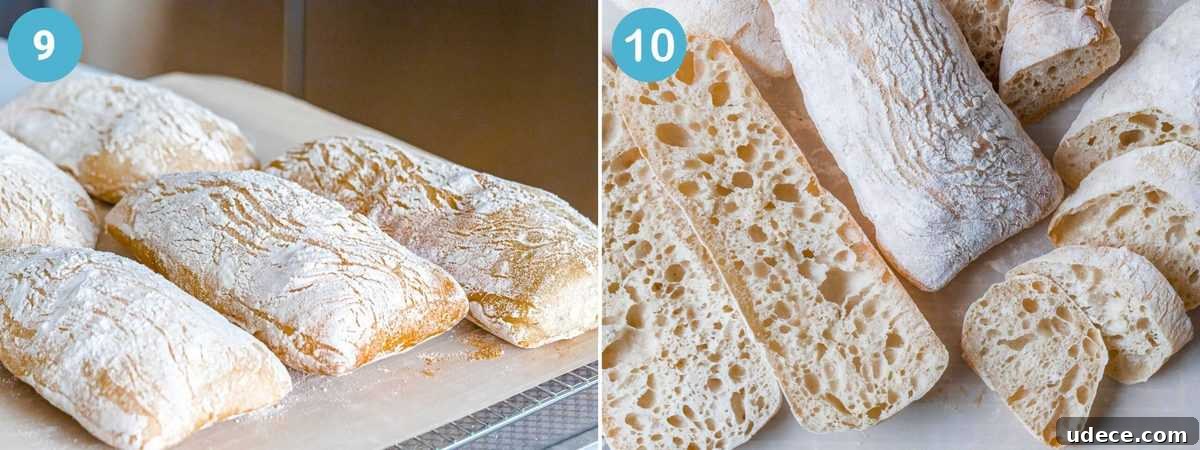
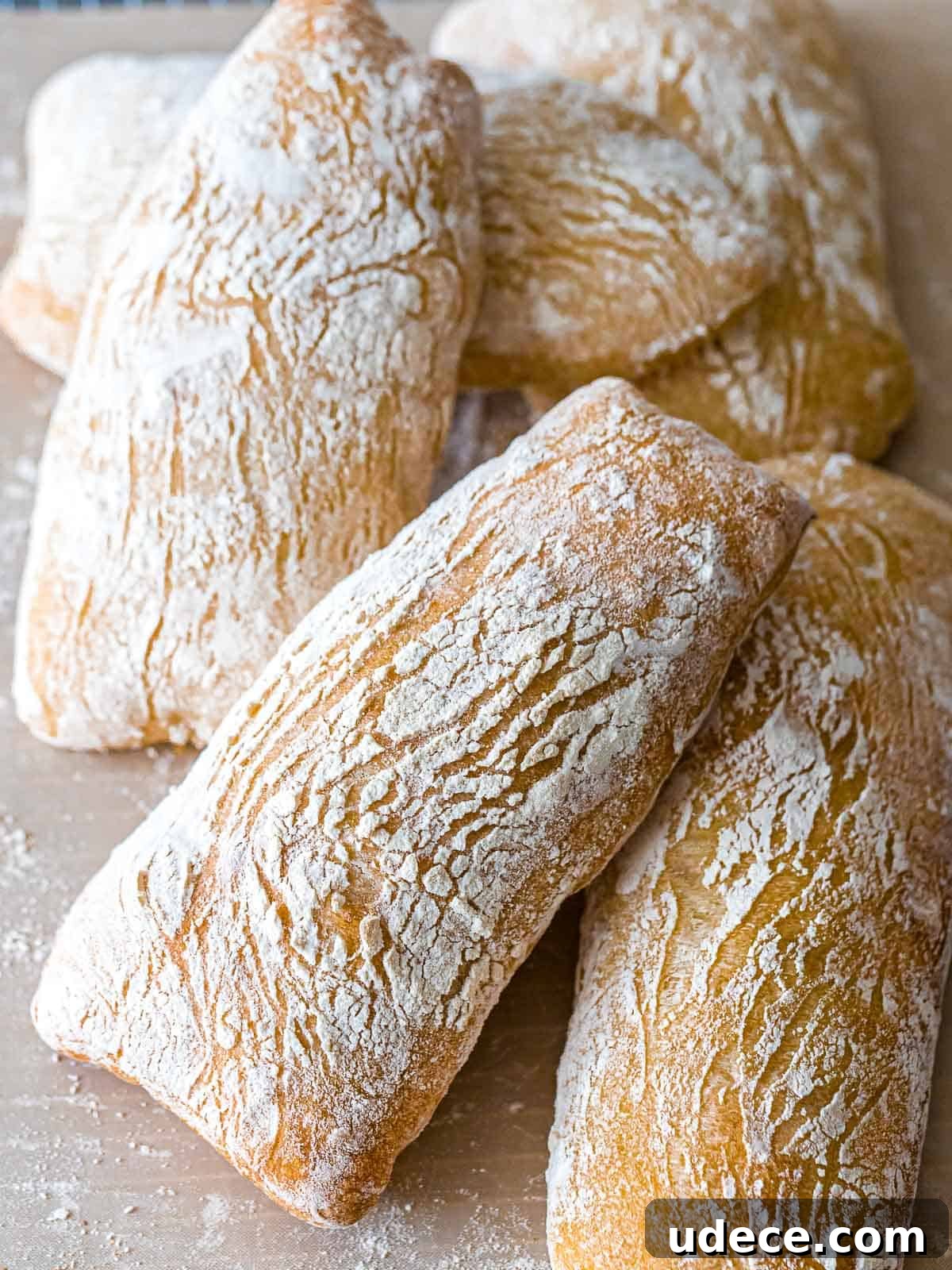
- The finished loaves should have a thin, crispy crust with a cracked floury surface and large irregular holes inside.
- Allow the bread to cool to room temperature before slicing. Use it for sandwiches, paninis, dips, or crostini.
Ciabatta FAQs
Ciabatta is an Italian white bread known for its flat, broad shape. It’s made from high-hydration dough—flour, water, yeast (or starter), olive oil, and salt—and results in a tender interior with a crisp, thin crust. This recipe uses sourdough starter and a poolish for extra flavor and texture.
Traditional sourdough often has a pronounced tangy flavor. Ciabatta is typically milder with an emphasis on texture—large holes and a chewy crumb. Using sourdough starter here enhances flavor and keeping power without necessarily making the bread overly sour.
Bread flour is recommended for its higher protein content, which supports strong gluten development and an open crumb with large holes.
Yes. Traditional ciabatta contains no dairy or eggs and is naturally vegan.
Poolish is a high-hydration pre-ferment made with equal parts flour and water plus a small amount of yeast. It improves flavor, extensibility, and crumb structure, helping create the open holes characteristic of ciabatta.
Barley malt syrup is a thick, slightly sweet syrup from malted barley. It adds moisture and acts as a nutrient for yeast, improving crust color and flavor.
More recipes:
Sourdough Recipes
Sourdough Ciabatta
Sourdough Recipes
Soft Pumpkin Sourdough Bread
Sourdough Recipes
Sourdough Starter 2 Ways – Traditional and No-discard method
Sourdough Recipes
How to Make Yeast Water with Fruit
Sourdough Ciabatta
Equipment
-
Proofing cloth
-
Bowl scraper
-
Bench scraper
-
Heatproof baking mat or perforated surface
Ingredients
Wet Ingredients
- 75 g sourdough starter (100% hydration, active)
- 15 g olive oil
- 5 g water
- 3 g barley malt syrup
- 652 g poolish (see Notes)
Poolish Ingredients
- 325 g bread flour
- 325 g water
- 0.8 g active dry yeast (about ⅓ tsp)
Dry Ingredients
- 175 g bread flour
- 8 g sea salt
- 2 g active dry yeast (about ¾ tsp)
Instructions
Prepare the poolish
-
Make Poolish: About 12 hours before baking, combine the poolish ingredients in a bowl, mix well, cover, and leave at room temperature until bubbly and not receding. Adjust timing for your kitchen temperature.
Mix
-
Mix: Add wet and dry ingredients (including the poolish) to a stand mixer. Keep salt away from active yeast until mixed. Mix low until hydrated, then increase speed. The dough should form a smooth ball with a slight sheen.
-
Windowpane Test: Check gluten by stretching a small piece until translucent without tearing.
Proof and Shape
-
Bulk Fermentation: Place the dough in a clear container, shape into a smooth ball, and proof 30 minutes in a warm, humid place. Punch down gently and continue until doubled with visible surface bubbles.
-
Bench Rest: On a well-floured surface, gently stretch by hand into a rectangle about 1 inch thick. Do not use a rolling pin. Rest 10 minutes.
-
Shape: Cut into six even pieces with a bench scraper, flip surface-side down onto a floured proofing cloth, and lightly cover.
-
Final Fermentation: Proof at room temperature until nearly doubled. Preheat the oven to 356°F and place a shallow pan on the bottom rack for steam.
Bake
-
Bake: Flip dough pieces surface-side up onto a heatproof mat and slide directly onto the middle rack. Carefully pour ⅓ cup of water into the preheated pan to create steam and quickly close the oven. Bake 15 minutes at 356°F. Use oven mitts and avoid water contact with glass or stoneware.
Notes
- Poolish timing: ~12 hours is a guideline for a 74°F kitchen. Adjust for cooler or warmer conditions.
- Transferring dough: Dust the bowl with flour and use a flexible scraper to transfer the dough gently.
- Proofing box alternatives: Use a warm oven with a pan of hot water or an insulated cooler with hot water to create a humid environment.
- Oven transfer: Use a large, flat baking sheet to push the mat onto the oven rack quickly and remove the sheet so the mat bakes directly on the rack for better airflow and crust formation.
- Adding steam: Steam promotes oven spring and prevents the crust from setting too early, helping produce an open crumb and thin, crisp crust. Handle steam carefully to avoid burns.
Nutrition
Nutrition information is an approximation and should be used as a guide.
Like this? Leave a comment below!