When my stepdaughter was very young, her favorite drink was apple juice. Like many parents, my husband (then my boyfriend) assumed fruit juice was healthy because it has “fruit” in the name.
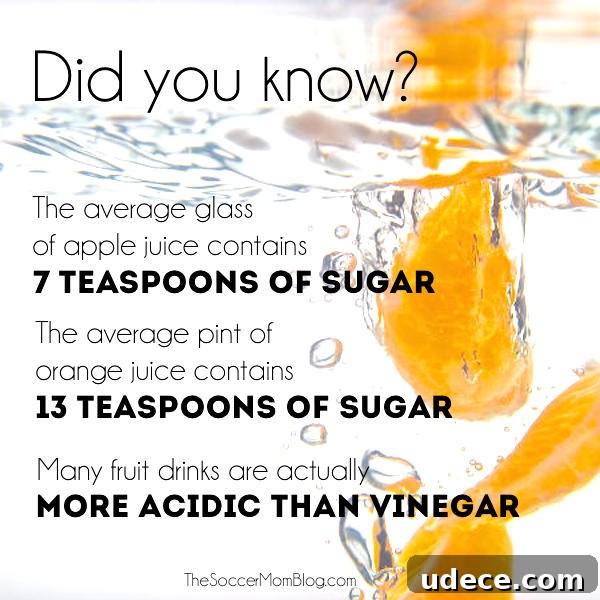
I grew up drinking my share of fruit juice too, but I worried it wasn’t a good idea for a child to rely on juice for most of her hydration. I knew juice contained sugar, but I was surprised by just how much sugar some children’s beverages have.
All that sugar sitting on a child’s teeth all day is a concern. Combine high sugar with the acidity found in many juices and smoothies, and you have a real risk for cavities and enamel erosion. The acidity in some popular drinks can be harsher on teeth than people expect, so it’s worth paying attention to what kids sip throughout the day.
When I was pregnant with Annabelle I decided I didn’t want her to grow up drinking juice all day, which meant Lilu needed to switch to water so she would set a healthy example. I braced myself for resistance, but it wasn’t as difficult as I expected.
I started by making apple juice a treat instead of a default beverage. I told Lilu simply and honestly that apple juice has a lot of sugar—almost as much as some desserts—so it wasn’t something to drink all day long. I framed it in a way she could understand (we don’t eat ice cream at every meal!), and I included the key facts so she could see the logic. She responded well.
Next, I limited juice to the morning. I explained that having sugar earlier in the day lets kids burn it off as energy, so she could have juice with breakfast and one juice box in her school lunch, but after lunch it would be water only. I kept the explanation straightforward and involved her in the decision, which helped her accept the change.
Over a few weeks the new routine stuck. Lilu would cheekily ask for juice at dinner and then celebrate when I said “just kidding!” She liked feeling included and proud that she was choosing something healthier.
One morning, when we’d run out of juice, I quietly served water with breakfast. She noticed but accepted it when I said we were out of juice and it would be water that day. After that, I stopped buying jugs of juice altogether.
Today, water is the drink at every meal. We still offer juice occasionally as a treat and I sometimes pack a juice box in her school lunch for nostalgia’s sake, but juice is no longer the default. Teaching moderation and giving kids a realistic view of nutrition helps them form habits that will serve them as they grow into adults.
Healthy alternatives to fruit juice:
- Sliced apples with a spread of nut butter (peanut, almond, or cashew)
- Banana “boats” topped with a thin layer of Nutella or other chocolate spread
- Sliced strawberries with a light whipped topping
Eating whole fruit instead of drinking juice is generally more nutritious: whole fruit contains less concentrated sugar and more fiber, which helps slow sugar absorption and keeps kids fuller longer. Fruit also makes a simple, satisfying snack on its own or paired with a small topping.
And as for soda—that’s an absolute no in our house.