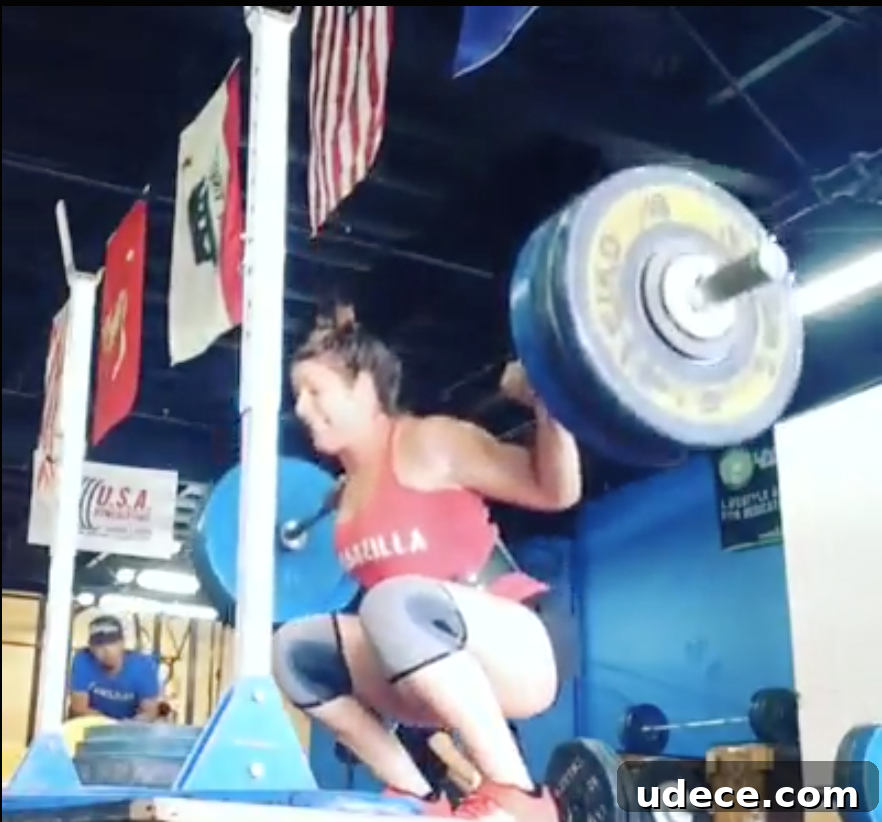
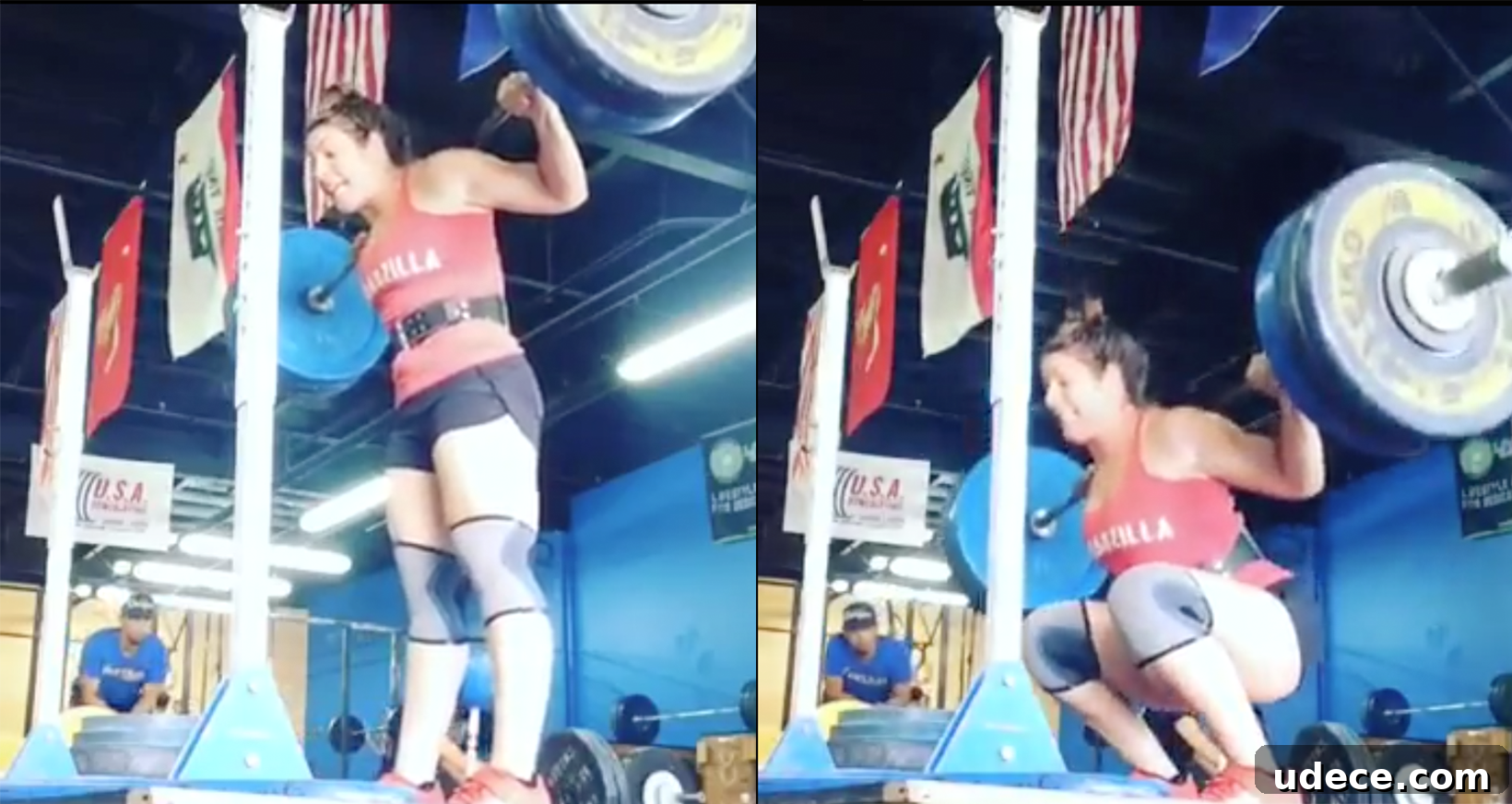
Steph’s note: Today’s post comes from JVB, strength coach at The Movement Minneapolis and an expert at helping people build powerful, resilient strength. I love strength training—that’s me in the photo above hitting a PR back squat of 291 pounds—so when JVB offered to share three accessory lifts that support a much bigger squat, I was excited to pass them on. Read through for clear coaching cues and how these movements fit into a program.
I won’t lie to you, I really enjoy the squat.
I compete in powerlifting, so testing maximal strength in the barbell back squat is part of the sport. Powerlifting emphasizes specificity: to develop a much bigger back squat you need to spend significant time squatting. That said, the smartest programs pair heavy, consistent squatting with targeted accessory work. Accessory movements are designed to complement the competition lift by addressing weak points, improving movement quality, and increasing the force and control you can express in the squat.
Accessory exercises don’t replace squatting — they enhance it. When chosen and executed correctly, they isolate or overload particular muscles and movement patterns that limit your squat. Below are three non-squatting exercises I use regularly to build a stronger, safer, and more confident back squat. These work for competitive lifters and for recreational athletes who want more leg and posterior chain strength.
Seated Box Jumps
Jump training can be intimidating, but it’s a highly effective tool for developing the explosiveness needed to stand up out of the bottom of a heavy squat. Seated box jumps are a variation that reduces the fear factor while preserving the key training stimulus: rapid, full-muscle recruitment from a dead start. They force your nervous system to fire quickly so your hips, quads, and glutes recruit many motor units at once.
How to perform them: sit briefly on a low surface or box so your thighs and torso are stable, then pause to remove any pre-stretch reflex. From that static position, explode upward and land softly on another box or platform. Reset completely between reps—no rocking or bouncing. This deliberate pause at the start forces each rep to be an all-out, clean effort and helps translate that explosive intent directly into your squat.
Practical programming tip: place seated box jumps near the start of a session right after your general warm-up and mobility work, before heavy squats. In my own training cycle I used this order and made a notable jump in squat performance at my next meet, which reinforced how beneficial explosive, low-volume jump work can be when paired with heavy back squats.
Weighted Step-Ups
Strong bilateral squats benefit greatly from robust unilateral strength. Weighted step-ups train each leg independently, emphasizing quad and glute strength while improving single-leg balance and joint stability at the ankle and knee. They also help correct left-right imbalances that can limit how well you express strength under a heavy barbell.
Technique matters: perform step-ups slowly and deliberately. Drive through the heel and extend the hip without using momentum. On the descent, control the lowering phase like you’re trying not to disturb a fragile surface—slow, precise, and measured. Avoid rapid bouncing or pushing off the rear foot. Use dumbbells or a kettlebell for loading if you want to protect your spine and maintain an upright torso, or use a barbell if you’re confident in your bracing and balance.
Programming suggestion: include weighted step-ups for moderate sets and reps—often 3–4 sets of 6–10 reps per leg—focusing on tempo and control. They pair well after primary squat work or in the same session as accessory posterior chain movements.
Barbell Bent-Over Row
A powerful back is essential for a big, secure squat. The bar rests on your shoulders and upper back, so stronger thoracic and upper-back musculature improves bar positioning, comfort, and control. Bent-over barbell rows strengthen the lats, rhomboids, and rear delts while also demanding core stiffness to maintain a neutral spine in the hinge position.
Perform rows with a flat back, hinge at the hips, and pull the bar to your lower chest or upper abdomen. Keep the weight heavy enough to be challenging—these are large muscles capable of handling significant load—but light enough to retain strict technique and avoid spinal rounding. Bent-over rows also reinforce bracing and anti-flexion strength in your trunk, which transfers directly to better confidence and technical consistency under a heavy squat.
How to integrate: program rows on squat days or on upper-body accessory days. Aim for 3–5 sets of 5–10 reps, maintaining tension in the posterior chain and strict torso positioning throughout each set.
Combining these three accessory movements—explosive seated box jumps, slow and precise weighted step-ups, and heavy but controlled bent-over rows—creates a balanced approach to improving your squat. Each targets a different limiting factor: rate of force development, unilateral strength and stability, and upper-back control. When paired with consistent squatting, they help you lift more weight safely and with greater confidence.