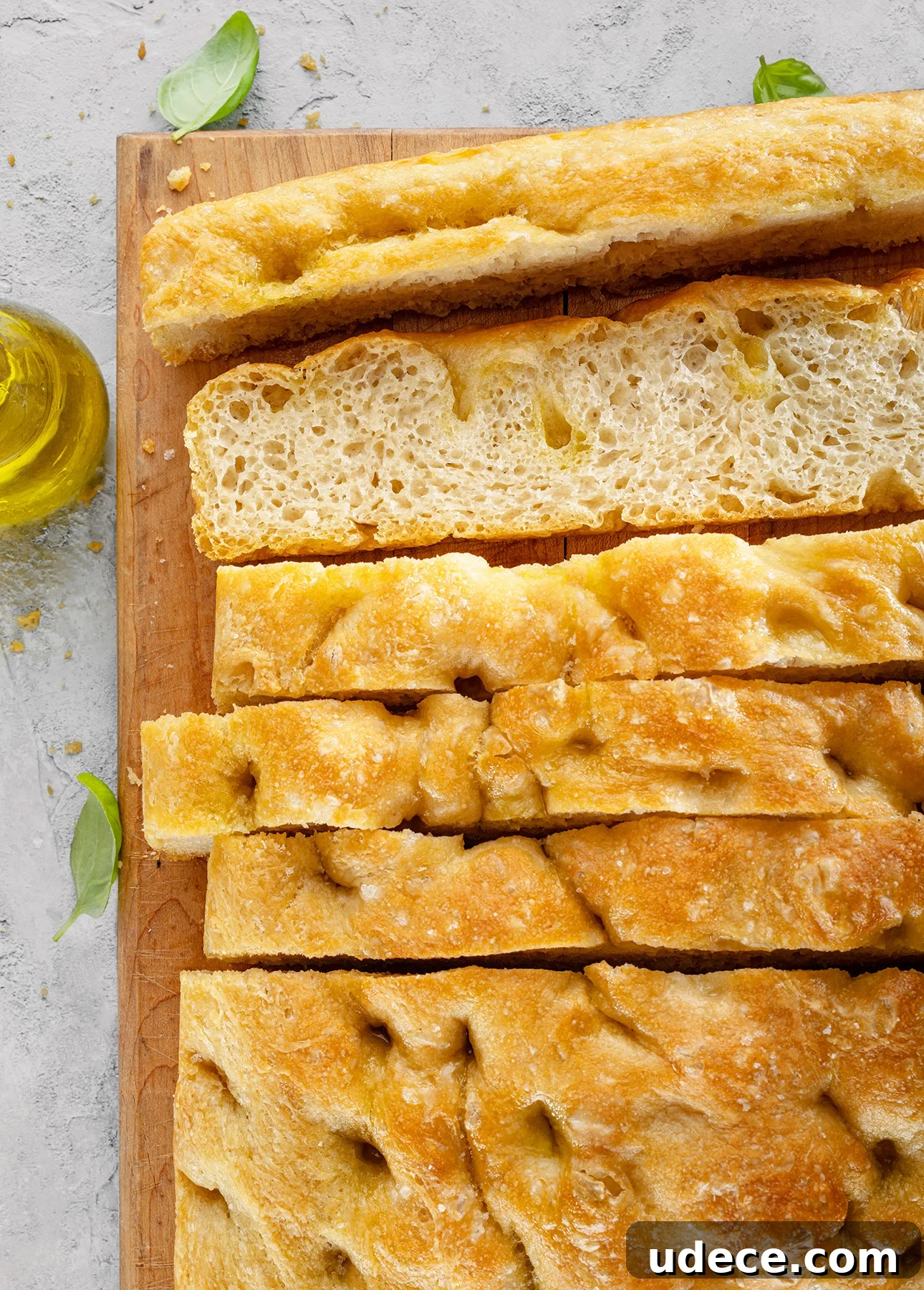
Learn how simple it is to make no-knead focaccia: a golden, airy Italian flatbread perfect for sandwiches, dipping, or a savory snack.
This post contains affiliate links. Full disclosure appears at the end of the article.
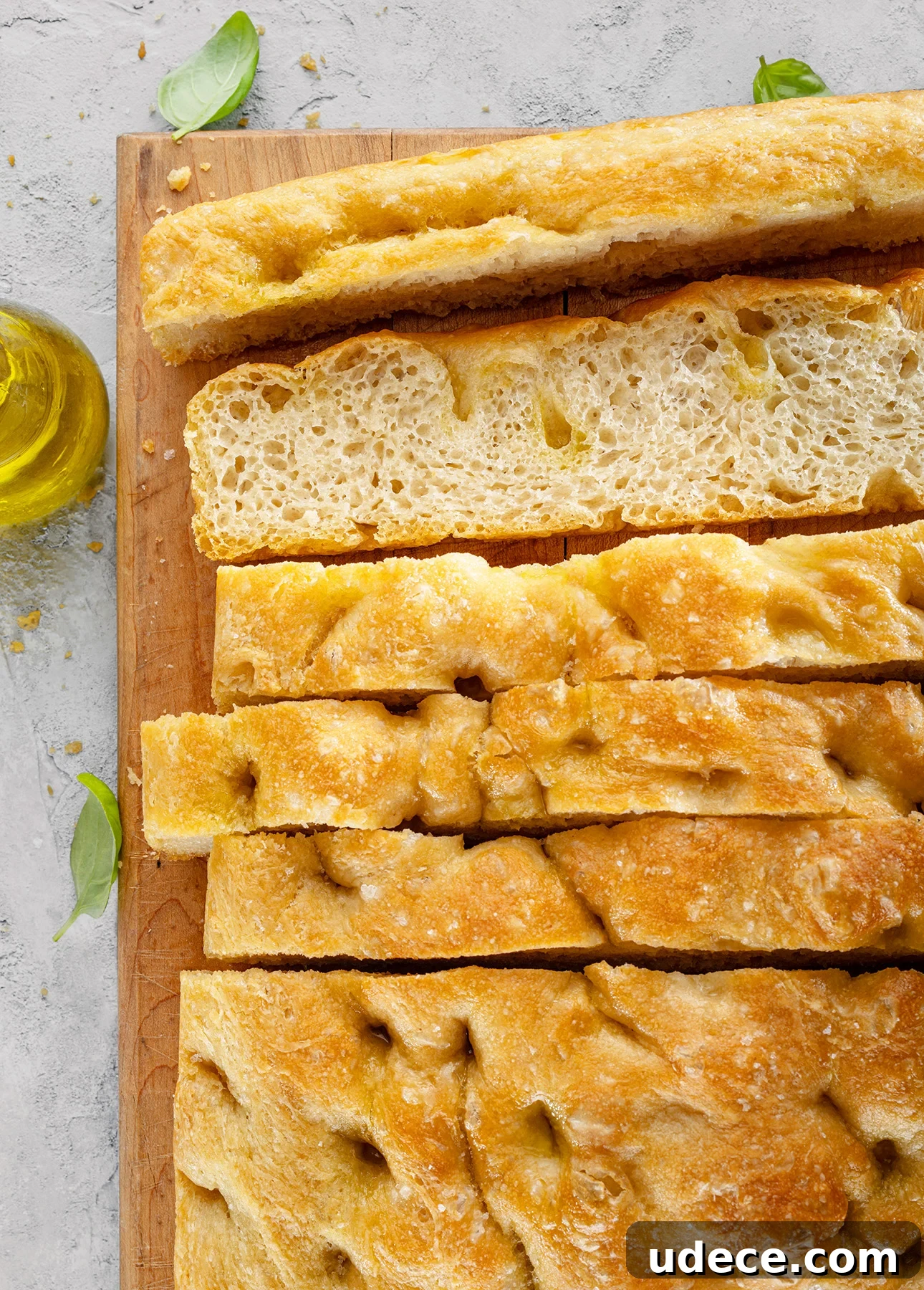
I don’t bake a lot of bread at home, but focaccia is an exception. Unlike elaborate sourdough projects, focaccia is forgiving and remarkably easy. With minimal hands-on time and simple ingredients, you’ll end up with a crusty, olive oil–rich loaf that’s soft and airy inside.
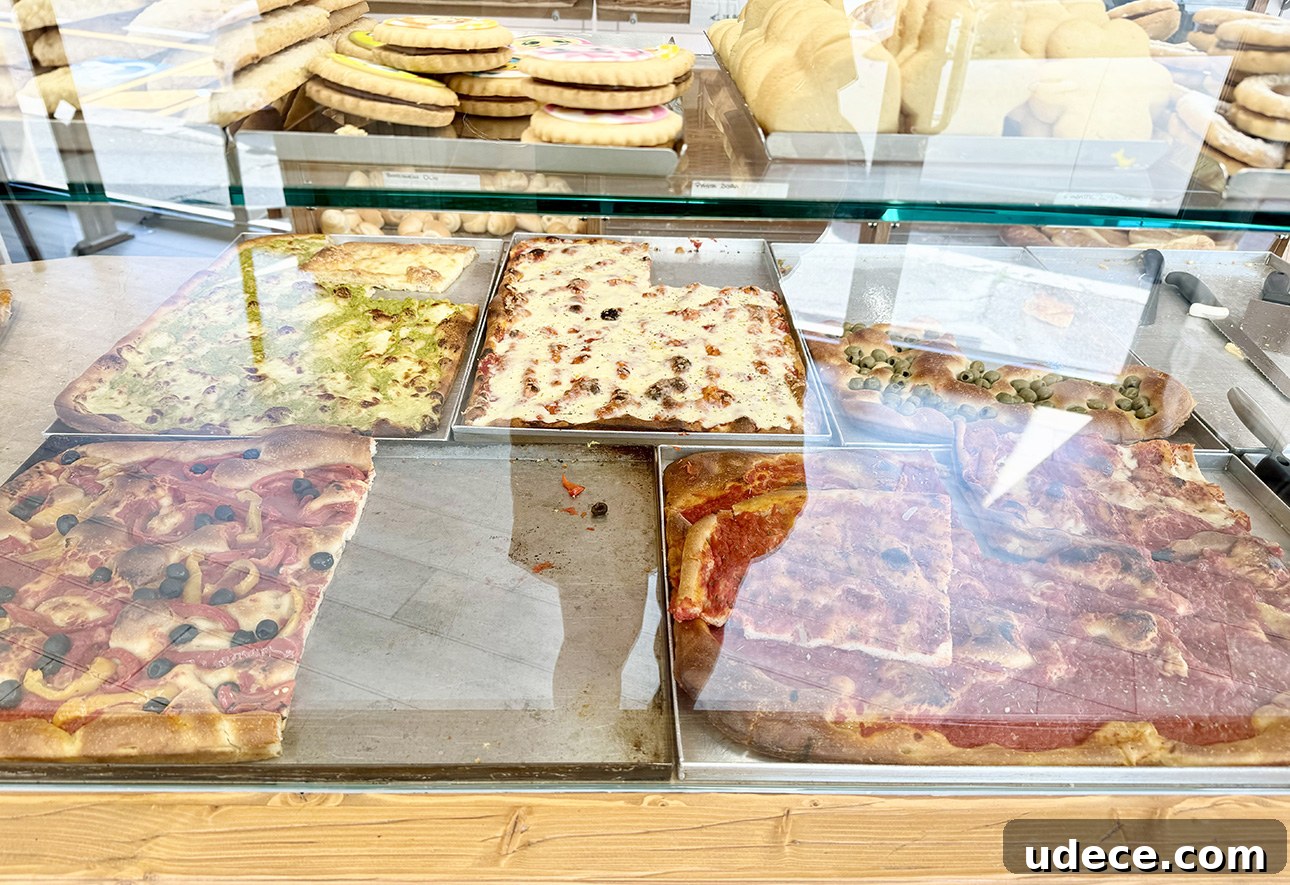
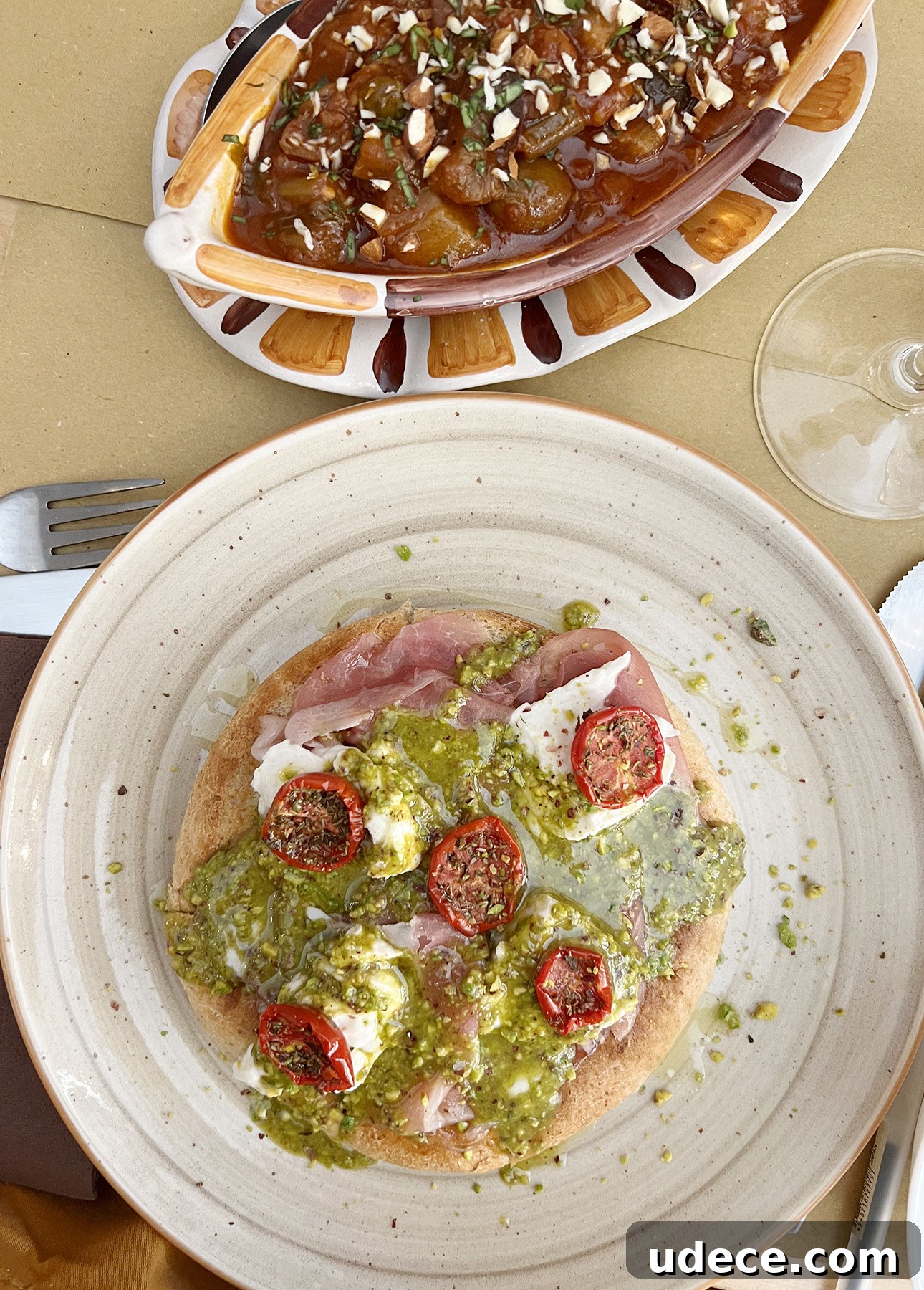
Focaccia is a highly versatile Italian flatbread. Serve it alongside soups and salads, slice it for hearty sandwiches, or enjoy it plain as a snack. In Italy, focaccia is often finished with rosemary, olives, or cherry tomatoes. Some regions dress it more like a flat pizza, topping it with cheeses or cured meats.
What I appreciate most about focaccia is how adaptable it is. In cool weather it pairs beautifully with warming soups; in summer, it becomes an excellent sandwich base. Over the years I’ve refined a simple, no-knead focaccia method that yields reliably tender crumb and a crisp golden crust every time.
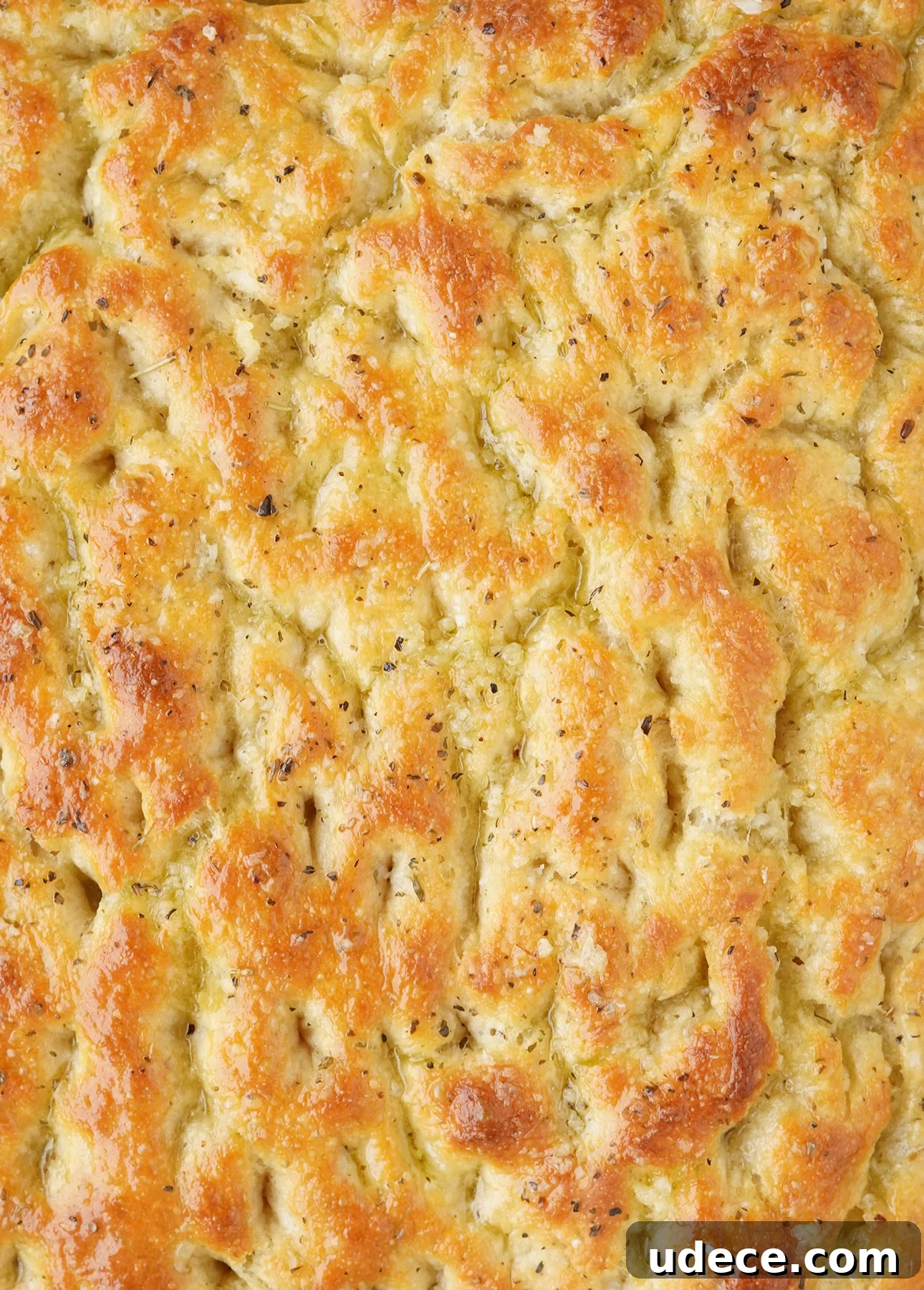
Video: How to Make No-Knead Focaccia
A short video accompanies this recipe and demonstrates the key steps: mixing a wet dough, letting it rise, folding gently with two forks to develop structure without kneading, dimpling the surface, and baking until golden. The technique removes the need for intensive kneading while still developing a light, open crumb.
A Brief History of Focaccia
Focaccia’s roots go far back in Italian culinary history. The name comes from the Latin word focus, meaning hearth, and early versions were baked over open flames. Over centuries, focaccia evolved across regions. Liguria, and Genoa in particular, developed the light, oil-rich style known as focaccia alla Genovese, which inspired the recipe here.
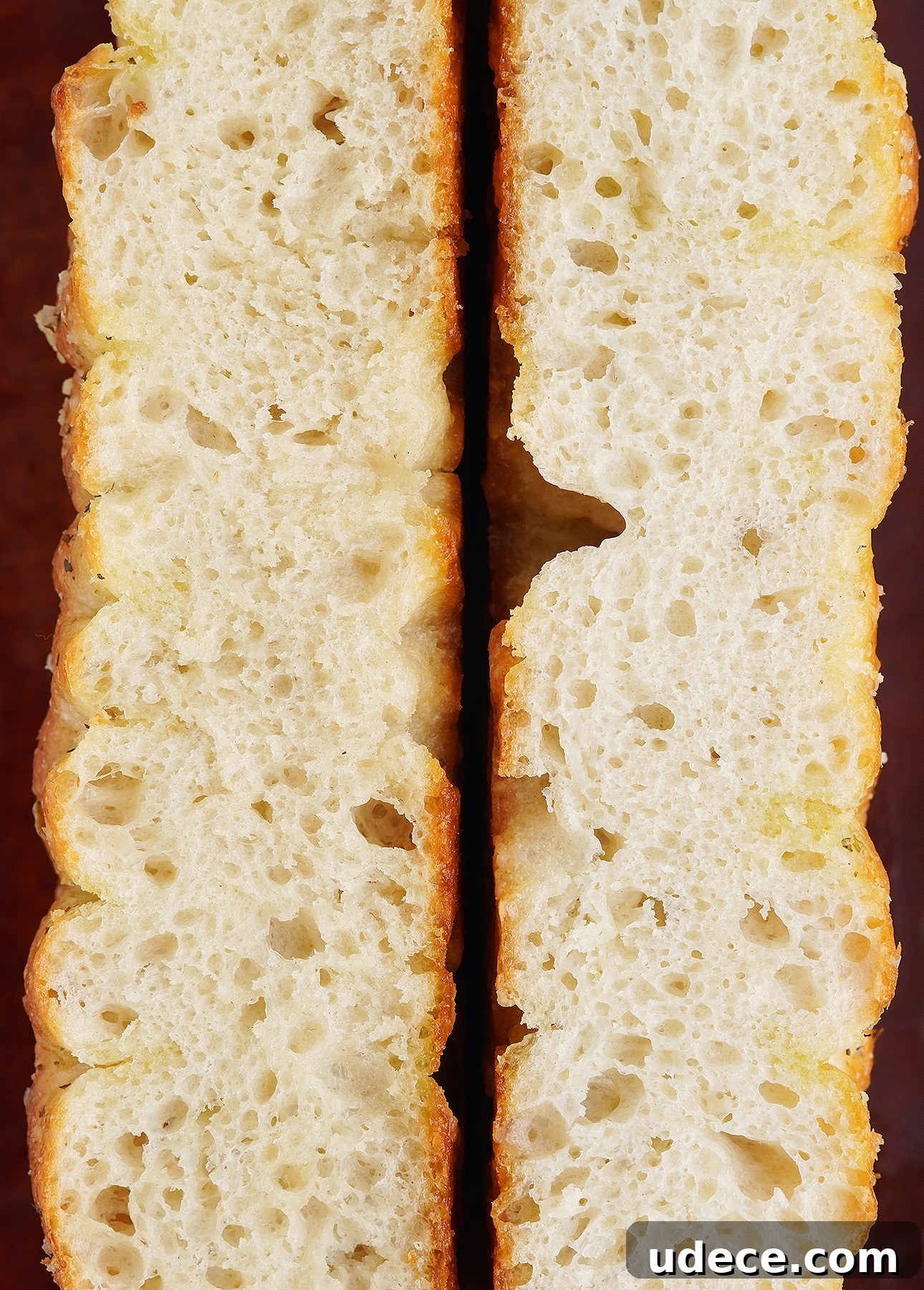
Different areas of Italy have their own takes: olive-studded focaccia in Puglia, rosemary-scented versions in Tuscany, and onion-topped focaccia around Bari. Despite regional differences, focaccia’s basic qualities—simplicity, olive oil richness, and a satisfying contrast of soft interior and crisp crust—remain consistent.
Key Ingredients for No-Knead Focaccia
The beauty of this focaccia lies in its straightforward ingredient list. With a few pantry staples you can create a flavorful bread with both crunch and tenderness. Here are the essentials:
1. Flour
All-purpose flour works well for this recipe. If you prefer a slightly chewier texture, Tipo 00 flour is a fine alternative. For a more rustic flavor, replace part of the flour with whole wheat.
2. Yeast
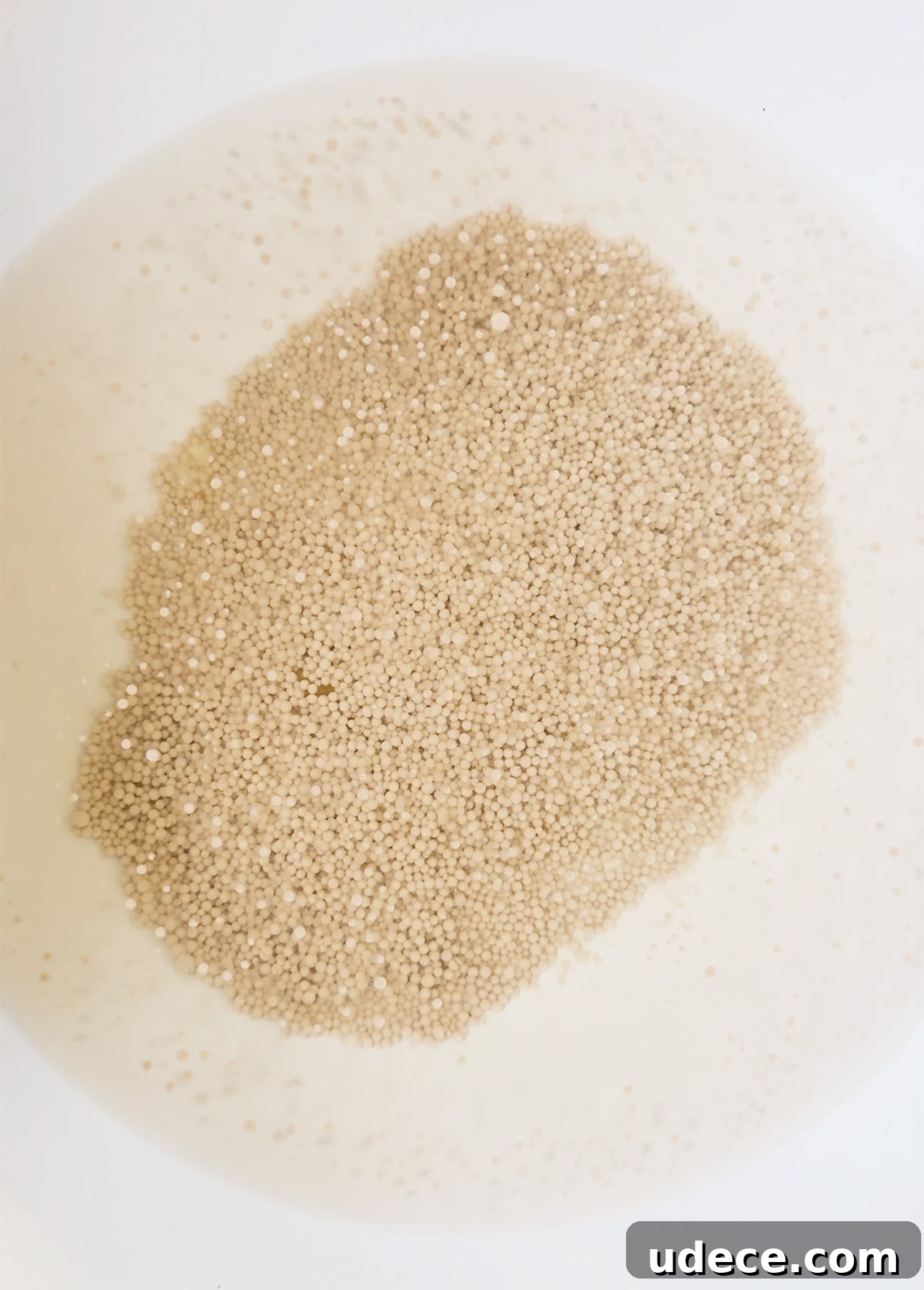
Active dry yeast provides the lift needed for a light, airy focaccia. Make sure the yeast is fresh—the dough should become foamy when the yeast is activated in warm water.
3. Water
Warm water (about 100°F / 37°C) activates the yeast. The water should feel nearly the same temperature as your skin when tested with a fingertip. Too-cold water won’t activate the yeast and too-hot water may kill it.
4. Salt
Salt seasons the dough and helps control fermentation. Kosher salt or fine sea salt works well in the dough, and flaky sea salt makes a lovely finishing touch on top.
5. Olive Oil
Extra-virgin olive oil is key to rich flavor and a crisp, golden crust. The dough is oiled liberally, and additional oil is drizzled before baking so it pools in the dimples and intensifies the bread’s character.
6. Honey
A small amount of honey helps bloom the yeast and adds a subtle sweetness that balances the savory notes. Granulated sugar can be used as a substitute if needed.
7. Butter
Butter is used to grease the pan. Although the dough contains plenty of olive oil, a buttered pan adds an extra-crispy bottom crust and helps the focaccia release cleanly from the pan after baking.
Helpful Tips for Perfect No-Knead Focaccia
These practical tips will help you get great results every time.
1. Verify Water Temperature
Use warm water—not hot—when activating the yeast. The ideal temperature is around body temperature so the yeast blooms without risk of damage.
2. Allow Adequate Rising Time
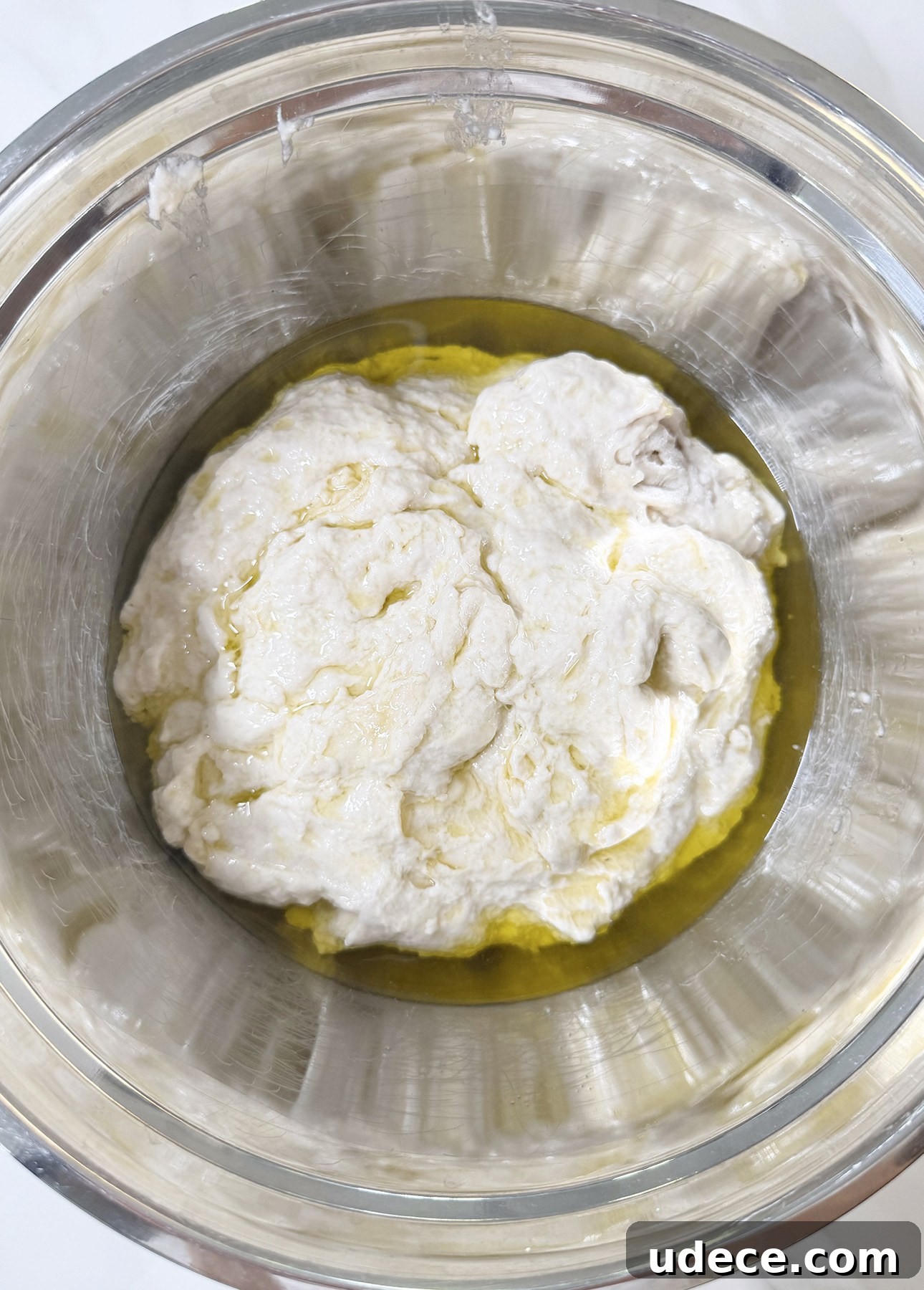
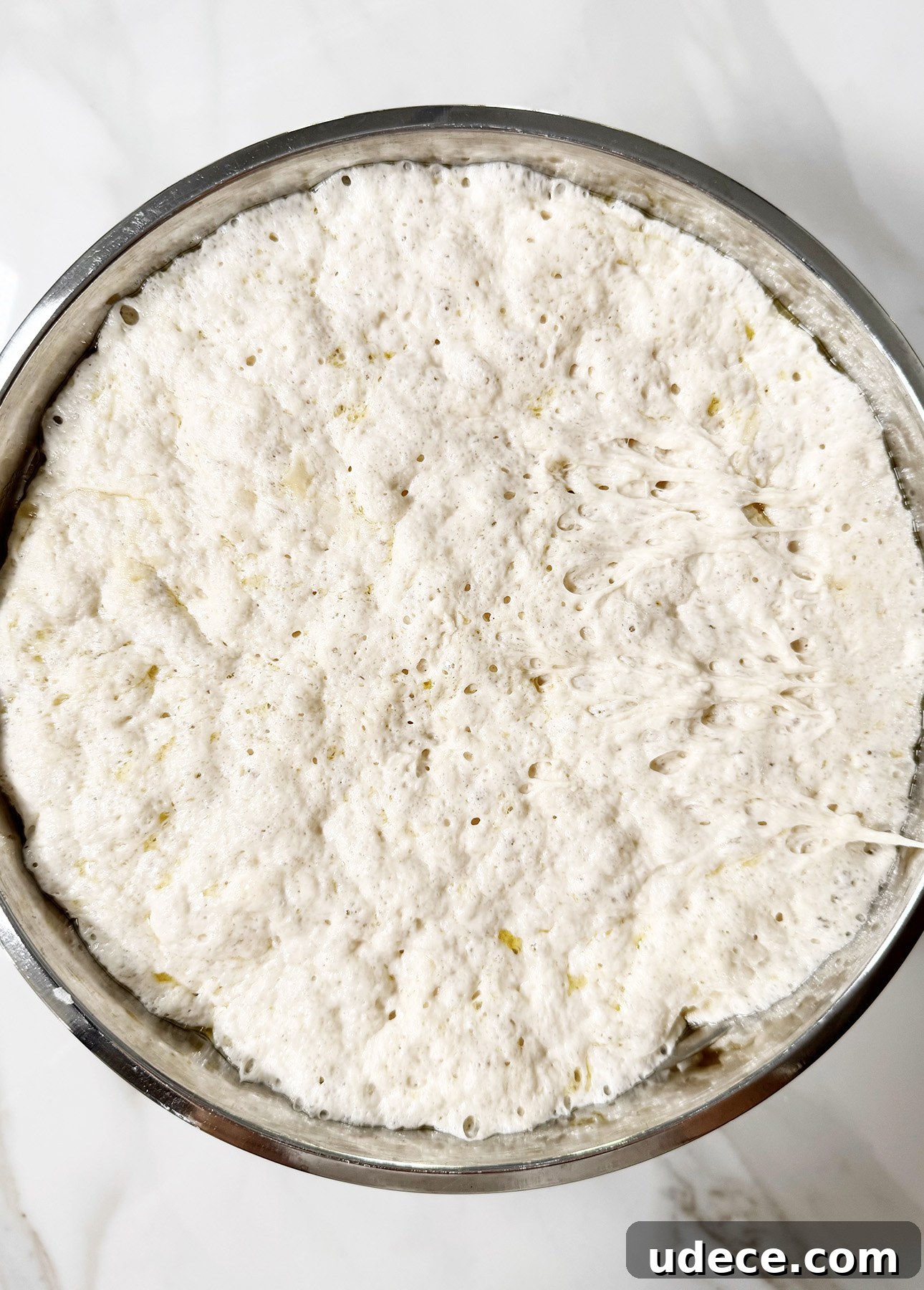
No-knead focaccia needs time to develop flavor and structure. Let the dough rise for about three hours at room temperature, or slow-rise overnight in the refrigerator for deeper flavor. After shaping in the pan, allow a second rise of 1½–2 hours until nearly doubled.
3. Two-Fork Folding
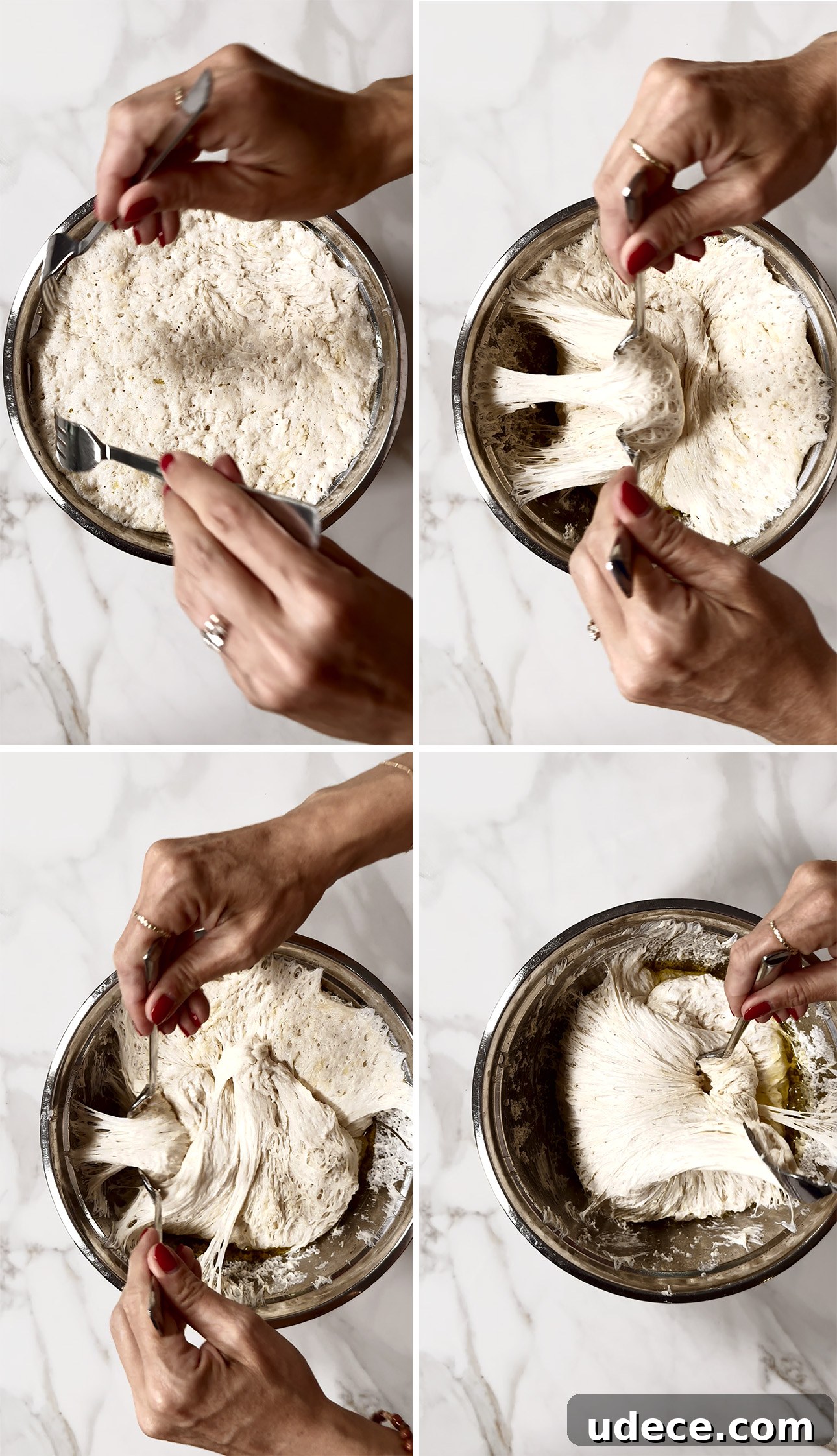
Instead of kneading, use two forks to fold the dough by lifting the edges into the center and turning the bowl. This builds gentle structure while preserving airiness.
4. Make Deep Dimples
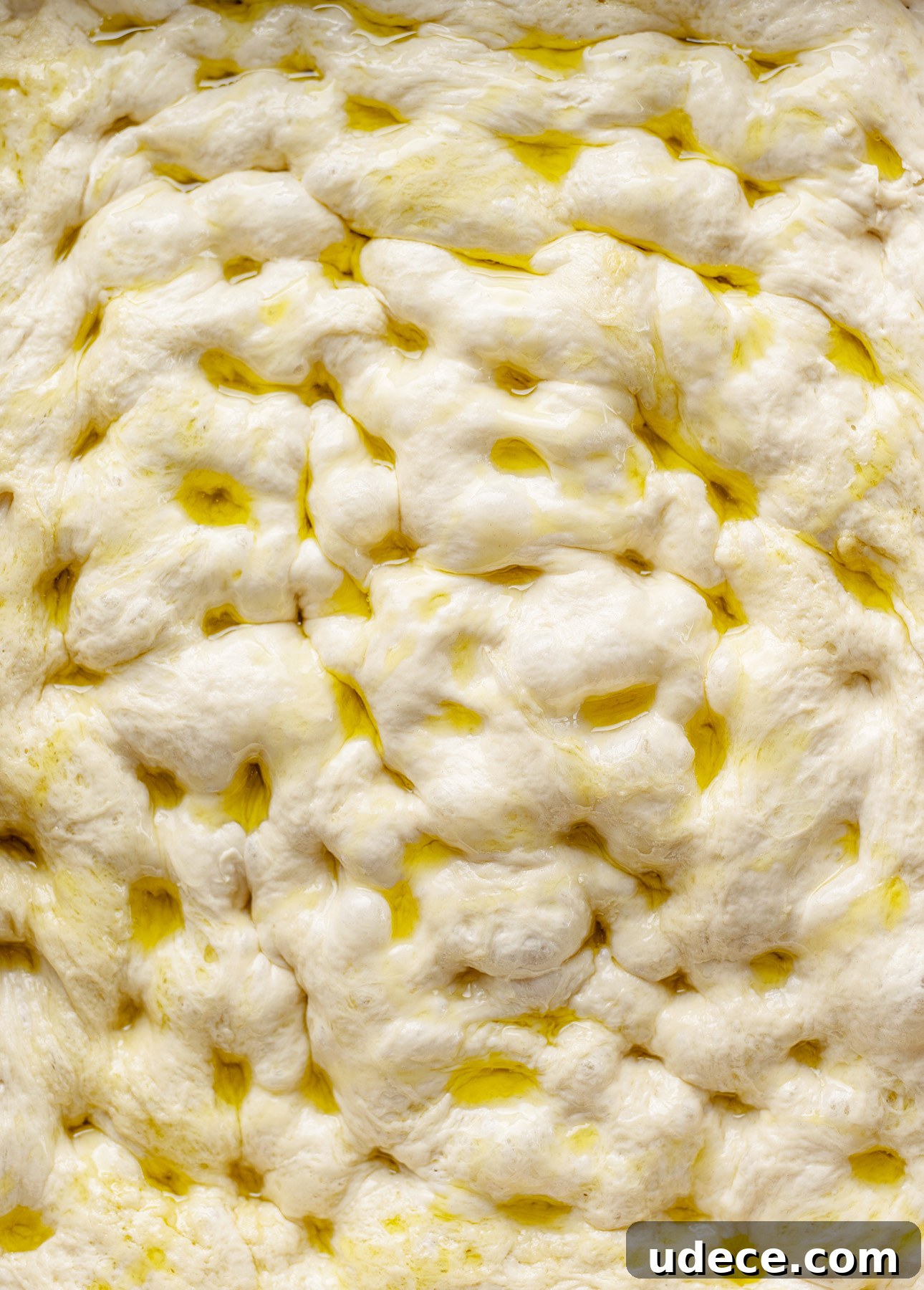
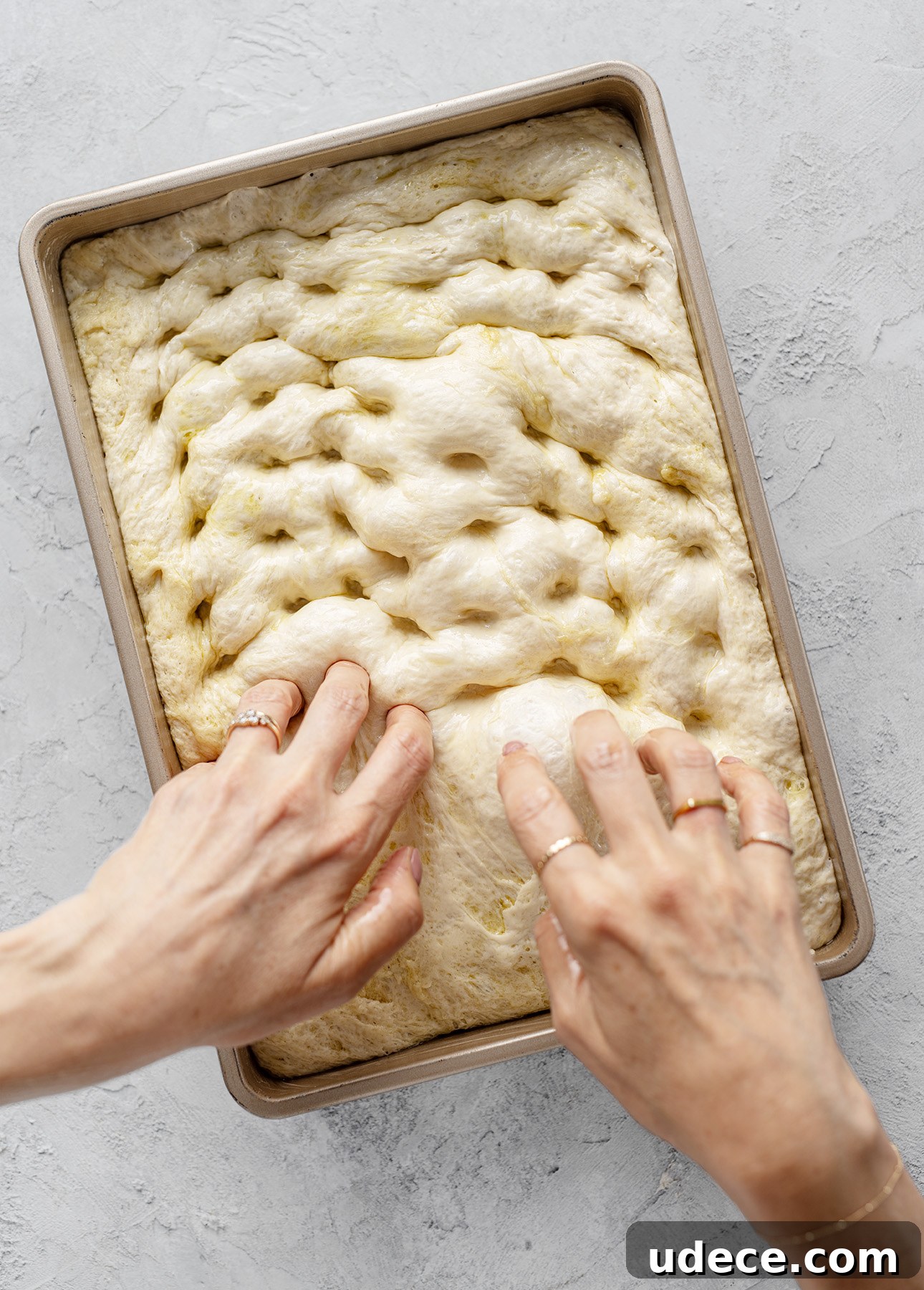
Use oiled fingers to press deep dimples across the dough right before baking. These pockets hold olive oil and any toppings, and they create focaccia’s distinctive texture.
5. Add Extra Olive Oil
Before baking, add a final drizzle of olive oil so it pools in the dimples. Also add a tablespoon of oil to the pan to promote a crisp bottom crust.
6. Finish Under the Broiler (Optional)
For an extra-crisp and golden top, briefly broil the focaccia for the last minute or two of baking, watching closely to avoid burning.
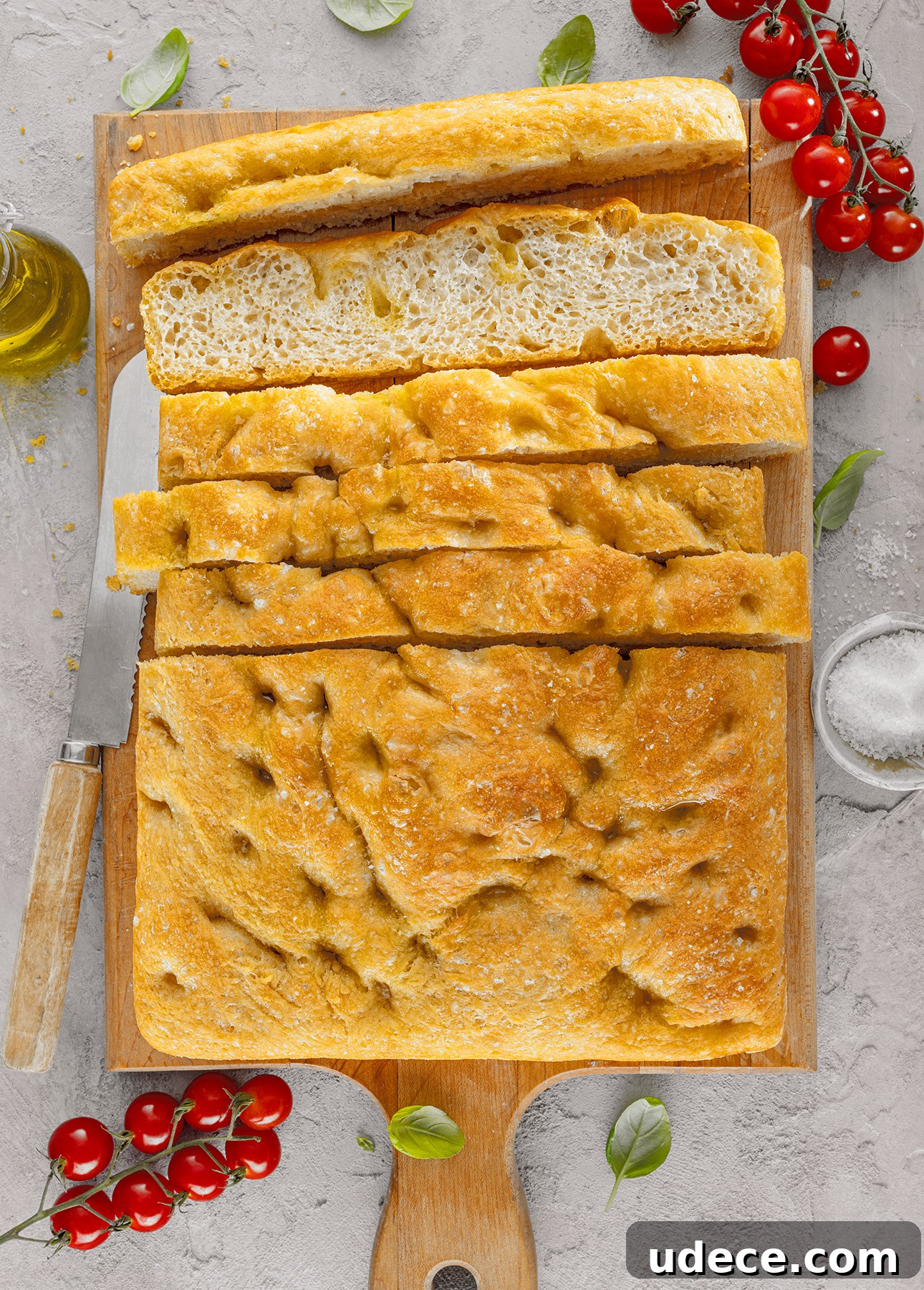
Creative Serving Ideas
This focaccia is adaptable for many uses. Here are a few ideas to enjoy it:
1. Classic Snack
Serve a warm slice plain to savor the contrast between the crisp crust and pillowy interior.
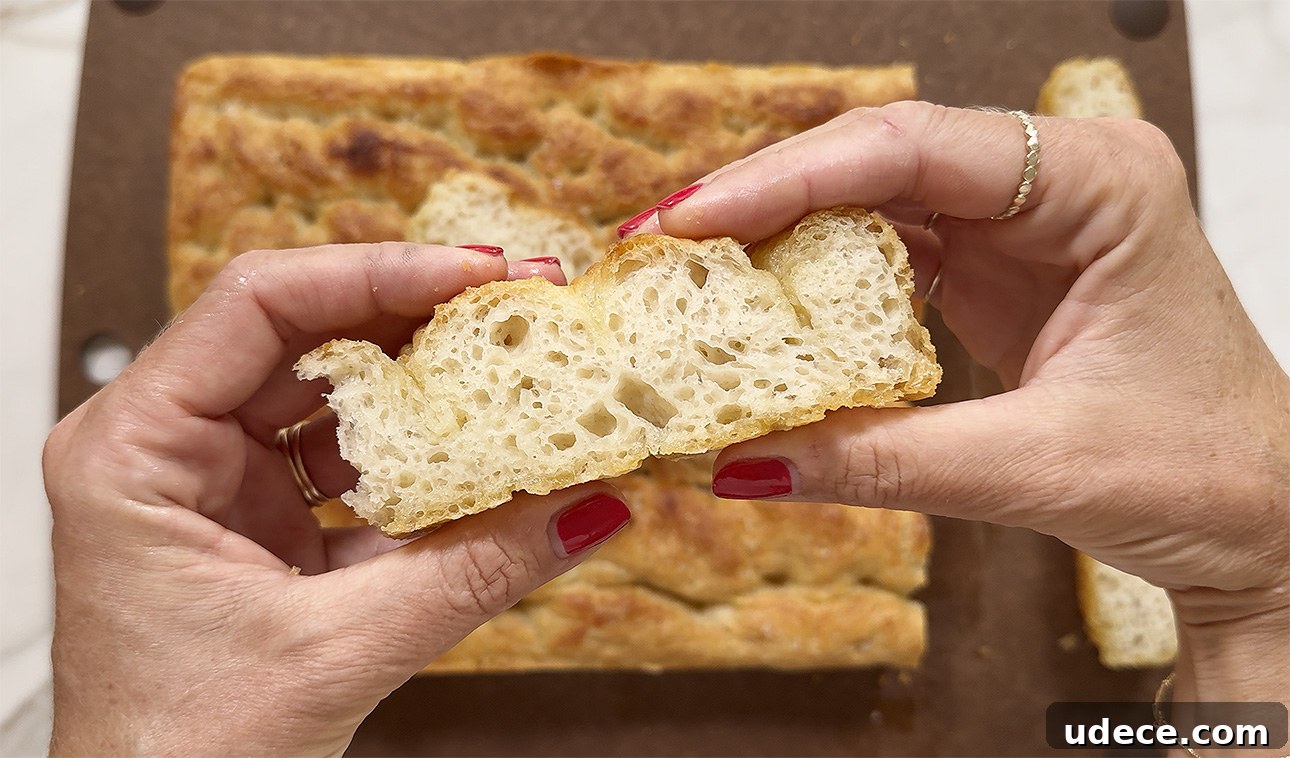
2. Sandwich Bread
Slice a thick focaccia horizontally and fill it with mozzarella, prosciutto, roasted vegetables, pesto, or any favorite sandwich fillings for a satisfying meal.
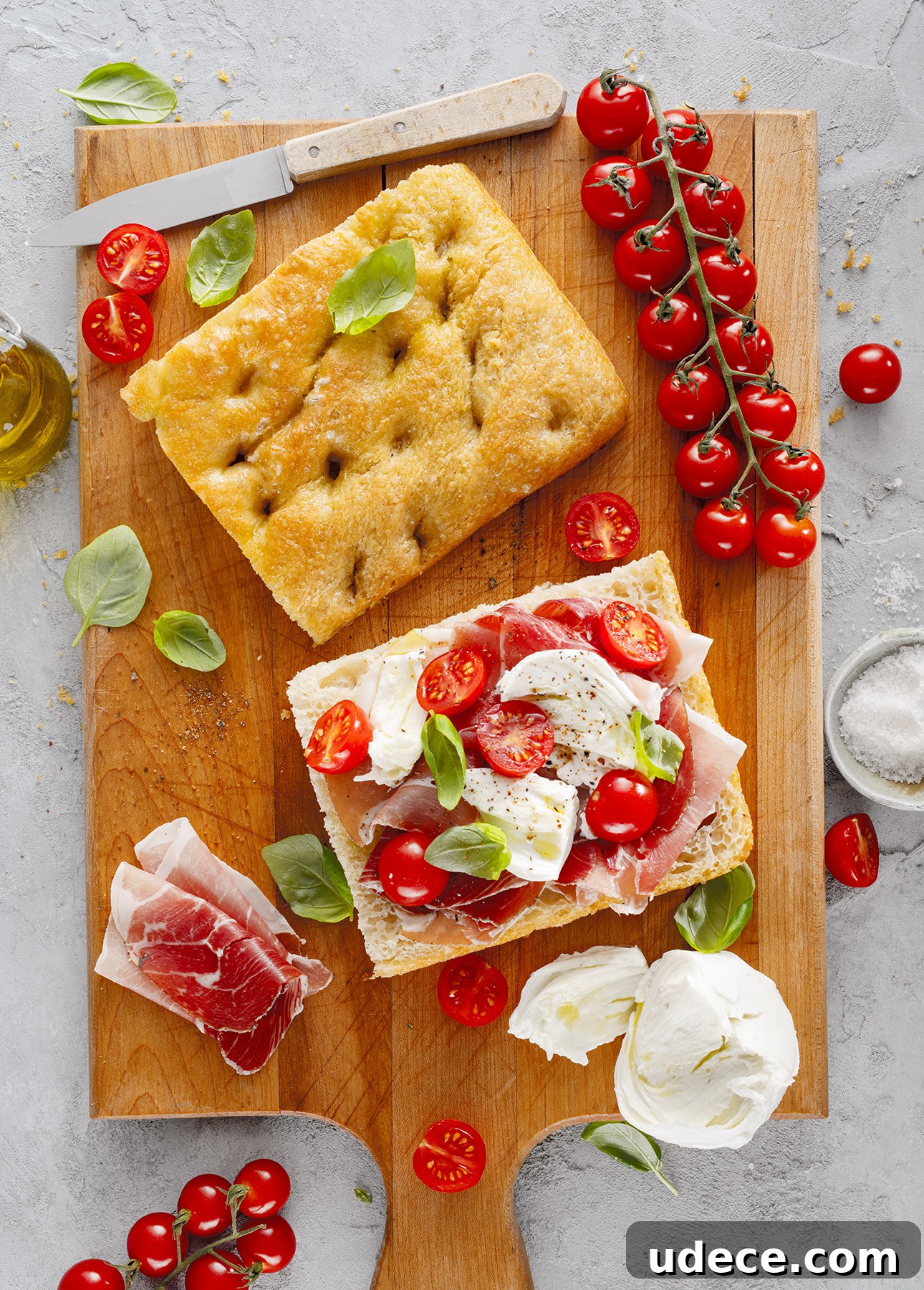
3. Topped Focaccia
Add toppings before baking: rosemary sprigs, cherry tomatoes, olives, garlic, or shaved Parmesan bake into the dough and enhance every bite.
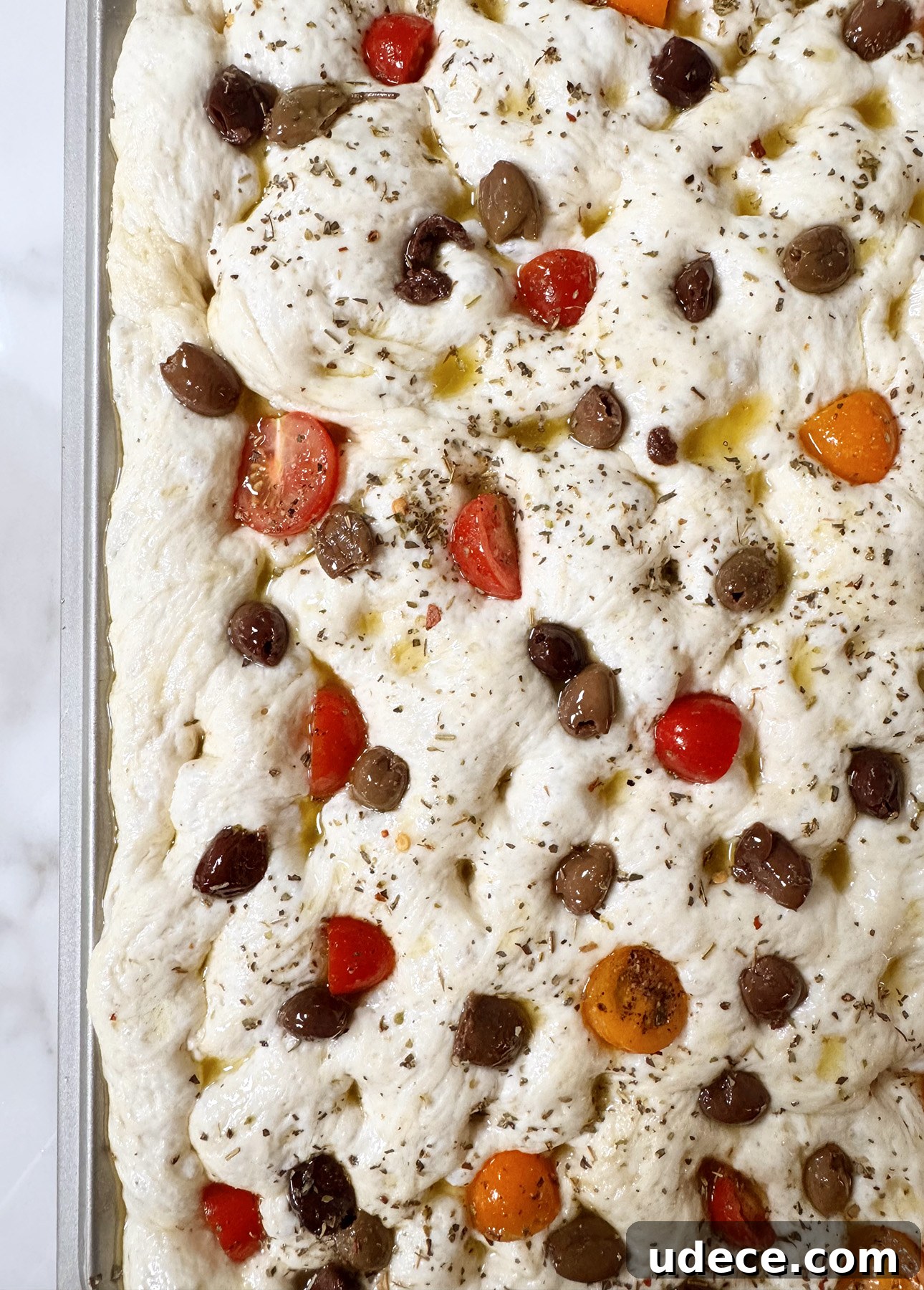
4. Pizza Alternative
Use a large sheet pan and top the focaccia with sauce and cheese to make a rustic, thick-crusted pizza-style bake.
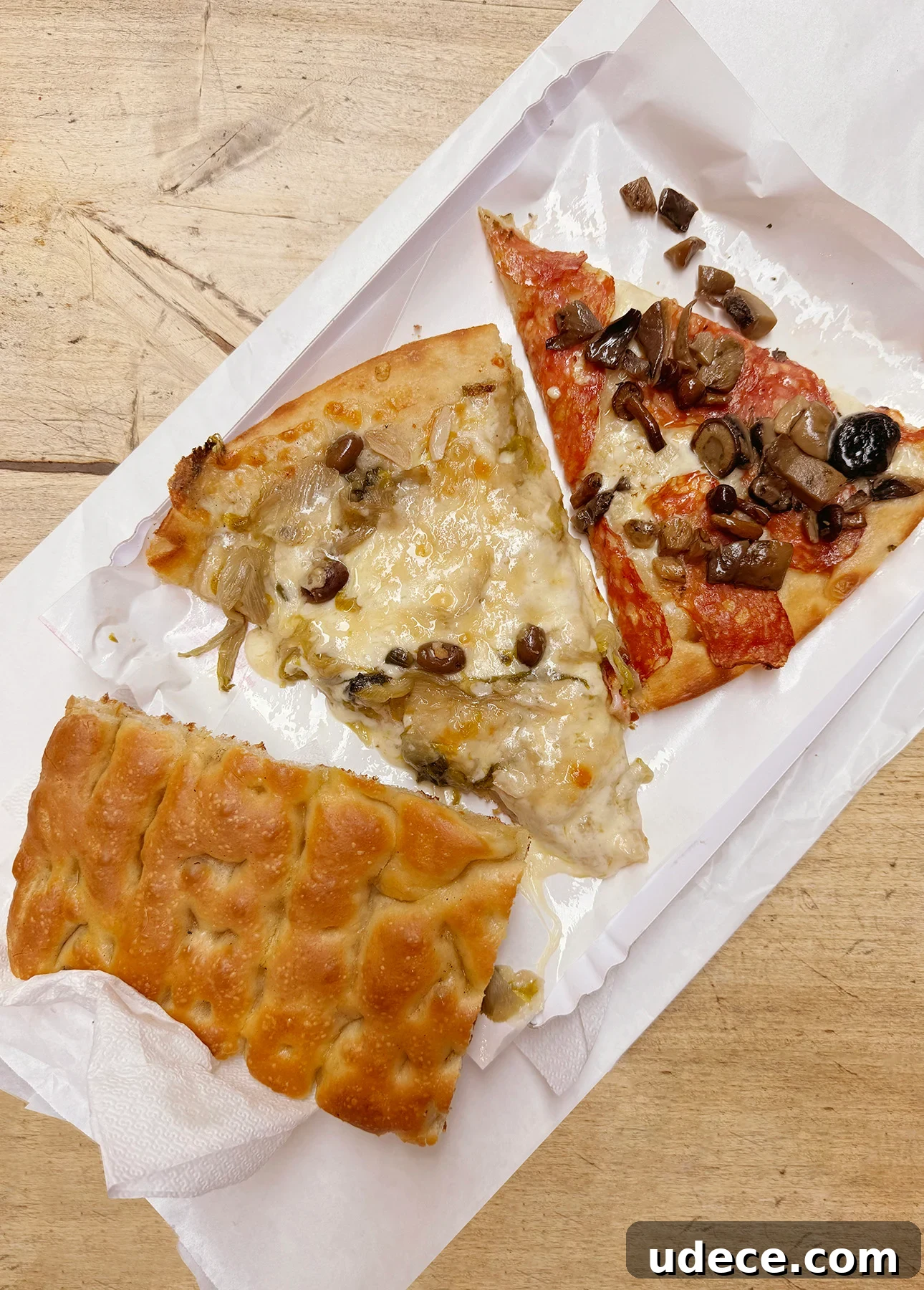
5. Soup Companion and Antipasto
Focaccia is ideal for dipping in soups or serving alongside an antipasto platter of cured meats, cheeses, olives, and marinated vegetables. Cut into squares for easy sharing.
Recipe Summary
Easy No-Knead Focaccia — Prep time about 15 minutes, bake about 25 minutes, total resting time roughly 4 hours including rises. Yields roughly 12 servings. This straightforward method produces a forgiving, flavorful focaccia with minimal effort.
Instructions (Condensed)
- Warm water to about 100°F / 37°C. Stir in honey and sprinkle yeast on top. Let bloom until foamy (about 5 minutes).
- Mix in flour and salt until a shaggy, slightly sticky dough forms.
- Coat a large bowl with olive oil, place the dough inside, turn to coat, and cover. Let rise 3 hours at room temperature or refrigerate overnight for a slow rise.
- Butter a 13 x 9-inch pan (or use a larger sheet for thinner focaccia). Using two forks, fold the dough in the bowl a few times to form a rough ball, then transfer to the prepared pan and scrape any oil over it.
- Gently stretch the dough in the pan, then let it rise uncovered in a warm spot until about doubled, 1½–2 hours.
- Preheat oven to 450°F / 230°C. Oil your fingers and dimple the dough all over, pressing down to the pan. Drizzle with extra-virgin olive oil and sprinkle flaky salt and any toppings you like.
- Bake until puffed and golden, about 25 minutes. Optionally broil for a minute or two for extra color. Cool on a wire rack for 10 minutes, remove from the pan, slice, and serve.
Disclosure Notice: This site participates in affiliate programs. Clicking affiliate links may generate commissions at no extra cost to you. This support helps create new content. Thank you.