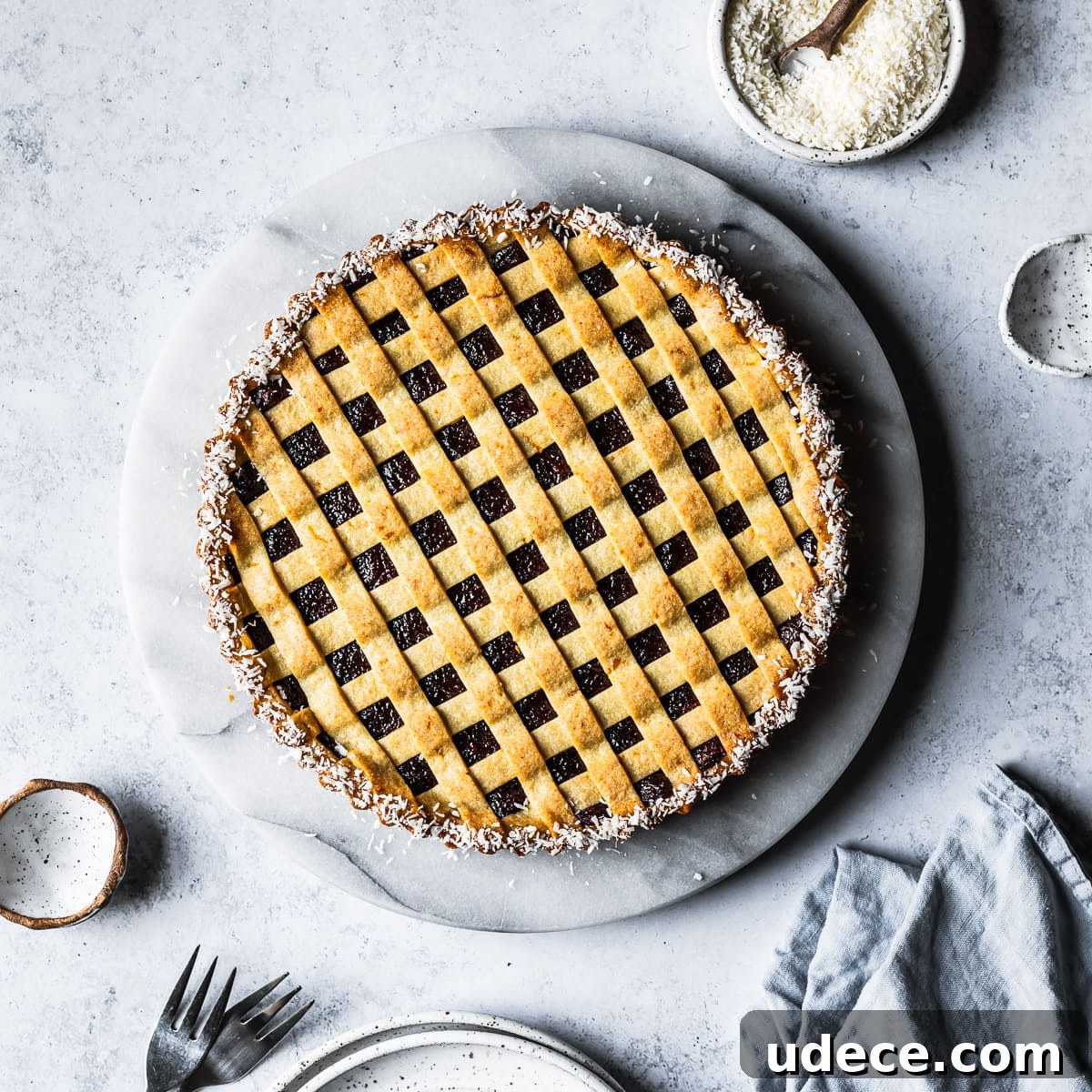
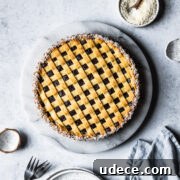
Pasta frola is a traditional Argentine quince tart with roots in Italian baking. It features a tender shortcrust pastry scented with orange zest, a thick, fruity quince jam filling, and a classic lattice top. Simple to assemble, this tart highlights quince’s unique apple-pear flavor in a handsome presentation.
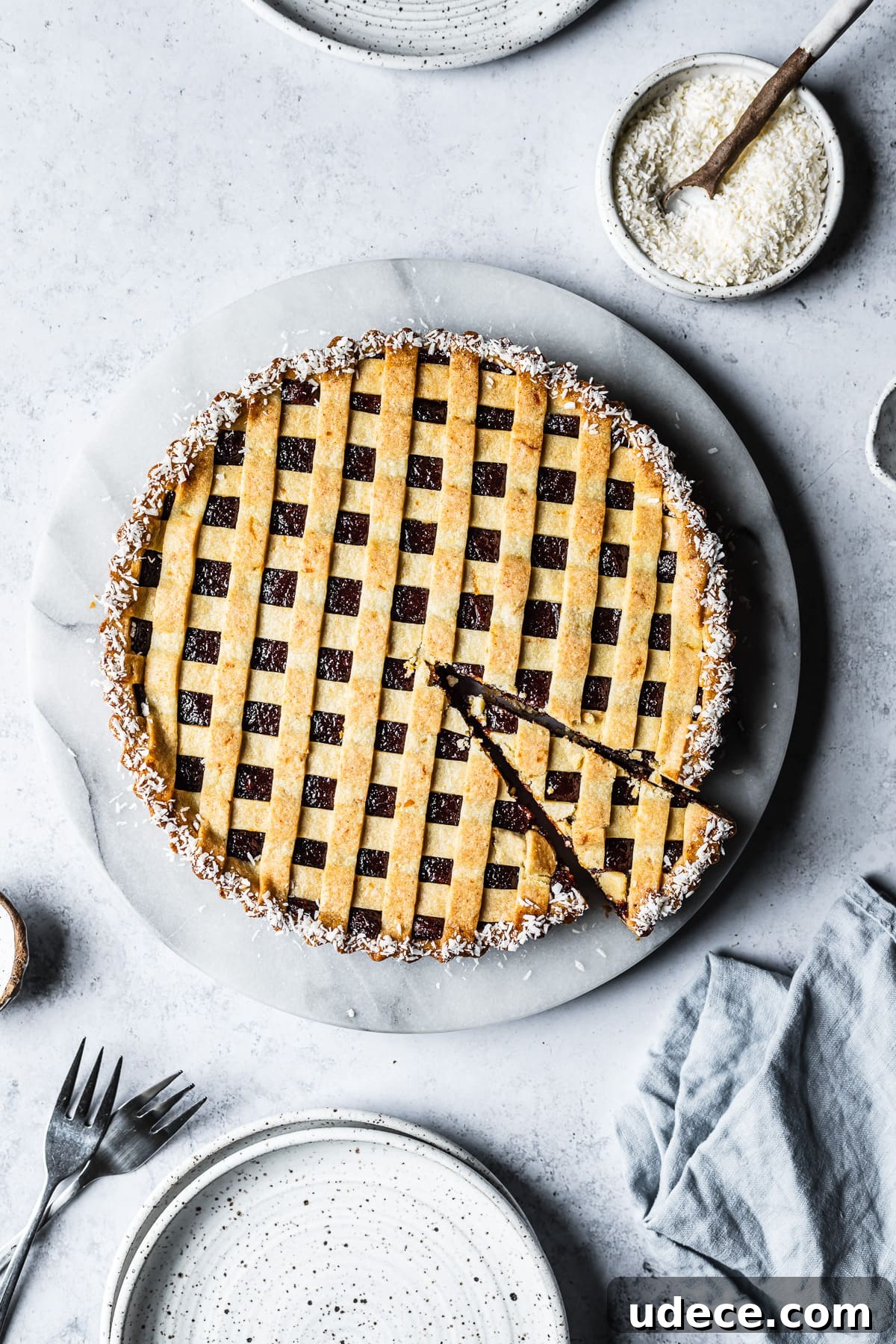
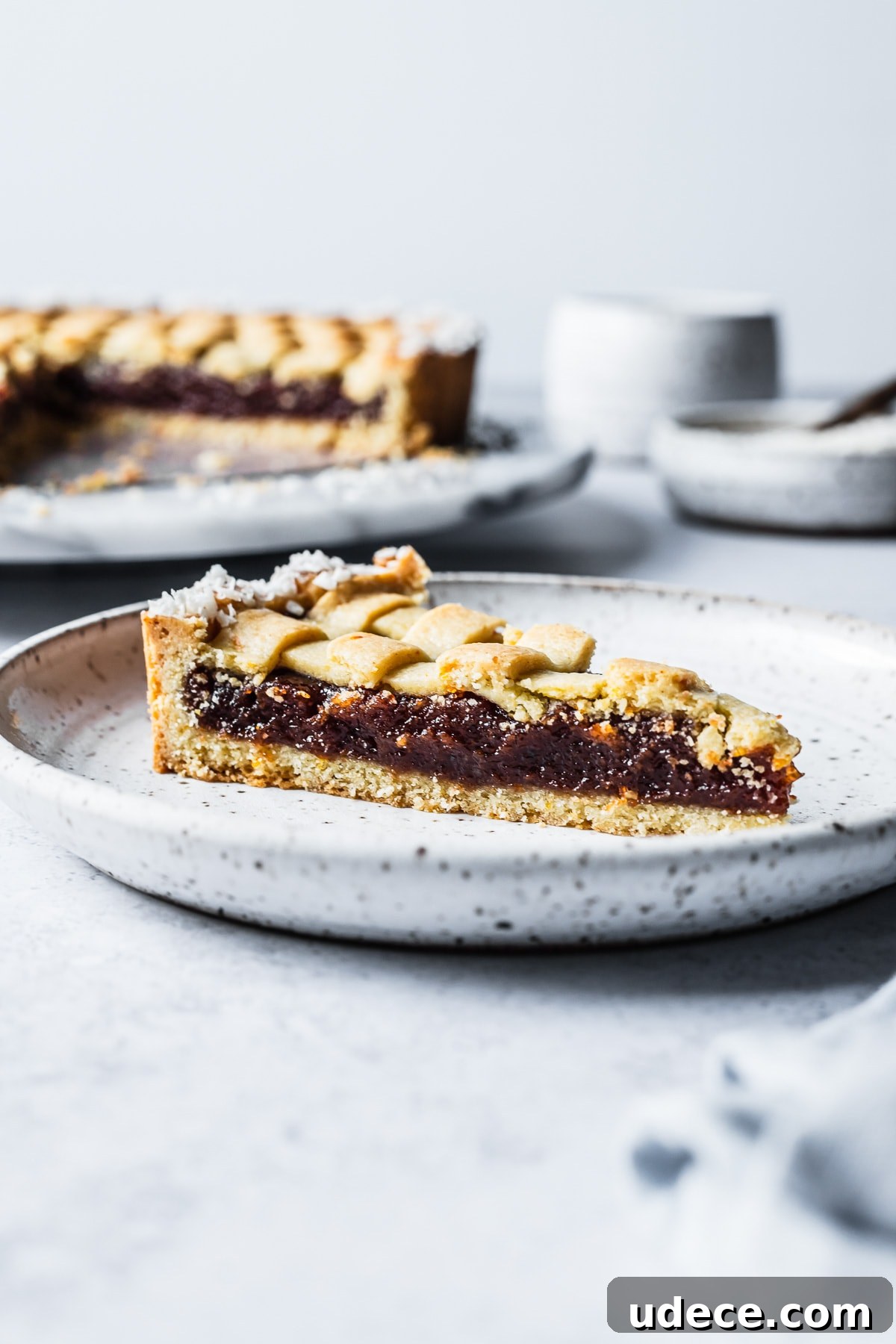
Pasta frola is an Argentine version of a jam-filled tart made with pasta frolla, the Italian shortcrust pastry used for crostata and other tarts. You’ll commonly find this dessert throughout Argentina, Uruguay and Paraguay. The shell is a buttery, slightly tender shortcrust dough, while the filling is most often quince paste (dulce de membrillo). Other regional variations use guava paste, sweet potato paste, strawberry jam or dulce de leche.
The decoration is typically a simple lattice of pastry strips set over the jam, similar to an Austrian Linzer torte but usually without nuts. This recipe grew from curiosity about concentrated fruit pastes used in other pastries and is a straightforward way to showcase quince paste with complementary orange flavors.
[feast_advanced_jump_to]
Ingredients
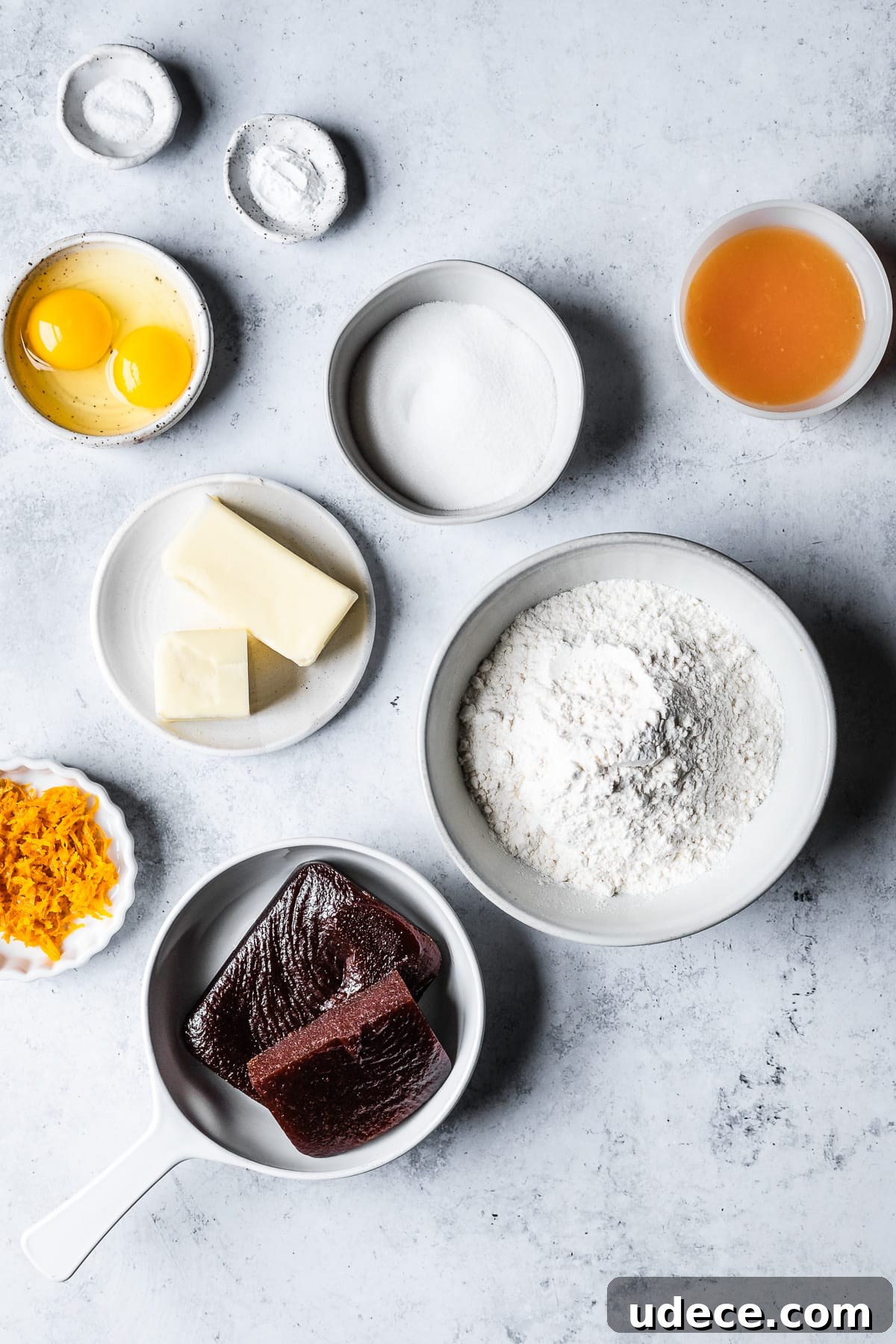
See the recipe card below for exact measurements. Key ingredients and notes:
- Unsalted butter – Use unsalted so you can control seasoning; bring to room temperature for easier creaming.
- Orange zest – Finely grated zest brightens the dough with citrus aroma and flavor.
- Baking powder – A small amount lightens the shortcrust so the texture is tender rather than dense.
- Eggs – Room-temperature eggs incorporate more evenly; chill briefly to separate yolk if needed.
- Quince paste – Typically sold in blocks (dulce de membrillo). If a package is smaller than called for, you can supplement with another jam or paste.
- Orange juice – Adds moisture and helps melt the quince paste into a spreadable consistency; water or orange liqueur also work.
- Orange marmalade – A thin glaze for the crust edge; any mild jam or honey can substitute.
- Finely shredded coconut – Optional decoration for the tart border; use unsweetened coconut and pulse larger flakes if needed.
Instructions
Follow these steps for a classic pasta frola. Photos in the recipe card illustrate each stage.
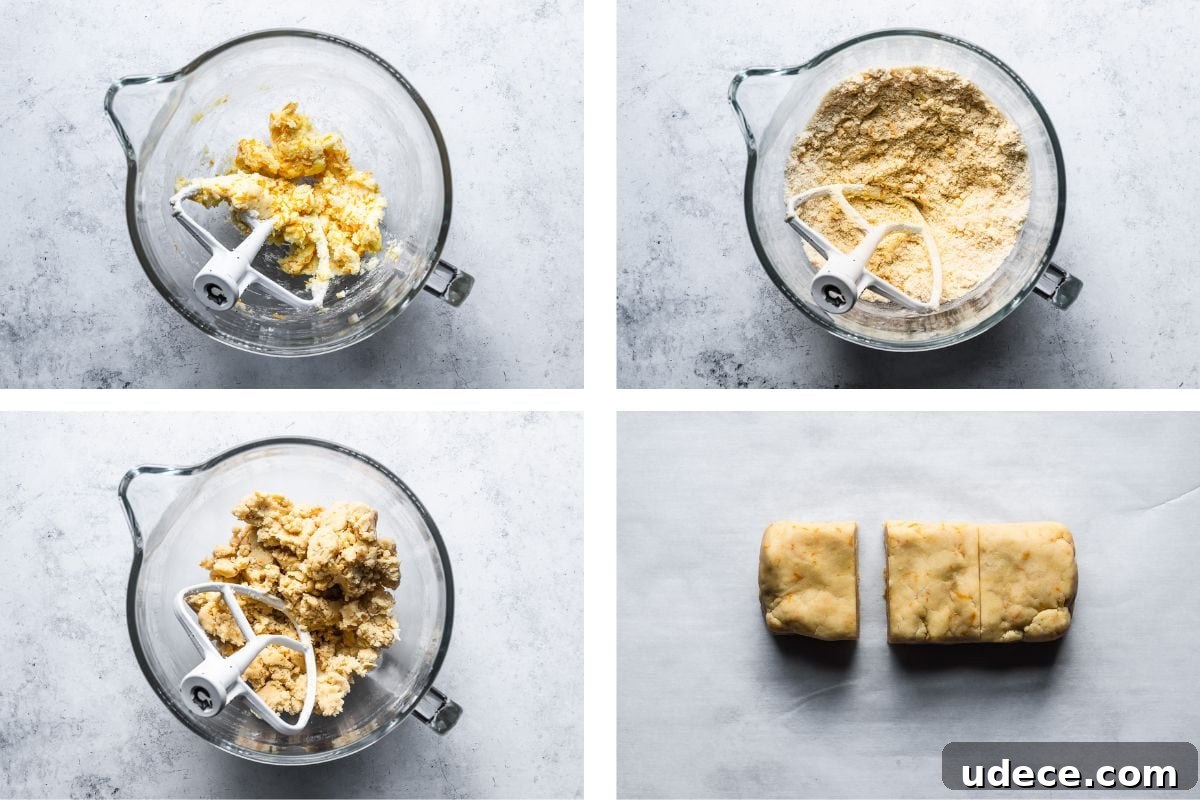
1. In a stand mixer fitted with the paddle, cream the butter and sugar on medium until combined. Add orange zest and mix briefly.
2. Add flour, salt and baking powder and mix on low until the mixture resembles fine sand. Scrape the bowl to ensure there are no large butter pieces.
3. Add the egg and egg yolk and mix on low only until the dough comes together. Avoid overmixing.
4. Shape the dough into a rectangle and divide it into two pieces: about two-thirds for the tart shell and one-third for the lattice and border. Flatten each piece into a disc and chill.
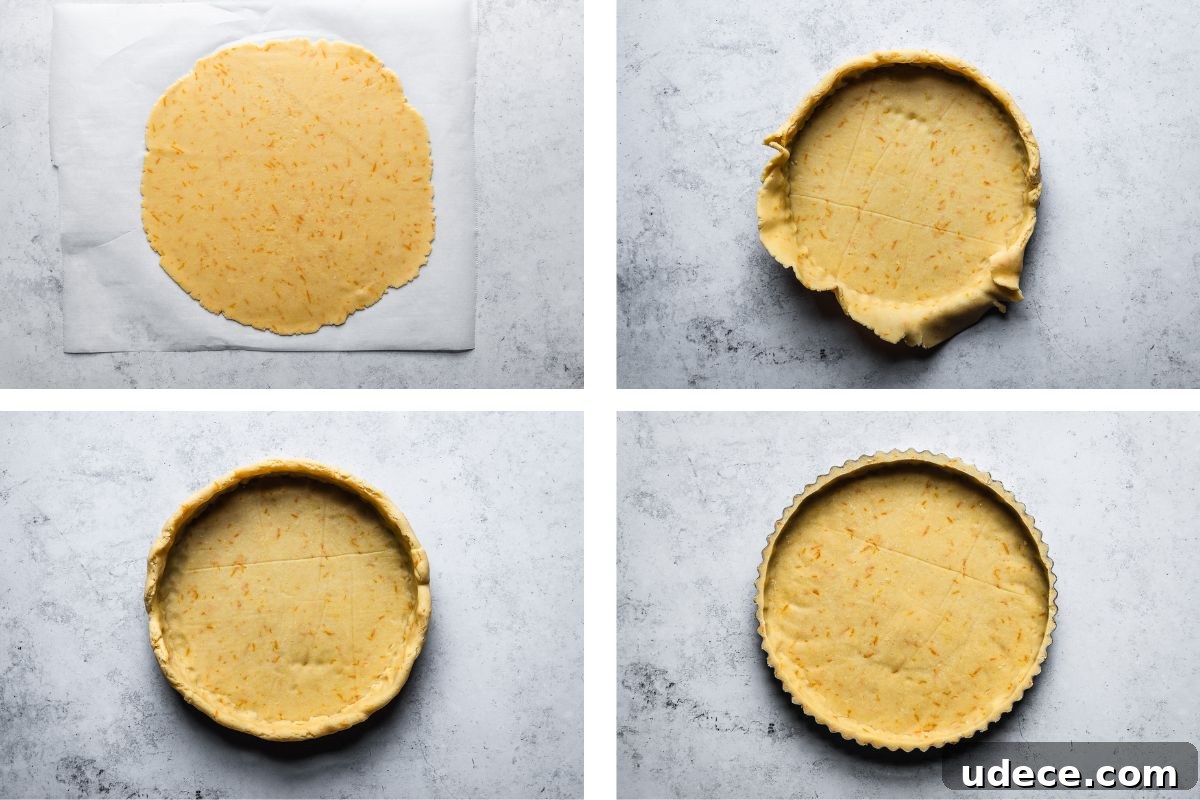
5. Roll the larger dough portion between parchment to about 1/8″ thick and large enough to cover your tart pan with an extra inch around the edge. Transfer it to the tart pan and press it into the sides, folding the overhang inward to create a slightly thicker edge. Chill the shell for at least 30 minutes, then trim the excess with a knife held parallel to your work surface.
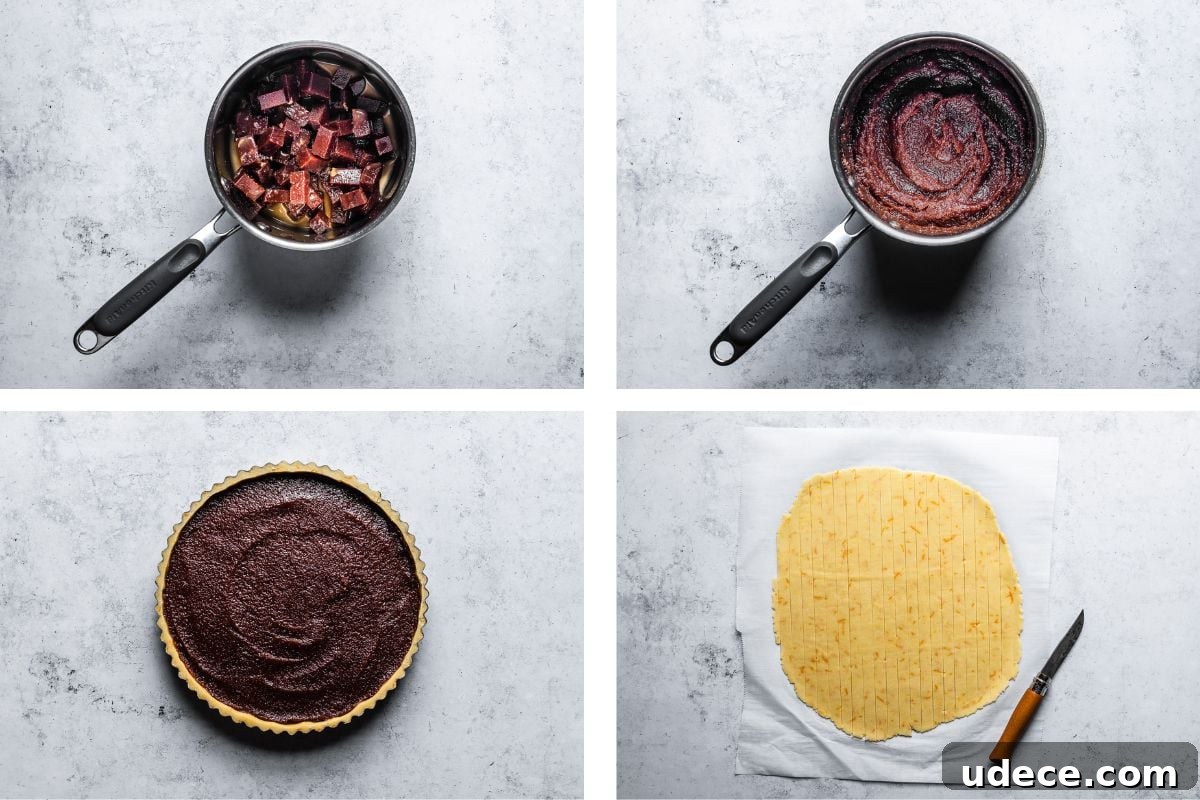
6. Chop the quince paste into small cubes and place them in a medium saucepan with orange juice. Warm over low heat, stirring and pressing the cubes until the mixture becomes smooth and jam-like. Remove from heat and let cool to room temperature.
7. When cool, spread the quince filling into the chilled tart shell and smooth the surface.
8. Roll the remaining dough between parchment, chill, then cut into long ½” strips for the lattice. Keep the strips cold so they hold their shape.
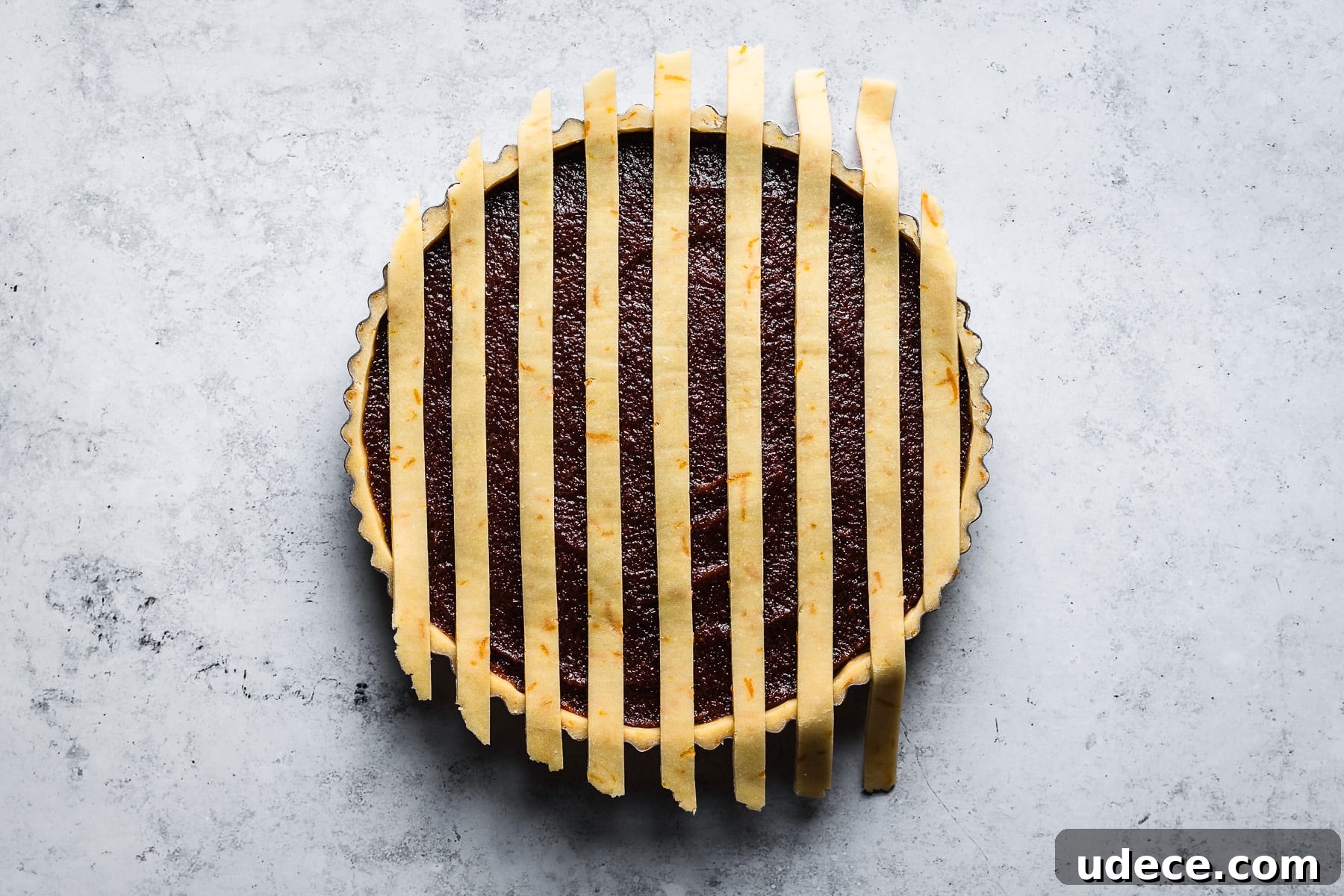
9. Lay half the strips across the tart in one direction, spaced about ½” apart, pressing the edges gently to seal. Trim overhangs. Rotate the tart and weave or lay the remaining strips perpendicular to form the lattice. Chill the assembled tart for 10 minutes.
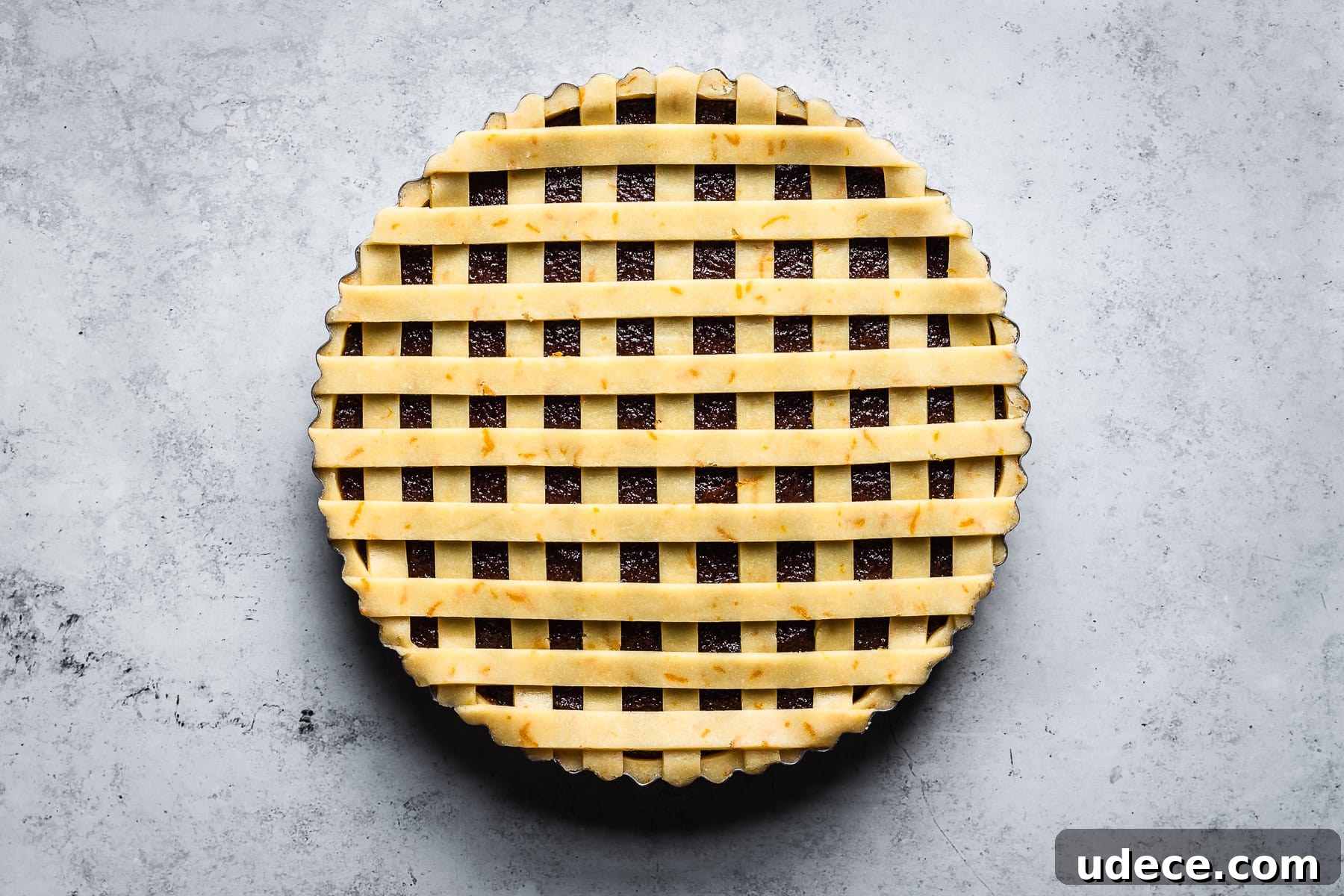
10. Preheat the oven to 350°F (177°C). Place a sheet pan on the middle rack and bake the tart for 40–45 minutes until the crust is evenly golden. Check at 30 minutes and shield the edges with foil or a pie shield if they brown too quickly.
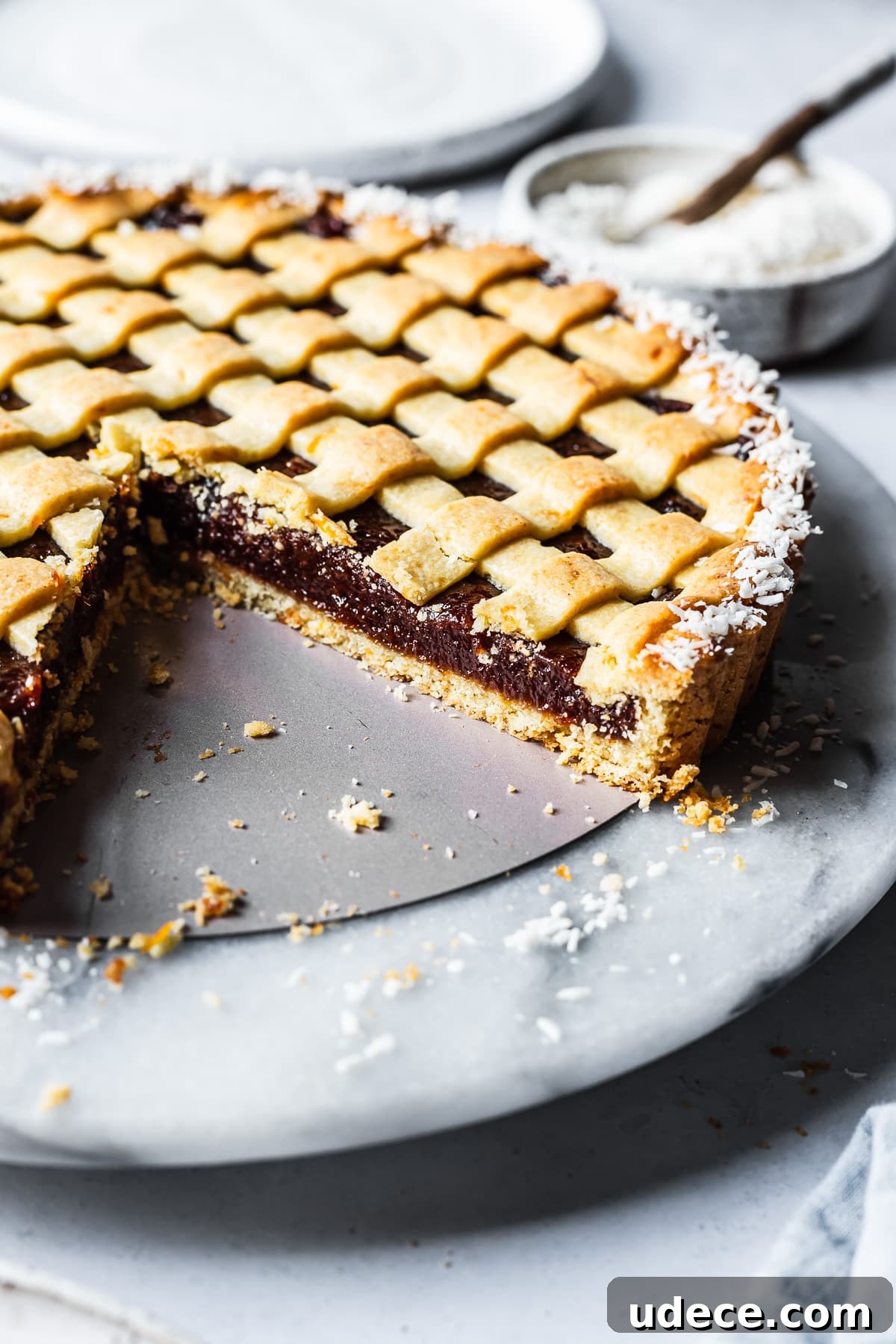
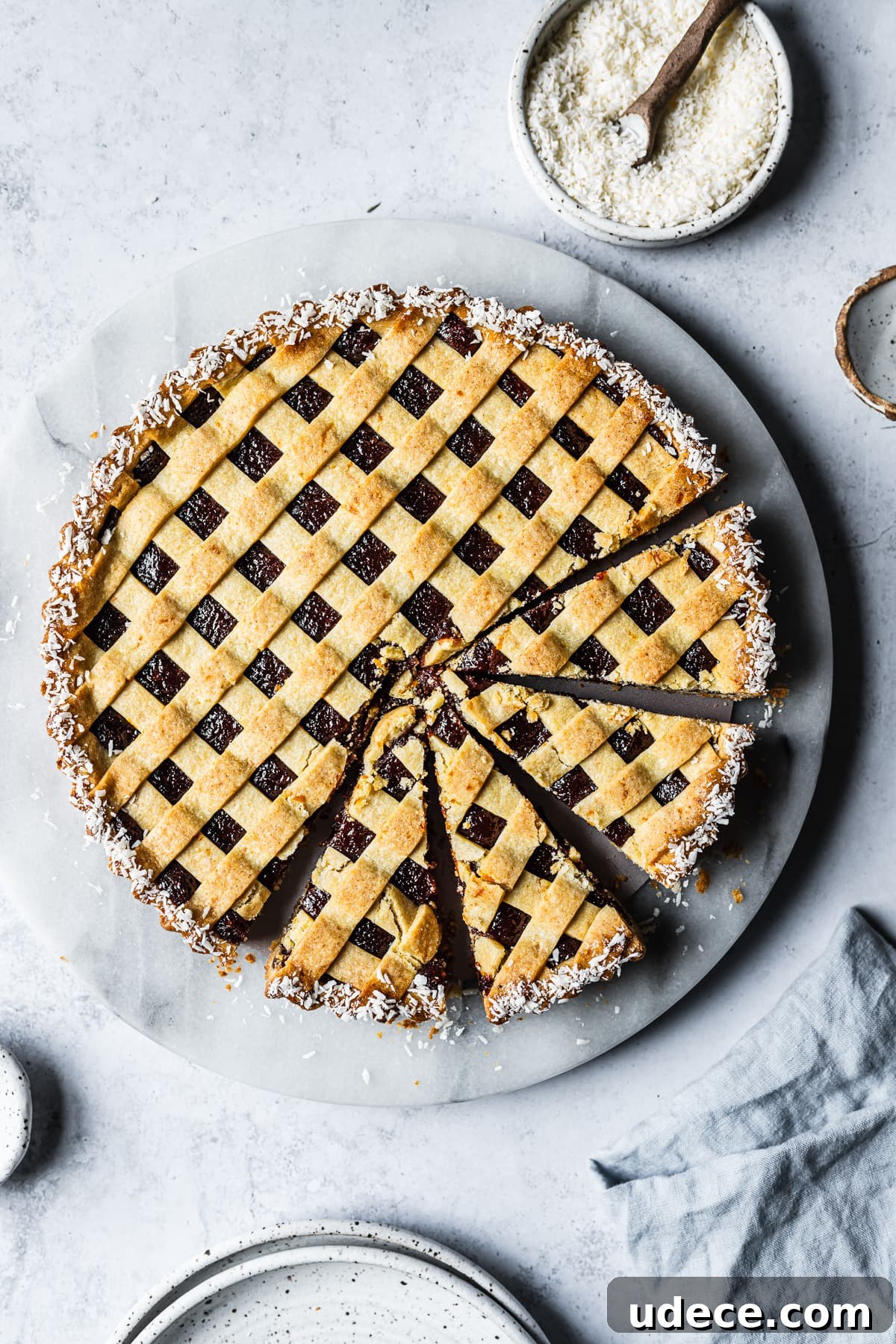
11. Cool on a rack. Once slightly cooled, brush the crust edge with orange marmalade and sprinkle the border with finely shredded coconut. Allow the tart to cool fully before slicing for best texture, or serve slightly warm if preferred.
Variations
Ideas to change the filling or flavor profile:
- Different jam: Substitute quince paste with a thick jam such as strawberry, raspberry, guava or pineapple for a different but equally delicious tart.
- Dulce de leche: In Argentina, dulce de leche is a popular alternative filling. A 14 ounce can (or homemade dulce de leche) will fill the tart nicely.
Equipment
Tart pan: A 9–10 inch tart pan with a removable base makes lining and removing the tart easier.
Pie shield or foil strips: Useful to protect the crust edge from over-browning during baking.
Sharp knife or pastry cutter: A ruler and sharp knife work well for cutting uniform lattice strips; a multi-wheel cutter can speed the process if you make lattices often.
Storage
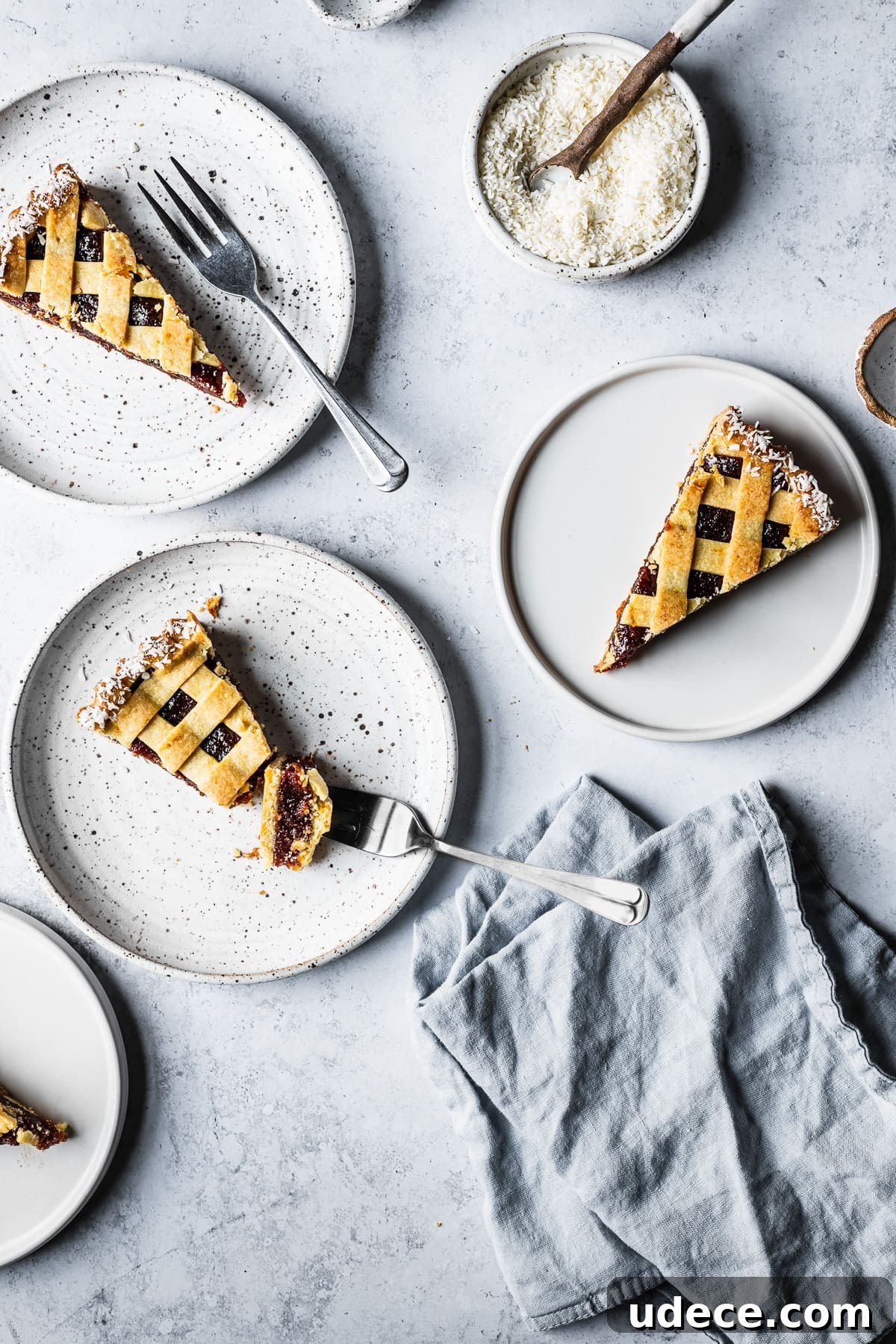
Store: Keep the whole tart or slices in an airtight container at room temperature for up to 3 days.
Freeze: Wrap well and freeze in an airtight container for up to 3 months. Thaw overnight in the refrigerator before serving.
Recipe Tips
- Make sure the quince filling is cool before adding it to the unbaked shell so the butter in the dough stays firm.
- Chill dough thoroughly when making lattice strips; cut after chilling and return strips to the fridge if they warm up while you work.
- Chill the fully assembled tart briefly before baking to prevent the pastry from becoming too soft and losing its shape.
Frequently asked questions
Quince is a firm, aromatic fruit that resembles a pear or apple. Raw quince is typically hard and tart, but when cooked it becomes sweet, tender and often develops a pinkish hue. Quince is commonly made into jams, jellies or a dense paste called dulce de membrillo, which is the classic filling for pasta frola. Cooked quince has a flavor often described as somewhere between apple and pear, with floral or guava-like notes.
They refer to similar jam tarts across cultures. Pasta frola is the Argentine name for a jam-filled tart made with Italian pasta frolla (shortcrust). In Greece, a similar tart became known as pasta flora. The desserts are closely related but names vary by language and region.
More tart recipes
-
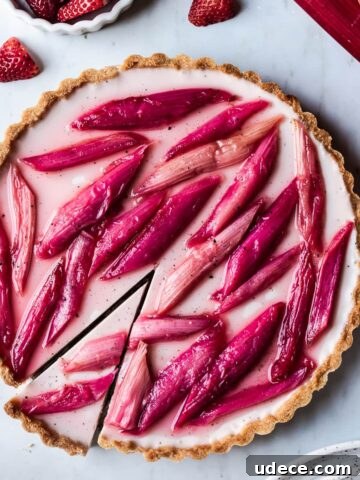
Strawberry Rhubarb Panna Cotta Tart
-
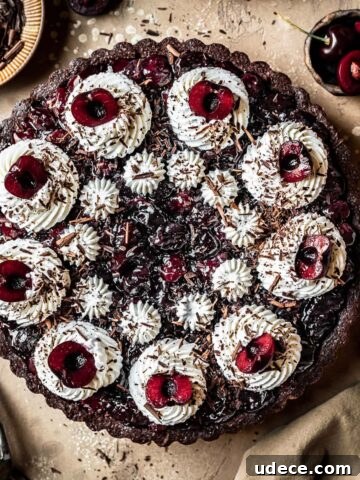
Chocolate Cherry Tart
-
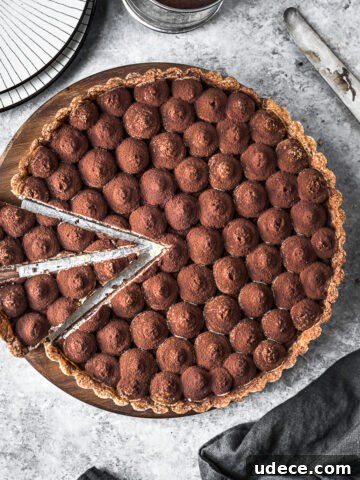
Chocolate Coffee Mascarpone Tart
-
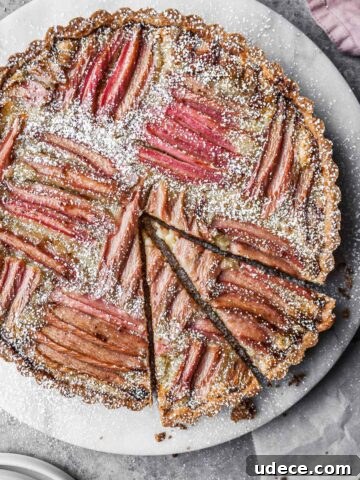
Rhubarb Frangipane Tart
Love this recipe? Please
leave a comment and star rating.
★★★★★ Your feedback and adaptations help other bakers!
📖 Recipe
Pasta Frola (Quince Tart)
INGREDIENTS
Pasta Frola Dough
- 170 grams (6 ounces) unsalted butter, room temperature
- 100 grams (½ cup) granulated sugar
- Zest of 1 orange
- 300 grams (2½ cups) all-purpose flour
- 2 grams (½ teaspoon) kosher salt
- 1 teaspoon baking powder
- 1 large egg
- 1 large egg yolk
Quince Paste Filling
- 500 grams (about 2 cups) quince paste
- 4 Tablespoons (¼ cup) orange juice
Decoration
- 20 grams (1 Tablespoon) orange marmalade or another jam/honey
- 15 grams (3 Tablespoons) unsweetened finely shredded coconut
INSTRUCTIONS
Pasta Frola Dough
- Cream butter and sugar, add orange zest.
- Add flour, salt and baking powder and mix until crumbly.
- Add egg and yolk; mix until just combined. Don’t overmix.
- Form dough, divide into two pieces (⅔ and ⅓), flatten and chill.
- Roll out the larger portion to cover a 9–10 inch tart pan, transfer, press into the pan and chill for 30 minutes. Trim the edge.
Quince Paste Filling
- Chop quince paste and warm with orange juice over low heat, stirring until it becomes smooth and jam-like. Cool to room temperature.
Tart Assembly
- Preheat oven to 350°F (177°C).
- Spread cooled quince filling in the chilled tart shell.
- Roll, cut and arrange lattice strips over the filling, trim edges and chill 10 minutes.
- Bake 40–45 minutes until golden, shielding edges if they brown too quickly.
- Cool on a rack, brush the crust with orange marmalade and sprinkle the border with shredded coconut. Cool fully before slicing or serve slightly warm.
EQUIPMENT
- Round tart pan with removable base