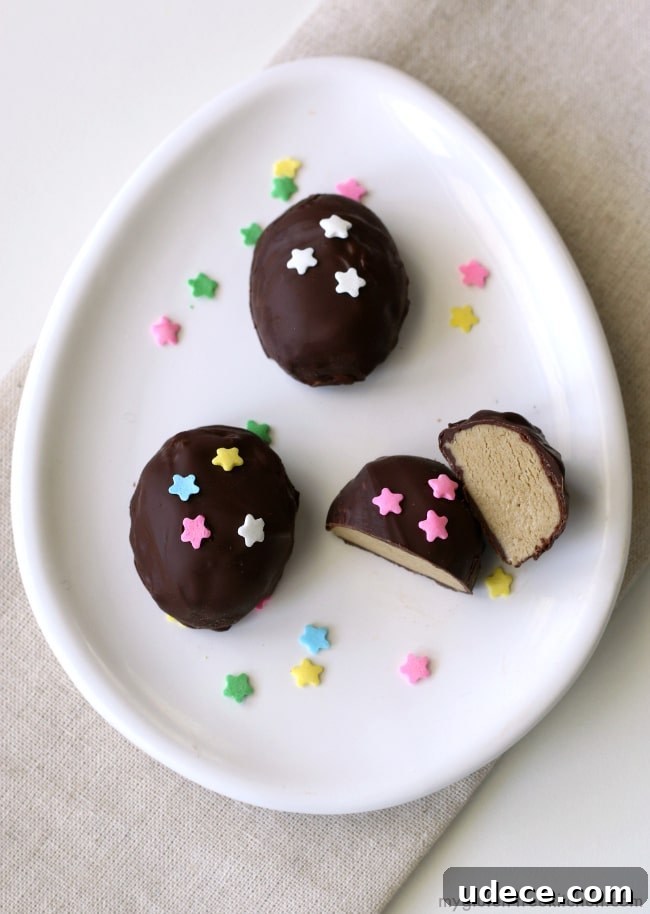
Have I got a fun treat to share with you today! These allergy-friendly chocolate Easter eggs are like the popular chocolate-covered peanut butter eggs, but adapted for common food allergies. Everyone deserves chocolate candy in their Easter basket, even those with allergies or intolerances. These are also ideal for class parties when a peanut-free treat is requested.
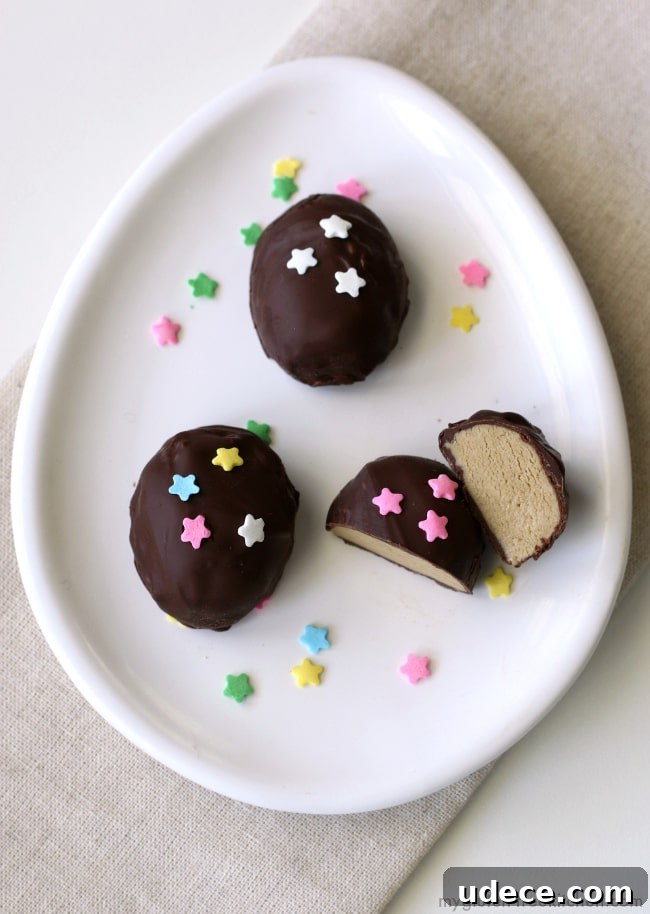
Finding safe gluten-free and allergy-friendly Easter candy can be challenging, especially for families managing celiac disease or multiple food allergies. Choices narrow quickly when you need treats free of the top eight allergens. That’s why this homemade Easter egg recipe is so useful — it gives you a simple, delicious option that many children can enjoy.
Parents, grandparents, and caregivers often make homemade treats for allergic children and sometimes for the entire classroom. This recipe is a crowd-pleaser at home or at school. These chocolate-covered eggs are gluten-free and free of dairy, tree nuts, peanuts, and soy when you choose appropriate ingredients.

Ingredient notes for these dairy-free, allergy-conscious chocolate eggs:
- Sunflower seed butter: To keep the recipe free of peanuts and tree nuts, sunflower seed butter is a great choice and works well here. If your household allows peanuts or tree nuts, you can swap in peanut butter or almond butter one-for-one.
- Powdered sugar: This filling uses powdered sugar for the familiar sweet, creamy texture. It’s a treat, so I haven’t suggested a substitute.
- Chocolate: I used Enjoy Life semi-sweet chocolate mega chunks because they’re free of the top eight allergens and certified gluten-free. They melt smoothly and taste great.
- Shortening: A small amount of shortening helps the chocolate glaze become shiny and coat evenly. I prefer organic vegetable shortening; coconut oil is another option if it’s safe for you.
- Sprinkles: Many retailers carry allergy-friendly sprinkles labeled for top-eight-free diets. I used star-shaped sprinkles, but nonpareils, colored sanding sugar, or small shapes work well for decorating.
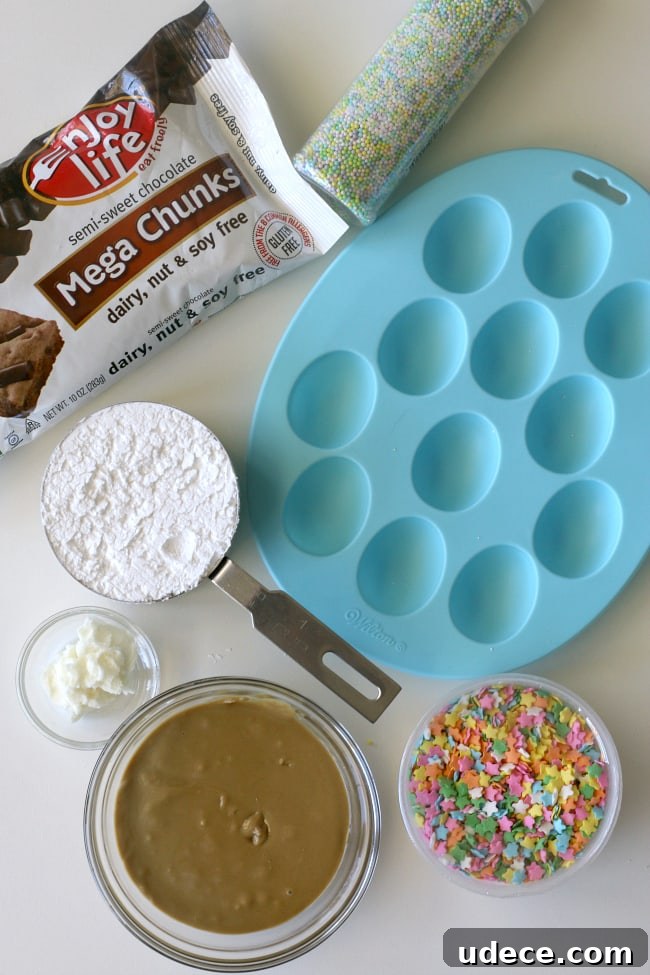
This is also a fun spring activity to do with kids. The egg theme works all spring long, not just at Easter. Kids enjoy mixing ingredients, pressing the filling into molds, dipping the shapes in chocolate, and adding sprinkles. It’s a simple project that yields a festive, shareable candy.
How to make this dairy-free Easter candy:
I’ve included photos so you can see what the filling should look like. It may seem soft at first, but that’s normal. Scoop one flat tablespoon of filling at a time and press each portion into the cavities of an Easter-egg-shaped silicone mold. The recipe yields 12 eggs, so a small silicone egg mold is perfect.
If you don’t have an egg mold, roll each tablespoon into a ball, flatten it, and shape it into an egg by hand. The chocolate coating hides small imperfections.
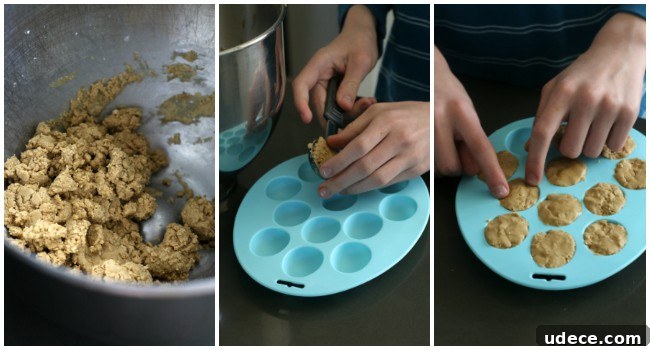
Freeze the shaped eggs in the silicone tray for at least 45 minutes so they are firm before dipping. If they’re still soft, they can fall apart when dipped. You can also chill them overnight if that fits your schedule.
When the eggs are firm, melt your allergy-friendly chocolate with a small amount of shortening until smooth and glossy. If the chocolate starts to harden while you work, warm it in the microwave for short 15–30 second intervals and stir until it’s dippable again. Using dipping tools or a fork helps coat the eggs evenly without getting chocolate all over your hands.
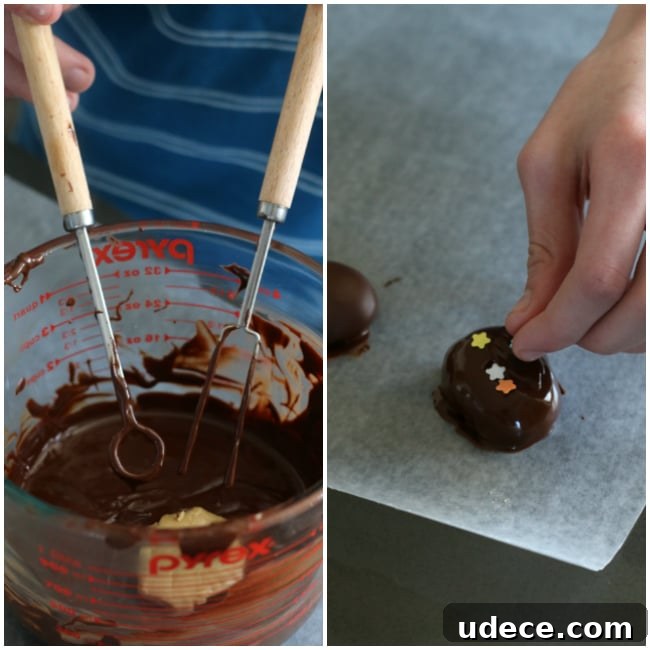
After dipping each egg, place it on wax paper to set. Add sprinkles after the chocolate has started to set but is still tacky so they stick. If using finer decorations like sanding sugar, let the chocolate set a bit longer so the sugar doesn’t sink into the surface.
Once the chocolate is fully set, transfer the eggs to a serving plate or package them in small boxes for gifting. Three eggs fit nicely in a small candy box — a perfect little gift for a child at Easter.
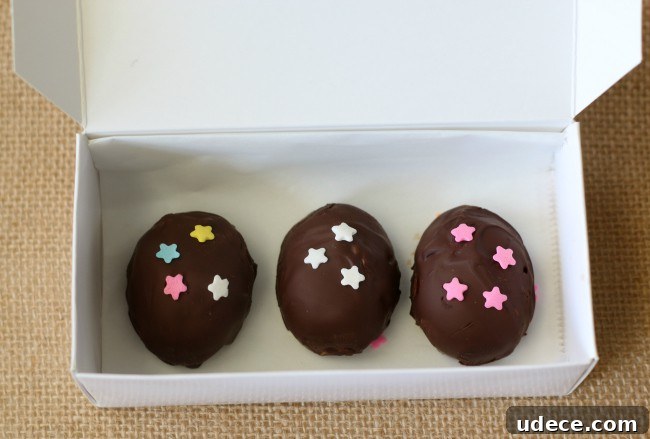
Store finished eggs at room temperature. Avoid long refrigeration, which can cause chocolate to discolor (it will still taste fine). If you need to transport them or take them to a class, chill for just 5–10 minutes prior to leaving so the chocolate is less likely to smear without risking discoloration.
This recipe makes 12 allergy-friendly chocolate eggs that are gluten-free and free of the top eight allergens when you use appropriate ingredients. Enjoy making and sharing them!
Allergy-friendly Chocolate Easter Eggs

Everyone deserves chocolate candy in their Easter basket, even those with food allergies and intolerances. These chocolate eggs are perfect for class parties.
1 hour
1 hour
Ingredients
- 1/2 cup sunflower seed butter*
- 1 Tbsp. organic shortening or butter alternative (room temp)
- 1 tsp. non-dairy milk
- 1 cup powdered sugar
- 1 cup Enjoy Life Semi-sweet Chocolate Mega Chunks
- 1 tsp. organic shortening
Instructions
- Mix the sunflower seed butter, organic shortening, and non-dairy milk with a mixer until well blended. Add half the powdered sugar and mix on low, then add the remaining powdered sugar and continue mixing until combined. Mixing the filling takes about 2 minutes.
- Scoop one flat tablespoon of filling at a time and press each piece into the egg cavities of a silicone mold. If you don’t have a mold, roll each tablespoon into a ball, flatten it, and shape by hand into an egg.
- Place the tray of shaped eggs in the freezer for at least 45 minutes or up to overnight so they are firm for dipping.
- When ready to dip, remove the eggs from the freezer and prepare the chocolate.
- In a microwave-safe bowl, combine the chocolate chunks and 1 tsp. organic shortening. Microwave in 30-second intervals, stirring between intervals, until smooth and glossy.
- Dip each sunflower butter egg into the melted chocolate, turning to coat. Place each coated egg on wax paper to set.
- Decorate with allergy-friendly sprinkles, nonpareils, or colored sanding sugar while the chocolate is still tacky.
- Store finished eggs at room temperature.
Notes
*If allergies allow, substitute peanut butter, almond butter, or hazelnut butter one-for-one. Keep finished eggs at room temperature; long refrigeration can cause chocolate discoloration. Chill for just 5–10 minutes before transporting to reduce mess without causing discoloration.

This recipe was inspired by a classic gluten-free peanut butter Easter egg recipe. If you don’t need peanut-free candy, peanut butter versions are a great option too.
Do you have a favorite treat you’d like help adapting to be gluten-free or free of more allergens? Tell me in the comments and I’ll try to help.