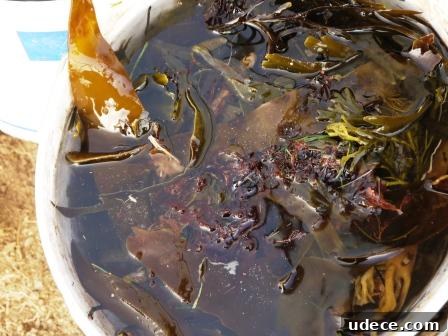
This is the perfect time of year to make fertilising teas for your vegetable garden. You can buy a commercial seaweed fertiliser, but if you’re planning a trip to the coast, bring a bucket or two of fresh seaweed home to make your own organic seaweed plant feed.
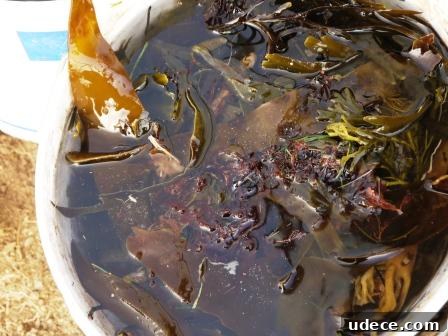
We live only a mile from the beach, and after recent strong winds I knew there would be plenty of fresh kelp washed ashore. Freshly stranded seaweed is best for making a nutrient-rich tea because it still contains lots of minerals and trace elements plants love.
First, collect fresh seaweed that has been washed up on the shoreline. If you must cut seaweed from rocks, avoid damaging the holdfast: leave at least a 3-inch stump so the plant can regrow. Avoid heavily decayed seaweed if possible; while half-rotted material will still add value, the fresher the better for nutrients.
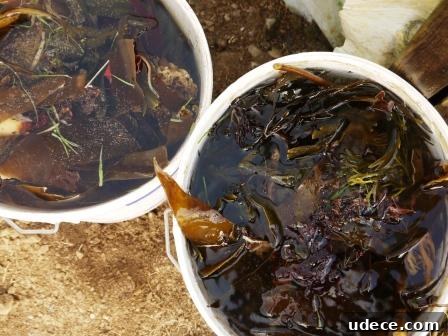
How to Make Seaweed Plant Food
At home, tip the seaweed onto the grass and rinse off as much sand and salt as you can with a hose or watering can. You probably won’t remove every grain of sand, but clean it as well as possible to reduce excess salt in the final feed.
Return the rinsed seaweed to one or two buckets, fill them with water and leave the seaweed to soak. If the buckets are left outside, use a loose lid to keep rain from diluting the infusion. I keep mine in a polytunnel at first, though be aware the soaking mixture will become quite smelly after a while, so choose a well-ventilated location.
Stir the mixture occasionally with a stick to help extraction. You can start using the tea after a couple of weeks, but strength and richness improve if you leave it for a month or two. The longer it brews (within reason), the more potent the feed becomes.
The concentrated tea will be too strong to apply directly. Dilute it at roughly 10:1—ten parts water to one part seaweed tea—before adding it to a watering can for feeding plants. This dilution gives a gentle boost of nutrients without risking burn or salt stress.
When one batch is finished you can reuse the same seaweed for a second, weaker brew. After two batches the nutrient content will be low, and the spent seaweed makes excellent compost material. Rinse it into the compost heap and, if you can, head back to the shore to collect fresh material for more plant feed.
Using homemade seaweed tea is an economical, organic way to support healthy growth in vegetables and other garden plants. It supplies trace elements, stimulates soil biology and complements a balanced feeding regime throughout the growing season.