
These Easter cookies are buttery with a tender, slightly soft crumb and are decorated with a simple icing made from evaporated oat milk and natural colorings. They’re easy to make and kid-friendly—perfect for spring baking and holiday decorating.

Thank you to Nature’s Charm for partnering on this recipe. All opinions are my own.
Originally published April 10, 2022; updated with new photos and details March 7, 2024.
Ingredients
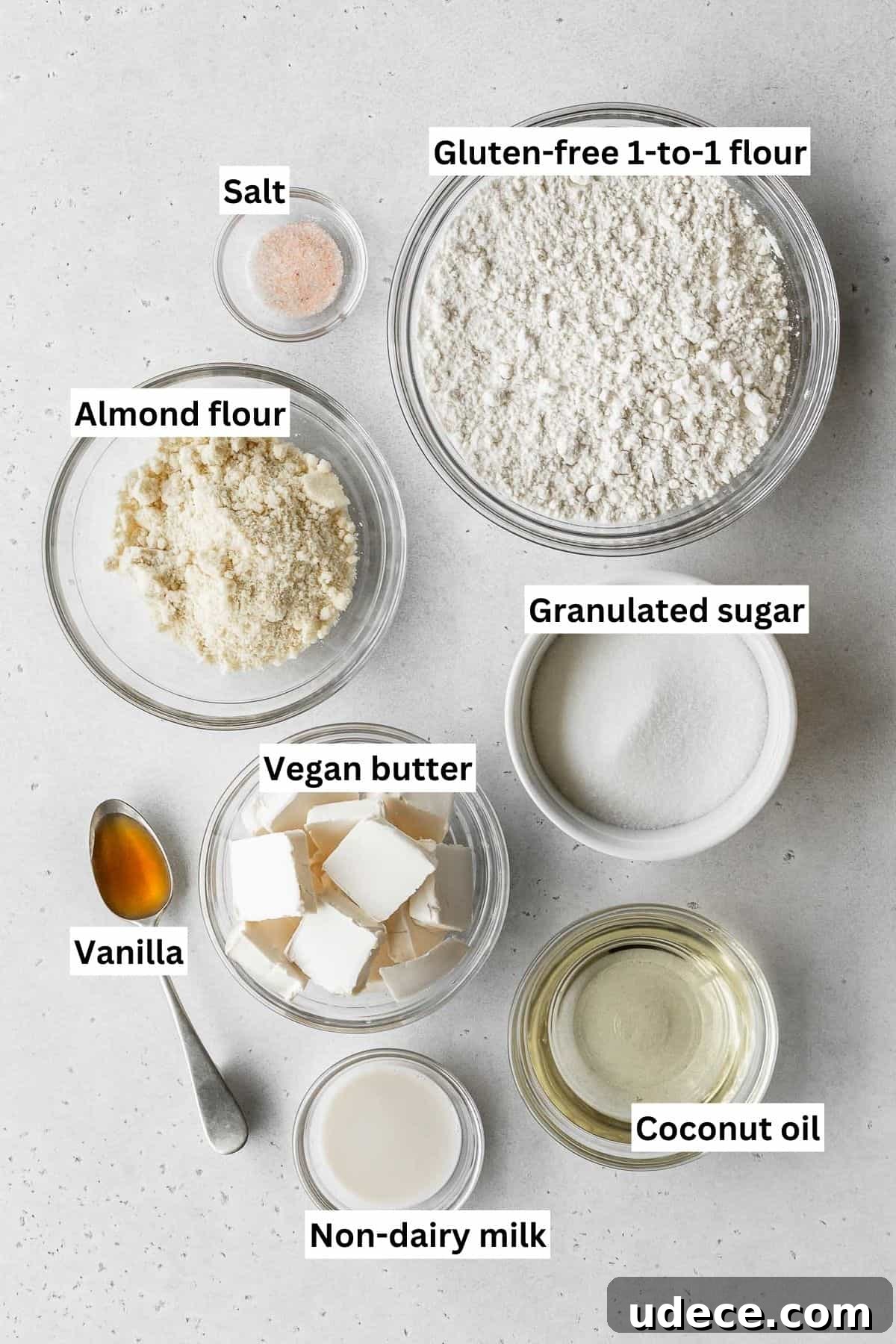
- Gluten-free flour blend – Use a 1-to-1 or measure-for-measure blend that contains xanthan gum. If you don’t need a gluten-free option, swap for regular all-purpose flour.
- Almond flour – Adds tenderness and depth of flavor to the cookies.
- Salt – A pinch balances the sweetness.
- Vegan butter – Use vegan butter sticks for best texture. If you eat dairy, substitute with 1 cup (227 g) unsalted dairy butter and omit the coconut oil noted elsewhere.
- Granulated sugar – The base sweetener for the cookie dough.
- Vanilla extract – Use pure vanilla for best flavor.
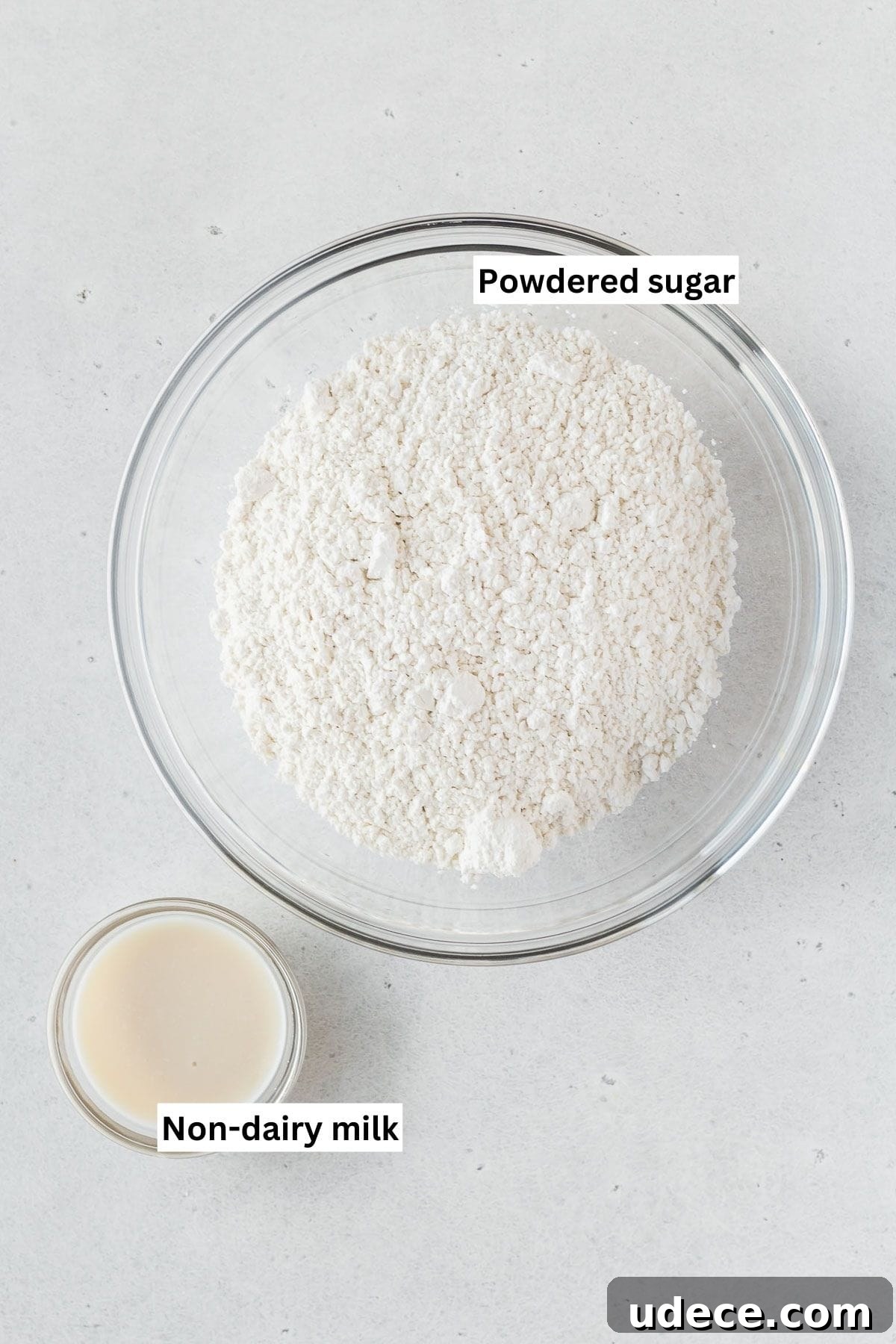
- Evaporated oat milk – Used in both the dough and the icing for a creamy texture.
- Powdered sugar – Sift before using to remove lumps.
- Natural food coloring – I used matcha, butterfly pea powder, beet powder, and turmeric to create four soft pastel shades.
How to Make Easter Cookies
Step 1 — Combine: In a bowl, whisk together the gluten-free flour blend, almond flour, and salt. Set aside.
Step 2 — Cream: In a separate large bowl, beat the softened vegan butter and granulated sugar until light. Add the evaporated oat milk and vanilla, and mix until incorporated.
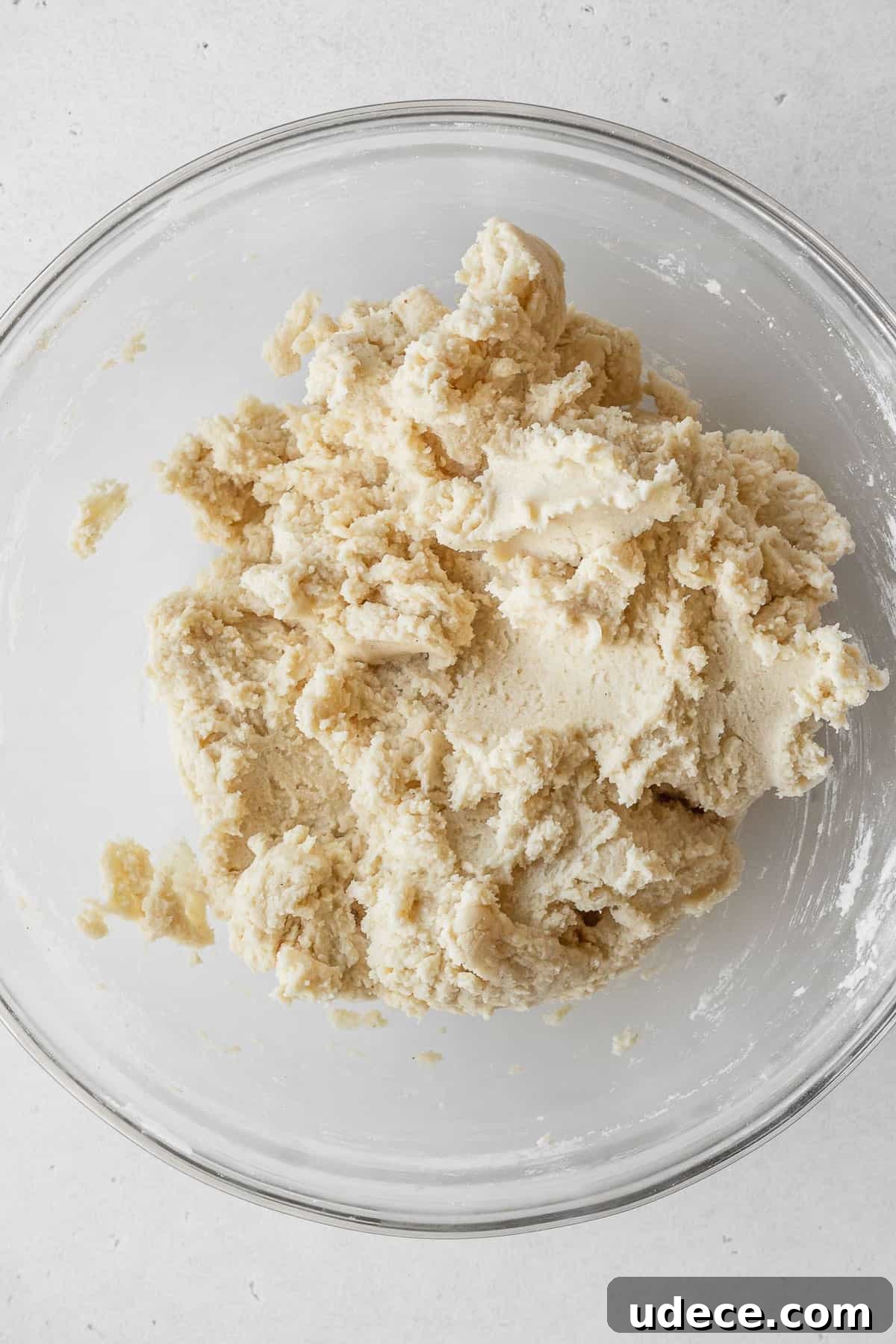
Step 3 — Mix: Add the flour mixture to the butter mixture and mix until no dry streaks remain. Cover and let the dough rest at room temperature for 30 minutes.
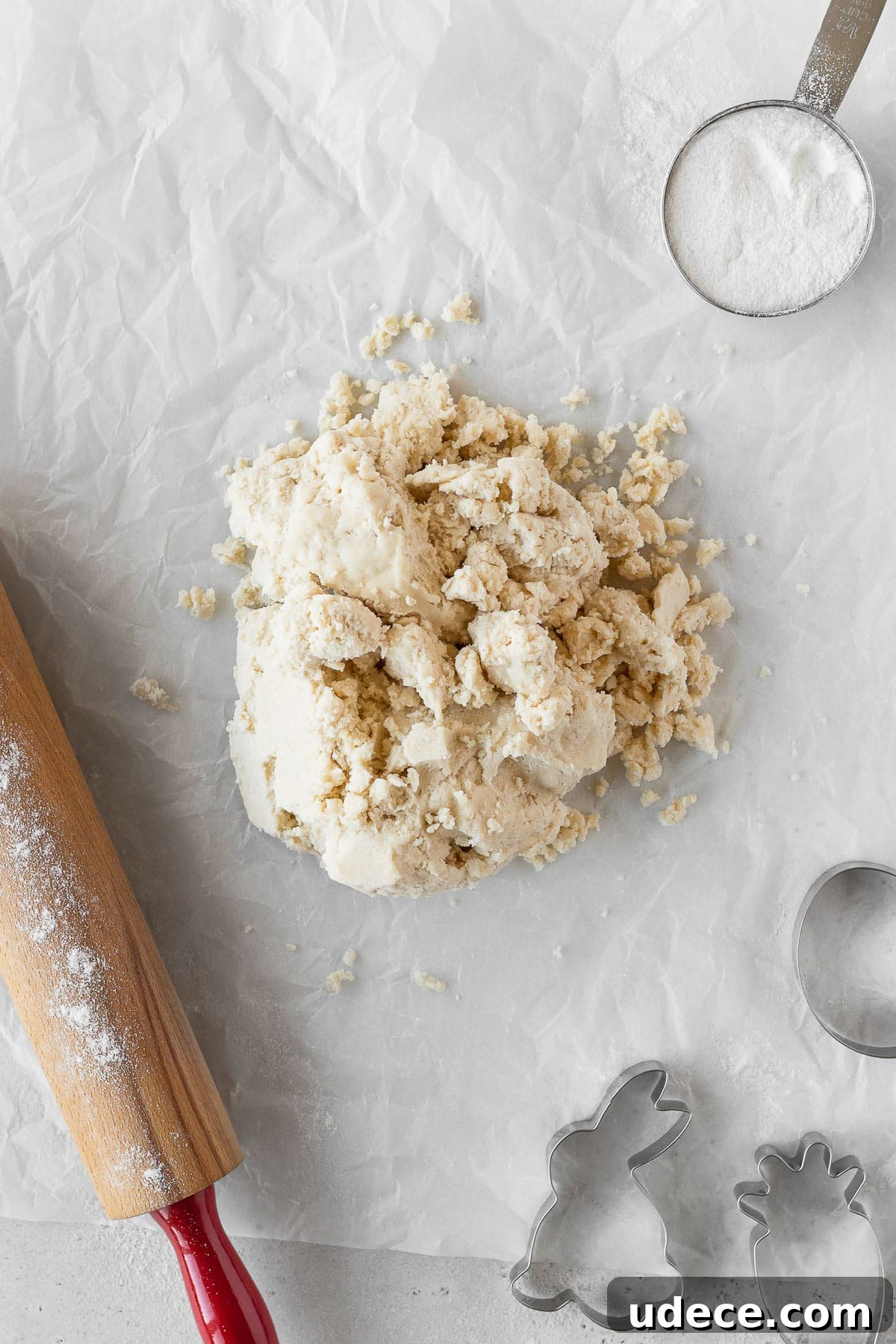
Step 4 — Roll: Transfer the dough to a sheet of parchment, top with another sheet, and roll to 1/4 inch (about 1/2 cm) thickness. Chill the rolled dough in the refrigerator while you preheat the oven.
Step 5 — Preheat: Heat the oven to 375°F (190°C). Line a baking sheet with parchment paper.
Step 6 — Cut shapes: Remove the chilled dough from the refrigerator and cut egg shapes with a cookie cutter. Arrange the cookies on the prepared baking sheet.
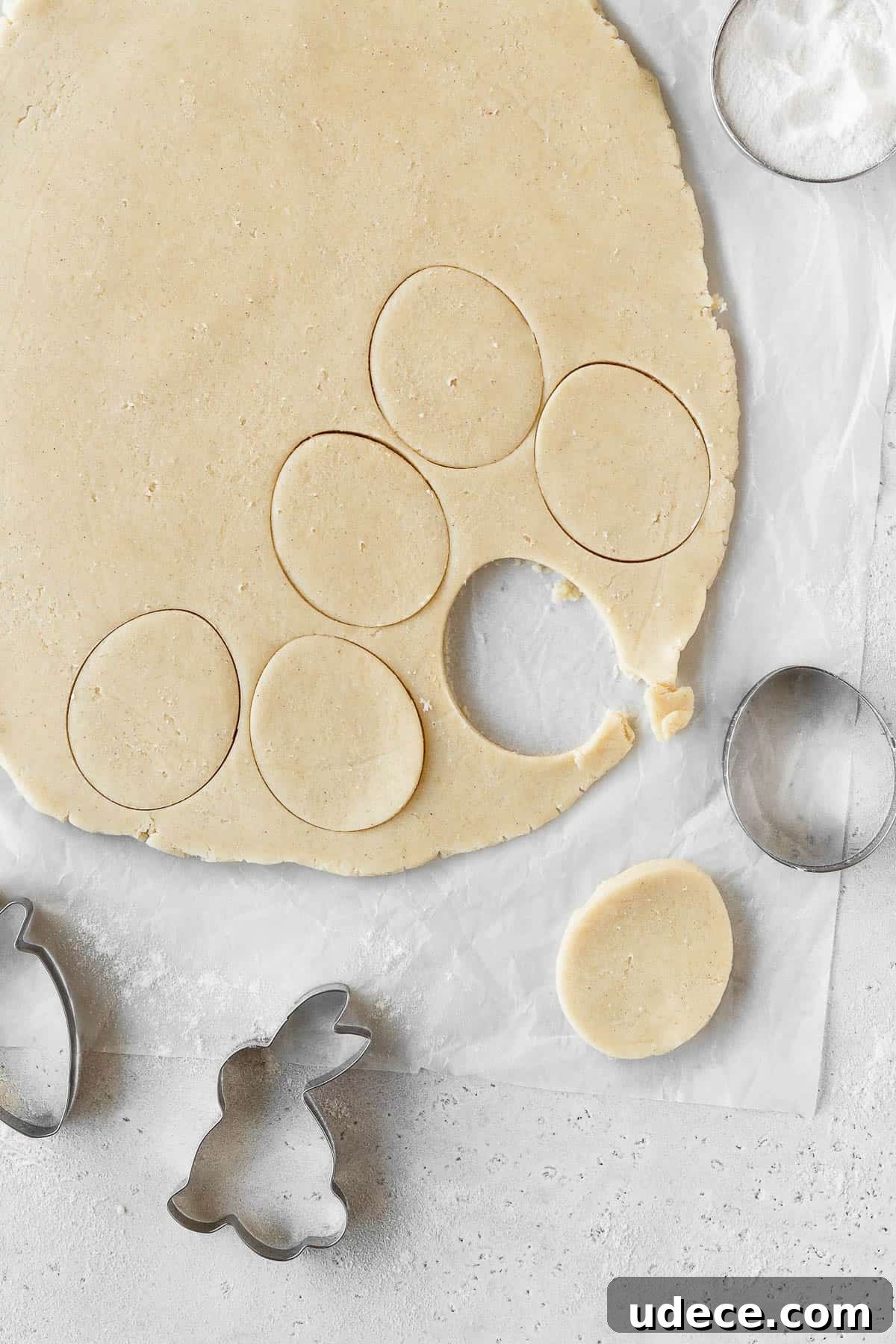
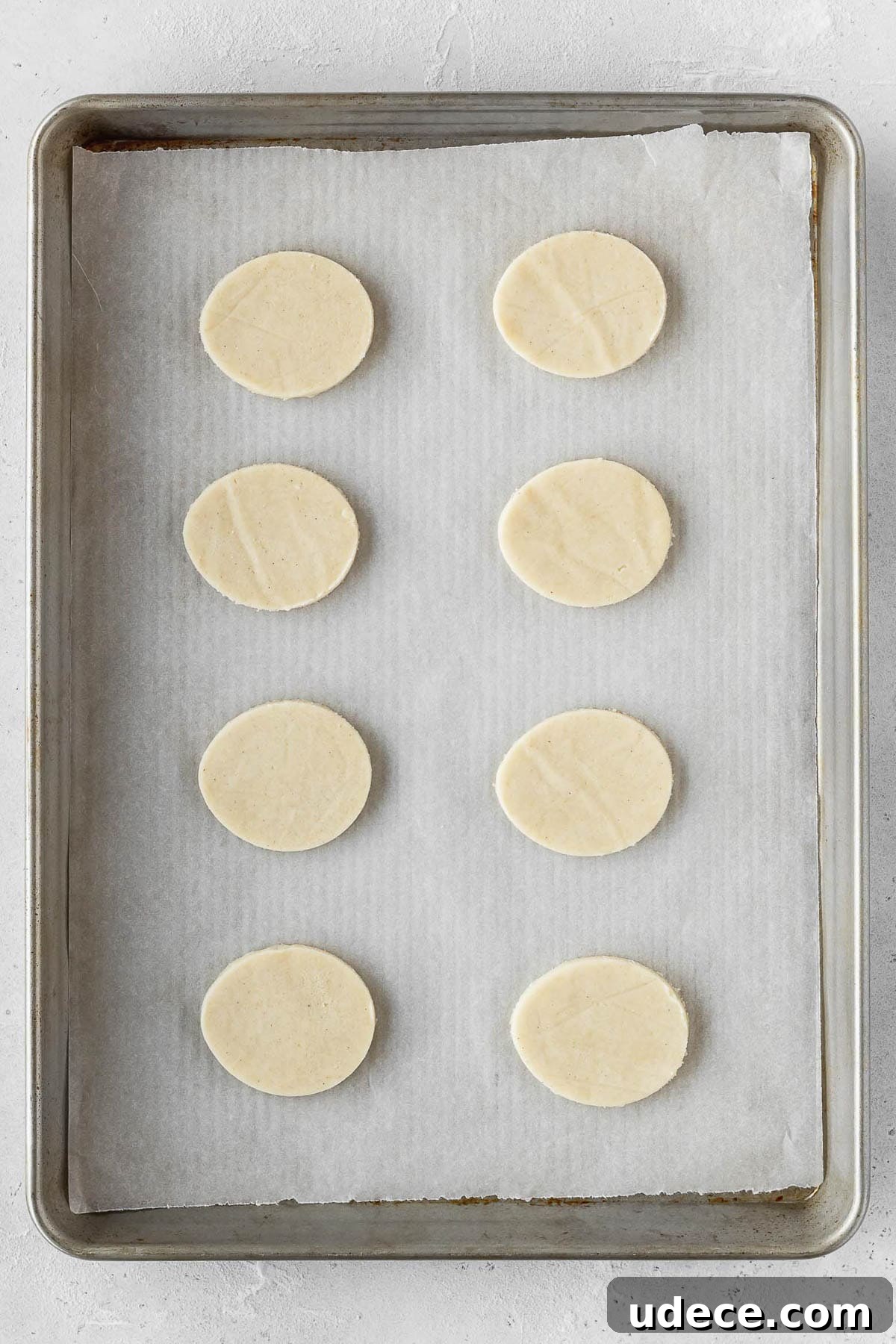
Step 7 — Bake: Bake the cookies for 8–10 minutes, until edges are set. Re-roll scraps and bake remaining cookies.
Step 8 — Cool: Allow cookies to cool completely on the baking sheet before transferring to a wire rack.

How to Decorate Easter Cookies
Step 1 — Prepare icing: In a small bowl, whisk sifted powdered sugar with evaporated oat milk until smooth and slightly thick but pourable.
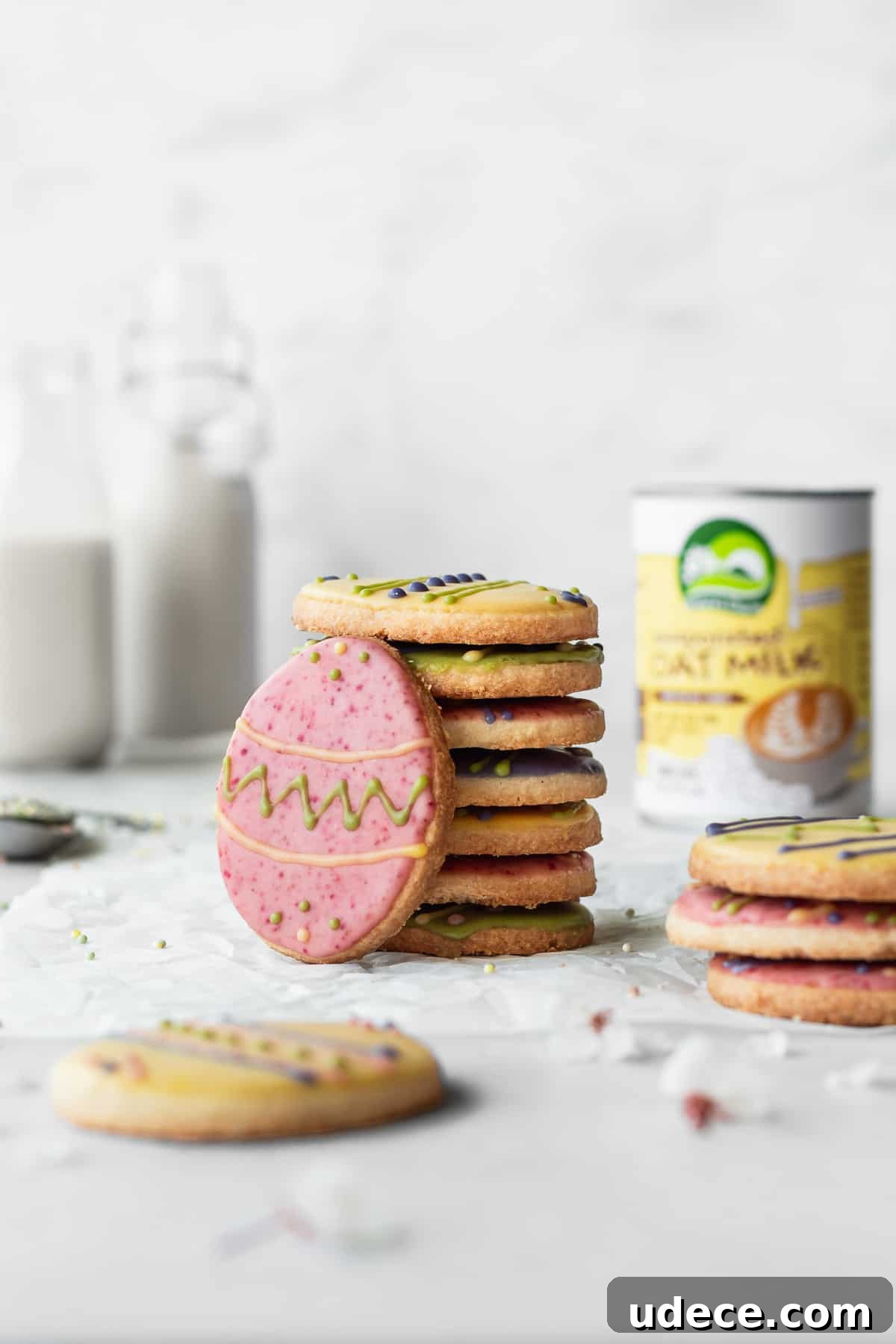
Step 2 — Color: Divide the icing into small bowls and tint each with a natural powder color—matcha for green, butterfly pea for blue, beet for pink, and turmeric for yellow.
Step 3 — Dip: Dip the top of each cookie into the base color and place on a wire rack to set.
Step 4 — Pipe: Fill small piping bags with the remaining icings and add details—lines, dots, and simple patterns—once the base has dried for 15–20 minutes.
If you prefer a richer finish, you can also use buttercream to frost these cookies.


Recipe Pro-Tips
- Roll before chilling: Roll the dough to an even thickness before chilling so it’s firm enough to transfer and cut clean shapes.
- Cool completely before icing: Warm cookies will soften the icing and prevent it from setting properly.
- Adjust for powdered colors: Powdered coloring can thicken icing. Add extra evaporated oat milk, 1/4 teaspoon at a time, until the desired consistency returns.
- Let the base set: Wait about 15–20 minutes after dipping the cookies so the base layer dries before piping details for crisp lines.
- Fix while wet: Pop air bubbles with a toothpick and smooth drips with a fingertip while the icing is still wet.

Storage Directions
- Store: Keep decorated cookies in an airtight container at room temperature for 3–4 days.
- Freeze: Wrap cookies individually and place in an airtight freezer container for up to 3 months. Thaw overnight in the refrigerator to prevent condensation on the icing.
More Easter Recipes
- Try bird’s nest cookies or cupcakes baked in eggshells for more themed treats.
- If you want other cookie variations, lemon curd thumbprints use the same buttery base with a tart filling.
- For cupcakes, carrot cake or dairy-free vanilla cupcakes are great seasonal choices.
- Looking for gluten-free Easter desserts? Oatmeal cookies, fudgy dairy-free brownies, and a gluten-free German chocolate cake are excellent options.
Thanks for visiting — I hope you enjoy these Easter cookies. For more dairy-free, gluten-free, and vegan dessert ideas, follow the author on social media or subscribe for updates.

Ingredients
Sugar cookies
- 2 cups gluten-free 1-to-1 flour (or all-purpose)
- 1/2 cup almond flour
- 1/2 teaspoon fine salt
- 1 cup vegan butter, softened
- 2/3 cup granulated sugar
- 1 tablespoon evaporated oat milk
- 1 1/2 teaspoons vanilla extract
Icing
- 2 cups powdered sugar, sifted
- 3 tablespoons evaporated oat milk
- Pinches (about 1/8 tsp) of matcha, beet powder, turmeric, and butterfly pea powder for coloring
Instructions
Sugar cookies
- Combine the gluten-free flour blend, almond flour, and salt in a bowl.
- Cream the vegan butter and sugar; add evaporated oat milk and vanilla and mix.
- Stir in the flour mixture until no dry streaks remain. Cover and rest 30 minutes.
- Roll the dough between parchment sheets to 1/4 inch (1/2 cm) and chill while you preheat the oven.
- Preheat oven to 375°F (190°C) and line a baking sheet with parchment.
- Cut egg shapes from the chilled dough and place on the baking sheet.
- Bake 8–10 minutes. Re-roll scraps and bake until all dough is used.
- Cool completely on the baking sheet before transferring to a wire rack.
Icing
- Mix sifted powdered sugar with evaporated oat milk until smooth and slightly thick.
- Divide into bowls and tint with natural color powders.
- Dip the top of each cookie into the base color and set on a wire rack to dry.
- Pipe details with remaining icing using small tips once the base is set.
Notes
Freezing: Wrap individually and freeze in an airtight container for up to 3 months. Thaw in the refrigerator overnight to avoid condensation.