
Gravlax is a classic Scandinavian preparation that’s easy to make at home. Silky in texture and delicately seasoned with aquavit (or another spirit), white pepper and fresh dill, this cured salmon is both elegant and flavorful.
Preparing the fish takes only a few minutes of hands-on work; the rest of the time is spent curing in the refrigerator. The most difficult part is waiting for the cure to finish so you can slice and serve it.

Gravlax is enjoyed year-round across Scandinavia and often appears on holiday smörgåsbords for Christmas, New Year’s, Easter and Midsummer. It’s typically served as part of a cold appetizer spread with dense rye bread, a mustard-dill sauce, pickled or cold sides, and other traditional dishes.
[feast_advanced_jump_to]
Ingredients
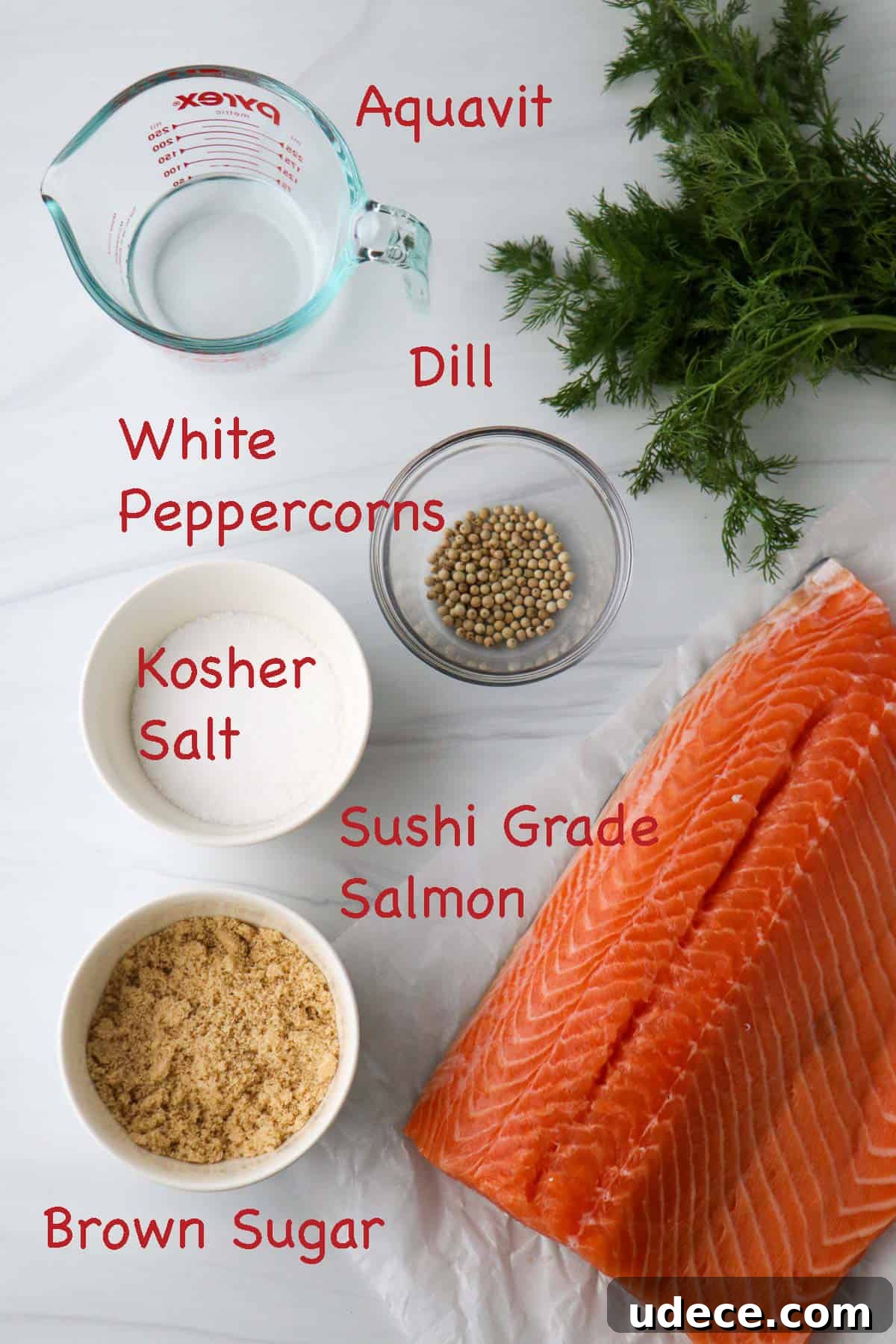
- Sushi-grade salmon – Choose the freshest, highest-quality skin-on salmon you can find. This recipe highlights the fish, so start with the best cut.
- Kosher salt – Forms the bulk of the cure. Do not substitute table salt; kosher salt yields a more controlled cure and better texture.
- Brown sugar – Adds gentle sweetness and balances the salt. Brown sugar pairs nicely with salmon.
- White peppercorns – Provide a mild, clean heat and are traditional in gravlax.
- Fresh dill – Essential herbaceous flavor for a classic Scandinavian profile.
- Aquavit (or gin, vodka, brandy) – A splash of spirit helps prime the fish and adds subtle aromatics.
See the recipe card below for exact amounts and full instructions.
Substitutions
- Black peppercorns: You can swap black peppercorns for white if preferred.
- Different spirits: Gin, vodka or brandy can replace aquavit with excellent results.
How to Make Homemade Gravlax
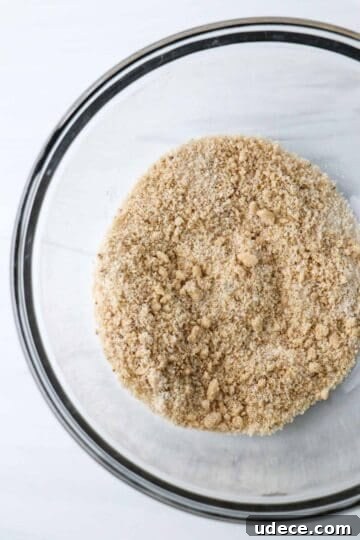
- Step 1: Crush the peppercorns with a skillet base, the side of a chef’s knife, a spice grinder or mortar and pestle. Combine the crushed peppercorns, kosher salt and brown sugar in a bowl and mix well. Set aside.
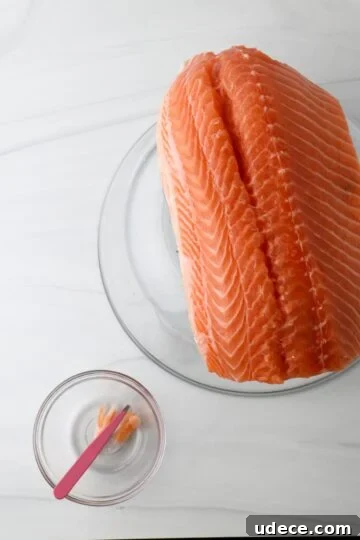
- Step 2: Check for pin bones and remove any you find. Laying the fillet over an overturned bowl helps any remaining bones protrude, making them easier to spot. Use clean tweezers or pliers to pull them out gently.
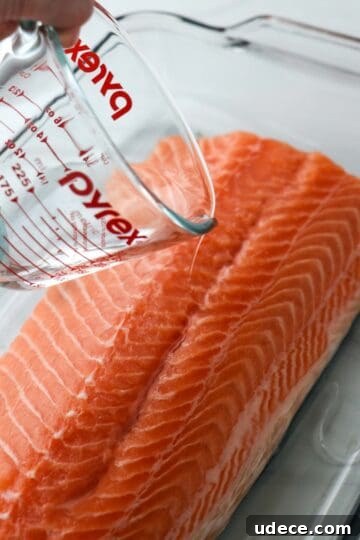
- Step 3: Place the salmon skin-side down in a 9 x 13 glass baking dish. Drizzle the aquavit over the flesh and rub it in with your fingers.
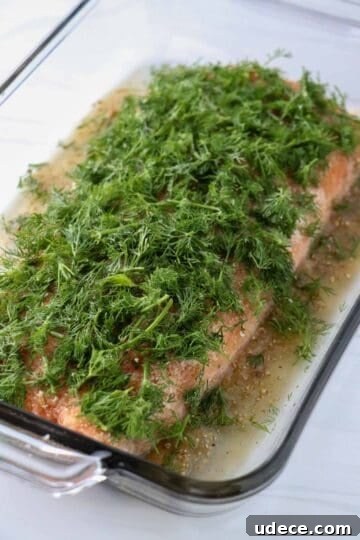
- Step 4: Evenly cover the salmon with the salt, sugar and pepper mixture, rubbing to coat the surface completely. Top with a generous, even layer of chopped fresh dill.
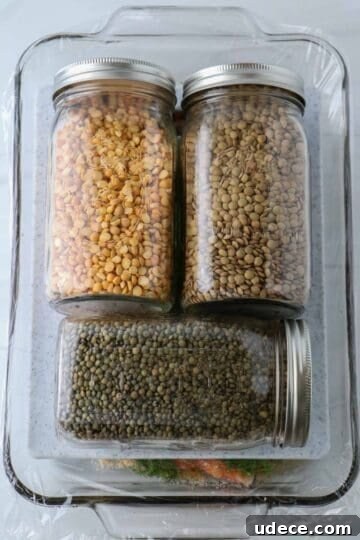
- Step 5: Tightly wrap the dish with plastic wrap. Place a cutting board or smaller baking dish on top, then add cans or jars as weights. Refrigerate and let the salmon cure for 12 hours or overnight.
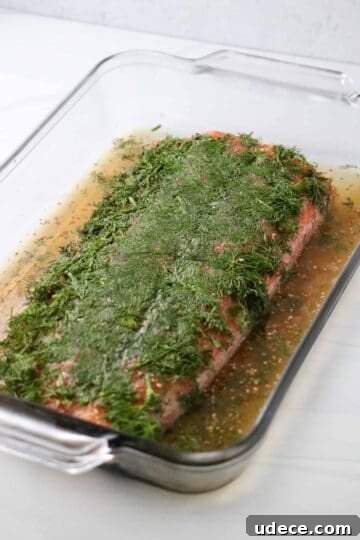
- Step 6: Remove the dish from the fridge, discard the plastic and weights, then baste the top with a little of the juices collected in the pan. Pour off and discard any remaining juices in the bottom of the dish.
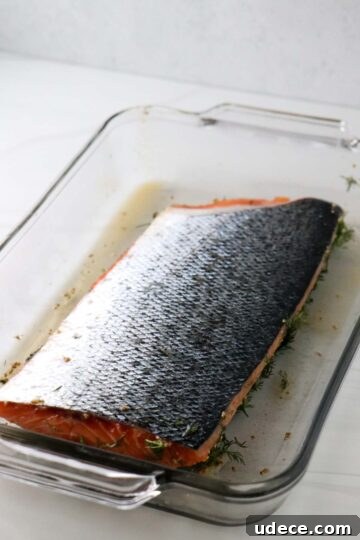
- Step 7: Flip the salmon so the skin is now up, rewrap with fresh plastic, replace the board and weights, and refrigerate another 12 hours.
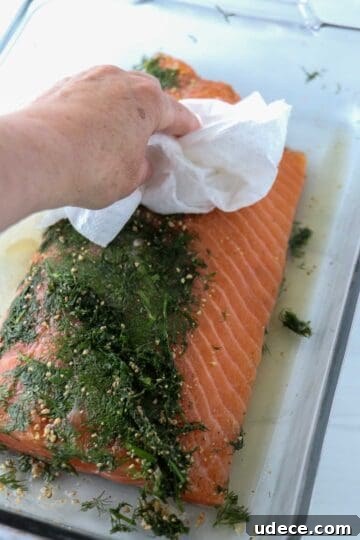
- Step 8: Repeat the flip and weigh-down one more time for a final 12-hour cure. The total curing time is roughly 36 hours. Remove plastic, board and weights, then wipe away the dill and any remaining cure with a paper towel.
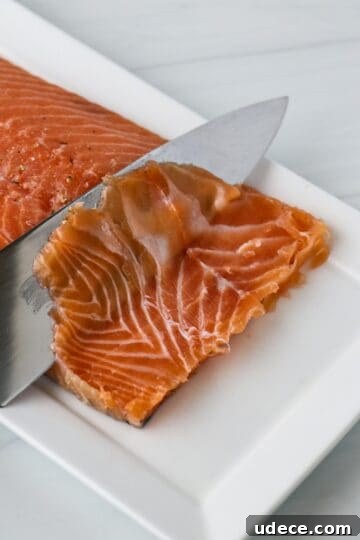
- Step 9: Transfer the salmon to a cutting board and slice thinly on the bias against the grain, leaving the skin behind.

- Step 10: Serve thin slices with rye bread or crispbread, lemon wedges, dill sprigs and an optional mustard-dill sauce. Enjoy.
Expert Tips
- Buy the freshest sushi-grade salmon you can—center-cut fillets work particularly well.
- A very sharp knife makes it easier to carve paper-thin slices.
- Watch for pin bones while slicing and remove any you find.
- After curing and removing the rub and dill, wrap unsliced gravlax tightly and refrigerate until ready to serve. Slice just before serving for the best texture.
- Properly wrapped, gravlax will keep in the refrigerator for about 3 days.

FAQs
Gravlax translates loosely as “buried salmon,” referring to the traditional practice of burying the fish in salt and sugar to cure it.
Curing is a preservation method: salt draws moisture from the fish and creates an environment that prevents spoilage. The fish remains technically raw, which is why using sushi-grade salmon is important.
Gravlax is cold-cured in a salt, sugar and spice mixture, then refrigerated until ready to slice—no smoke is involved. Smoked salmon can be hot-smoked (cooked at higher temperatures with a firm texture) or cold-smoked (usually cured first and then exposed to smoke at low temperatures, which keeps the texture silky).
After removing the cure and dill, wrap the unsliced gravlax tightly in plastic wrap and refrigerate until serving. Slice just before serving. Properly wrapped, it keeps for about 3 days.
Yes. Wrap individual serving portions tightly in plastic and place flat inside a freezer bag. Thaw in the refrigerator before serving. Frozen gravlax keeps well for a couple of months when tightly wrapped.
How to Serve Gravlax
Traditionally, gravlax is served with a tangy mustard-dill sauce (gravlaxsås) and dense rye bread, crispbread (knäckebröd) or boiled new potatoes with dill. It also pairs well with mild cheeses and pickled vegetables for a festive spread.
For a simple, classic presentation, serve thin slices with a squeeze of lemon and a fresh dill sprig—clean, bright and unmistakably Nordic.
More Salmon Recipes
- Spiced Salmon Skewers with Lemon
- Easy Grilled Cedar Plank Salmon with Creamy Horseradish Sauce
- Simple Roasted Salmon with Cucumber-Radish Relish
- Roasted Salmon Smørrebrød with Creamy Mustard Dill Sauce and Pickled Beets
If you tried this Homemade Gravlax recipe or any other recipe on my site, please leave a star rating and tell me how it went in the comments. I love hearing from you!
Recipe

Homemade Gravlax (Easy Cured Salmon Recipe)
Equipment
-
1 9 x 13 glass baking dish
Ingredients
- 1 tablespoon white peppercorns
- ⅓ cup packed light brown sugar
- ¼ cup kosher salt
- 1 cup coarsely chopped fresh dill
- 2- pound skin-on salmon filet sushi-grade, pin bones removed
- 3 tablespoons aquavit or gin, vodka or brandy
- To serve:
- Thinly sliced rye bread or crispbread
- Small lemon wedges
- Fresh dill sprigs
- Mustard and Dill Sauce for Gravlax (optional)
Instructions
-
Crush the peppercorns and combine with brown sugar and kosher salt in a small bowl. Set aside.
-
Pat the salmon dry and place skin-side down in a 9×13 glass dish. Drizzle with aquavit and rub into the flesh. Spread the salt, sugar and pepper mixture evenly over the salmon and top with chopped dill.
-
Wrap tightly in plastic. Place a cutting board or similar-sized item on top and add weights (cans or jars). Refrigerate for 12 hours or overnight.
-
Remove from the fridge, discard the plastic and weights, baste with some of the collected juices, and pour off any excess liquid. Flip the salmon so the skin is up, rewrap and weigh down, then refrigerate another 12 hours.
-
Repeat the flip and weighting one more time for a final 12-hour cure.
-
After a total cure of about 36 hours, remove wrap and dill, wipe the surface clean, then slice thinly on the bias, leaving the skin behind. Serve with rye bread, mustard-dill sauce, lemon wedges and fresh dill.
Notes
- Use the best sushi-grade, skin-on salmon available for optimal texture and flavor.
- Do not substitute table salt for kosher salt; the cure will become overly salty.
- To expose pin bones, drape the fillet over an overturned bowl and remove bones with tweezers or small pliers.
- After curing, wrap unsliced gravlax tightly and refrigerate until serving. Slice just before serving; it keeps for about 3 days when wrapped.
- Thin slicing is easiest with a very sharp knife; check for pin bones as you slice.
- To freeze, portion and wrap tightly, place flat in a freezer bag, and thaw in the refrigerator before serving. Frozen gravlax keeps a couple of months when well wrapped.
- Sodium values in nutrition info may vary because it’s difficult to know how much salt the fish absorbs during curing.