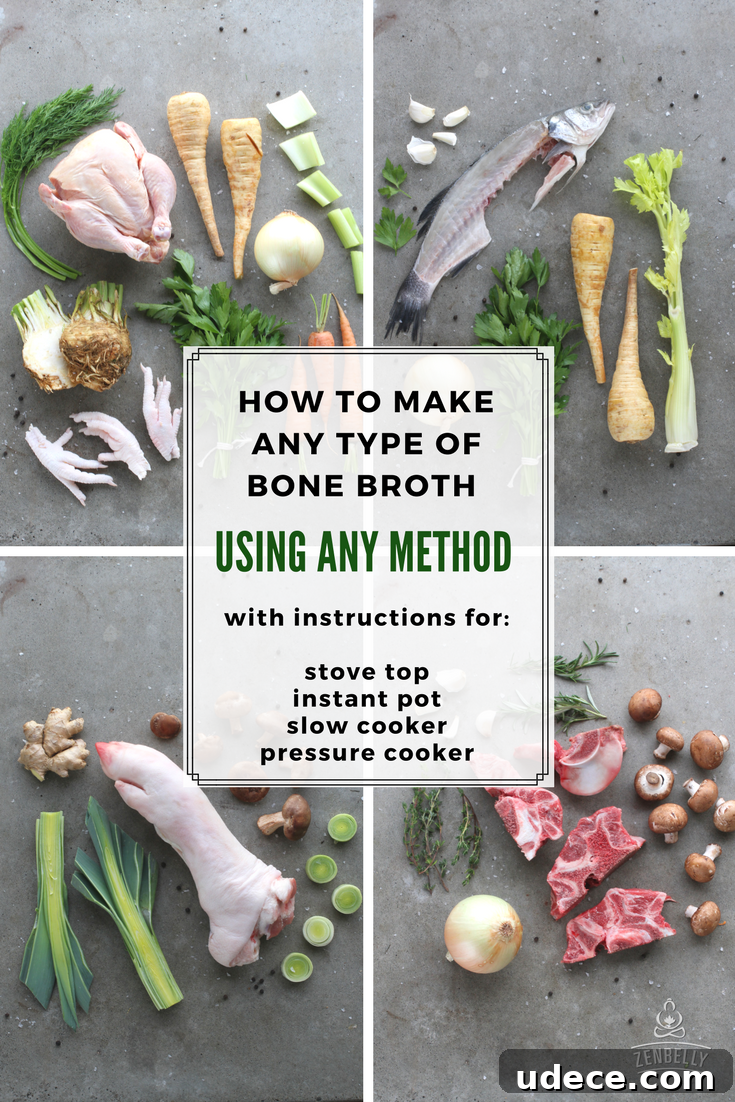
I hesitated to write a post about how I make bone broth because my method always felt too simple: toss bones in water and cook. It didn’t seem like a recipe. But after sharing photos of the rich, gelatinous results, I learned many people don’t get the same outcome. So here’s a clear, flexible guide to help you make reliably excellent broth every time.
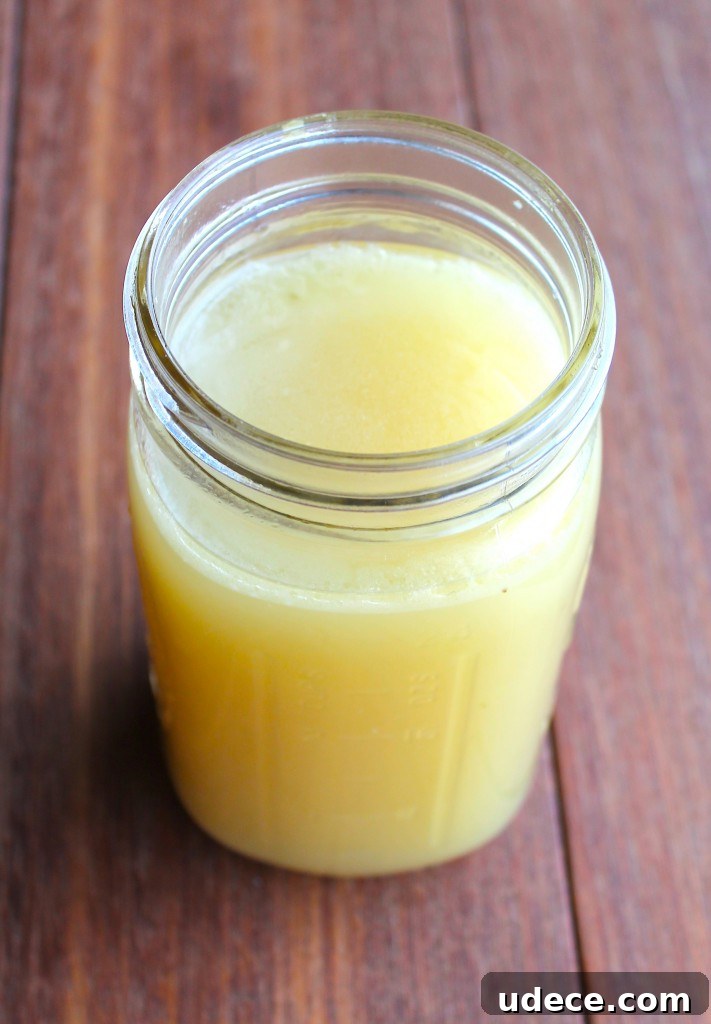
broth is beautiful.
How I Make Bone Broth
This tutorial aims to give you a template you can adapt. Follow the general approach and you should achieve a rich, well-gelled broth while keeping the freedom to adjust flavors and timing.
I prefer using a pressure cooker for speed, but the same principles apply to a stock pot or slow cooker. If you don’t use a pressure cooker, simply simmer longer — up to 24 hours for beef bones instead of 1–2 hours in a pressure cooker.
I make bone broth in two phases: the bone phase and the vegetable phase. Splitting them takes a little longer but improves flavor and concentration for two main reasons:
- Vegetables don’t need as long as bones. Long cooking can make some vegetables bitter, and it’s unnecessary to subject them to the same extended simmering as bones.
- Reduction concentrates flavor. In the second phase I leave the lid off so the broth reduces and becomes more concentrated. Using less water and reducing yields a richer, more flavorful broth; you can always dilute it later if needed.
Choose bones with joints and connective tissue for the best gel: knuckle bones, marrow bones, chicken backs, necks, and wings are ideal. Save bones from roasted chickens or other meals. Use the best quality meat you can find — grass-fed beef and pastured chicken give superior flavor and nutrition.
Here’s the method I use, described for a stove-top pressure cooker (the steps are the same for an electric model):
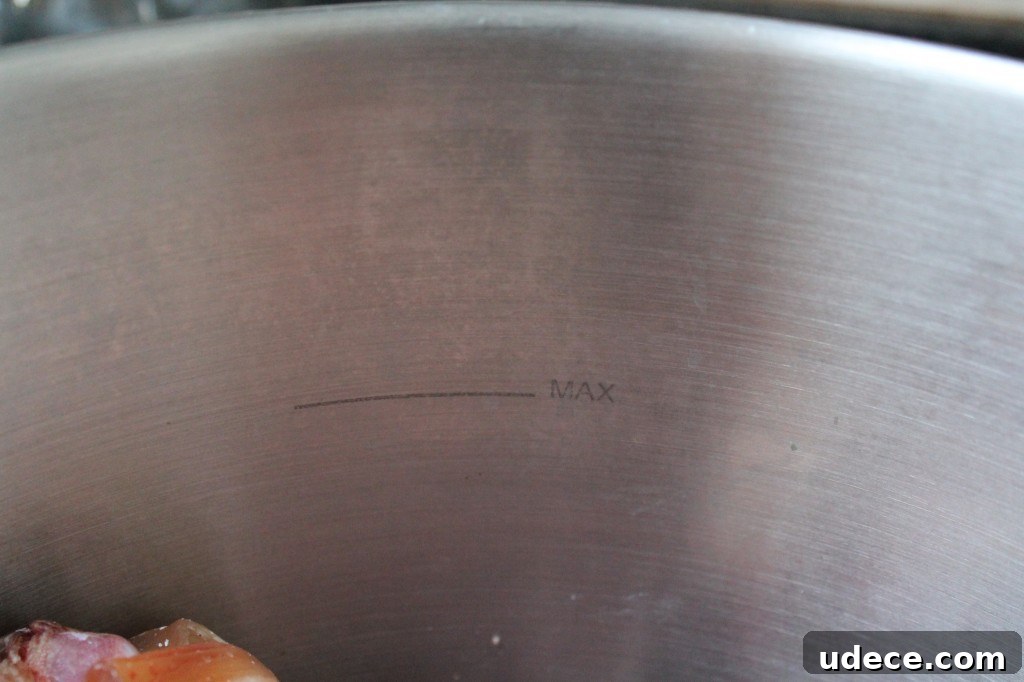
Place several pounds of bones in the pressure cooker — beef, lamb, pork, chicken, or a mix. Fill the pot so bones are about halfway to two-thirds full and cover them with water by a couple of inches. Respect the pot’s MAX line and keep the water below it.
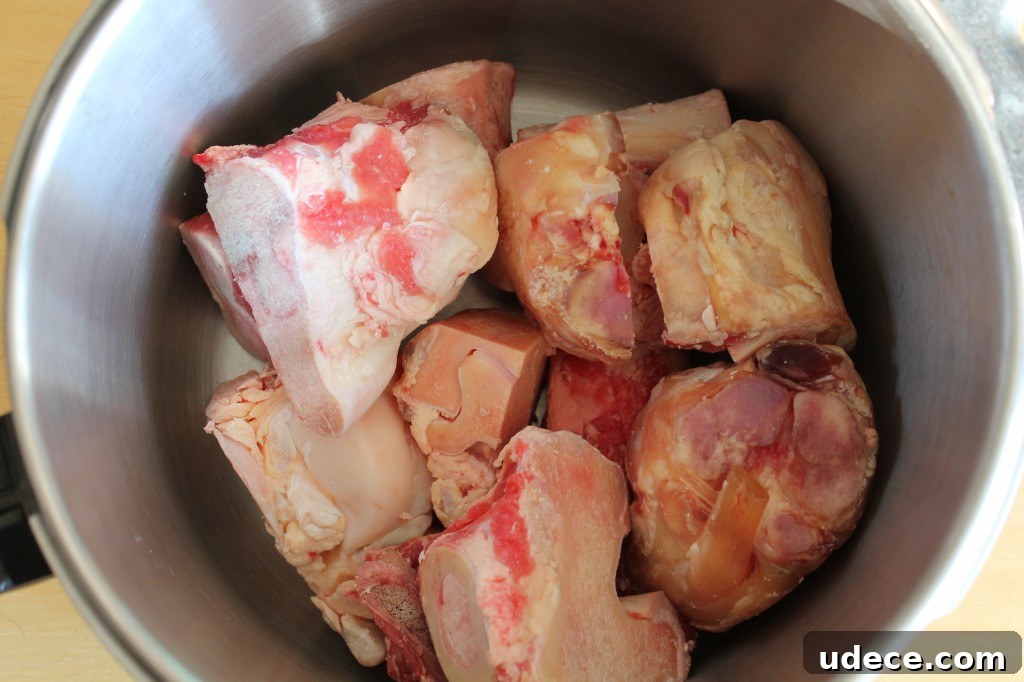
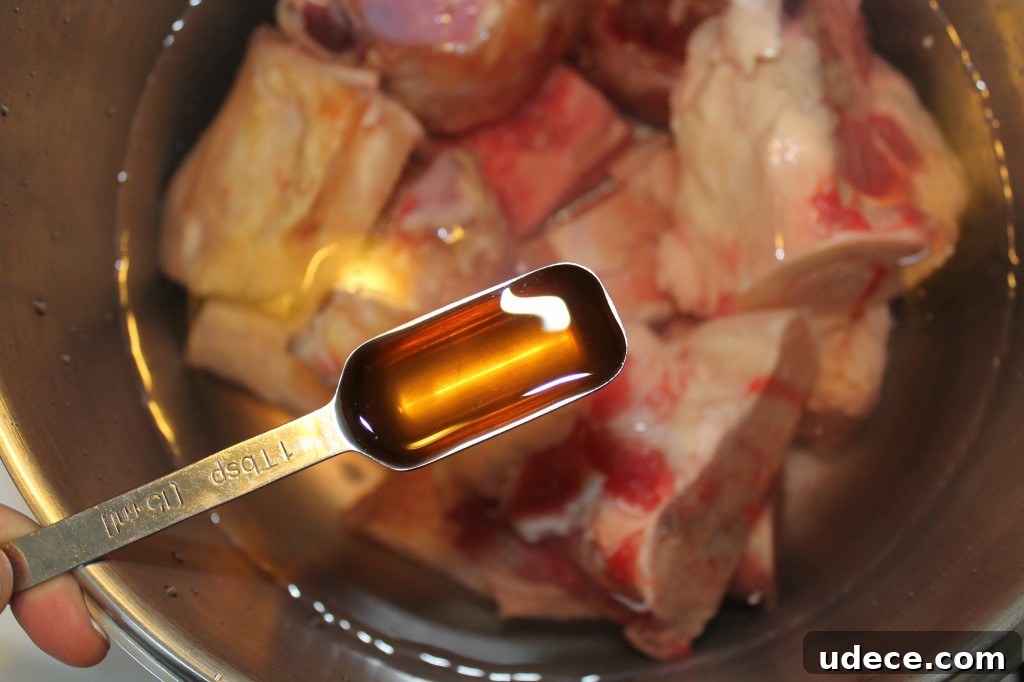
Add 1–2 tablespoons of apple cider vinegar (to help extract minerals) and about 1–2 teaspoons of sea salt, plus a handful of whole black peppercorns. That’s it for the bone phase — let the bones cook according to the timings below for your chosen method.
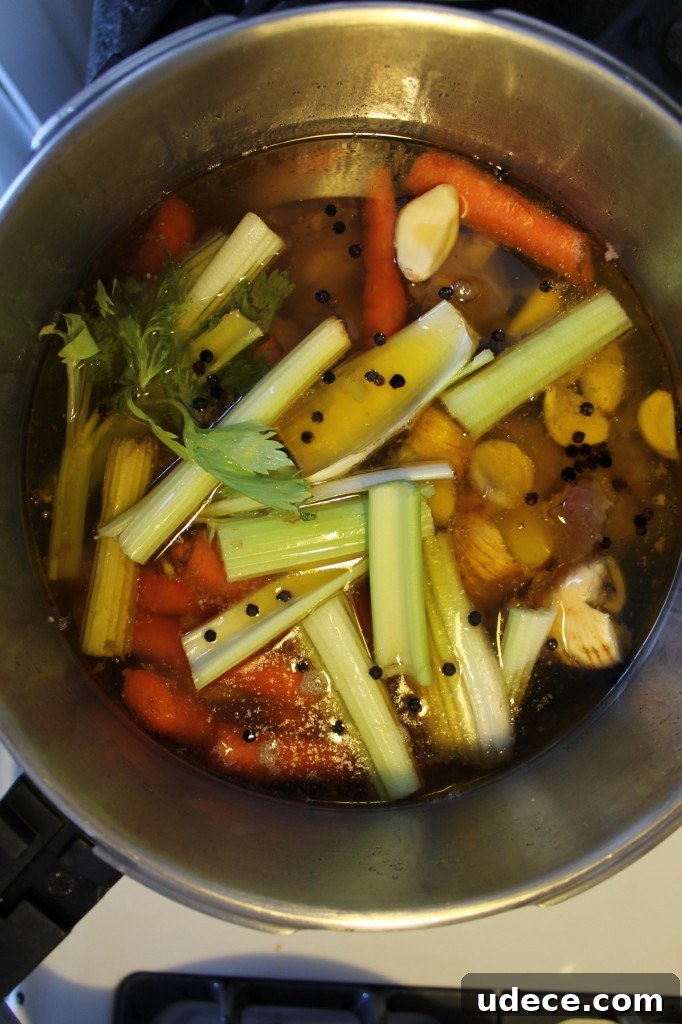
Phase 2: add vegetables. Save kitchen scraps in the freezer — onion ends, carrot peels, celery tops and roots — and use them here. I like lots of hearty root vegetables (carrots, parsnips, celery root), a quartered unpeeled onion, several unpeeled garlic cloves, and a couple of sprigs of herbs (rosemary, thyme, parsley, etc.). These don’t need to look pretty; they’re for flavor. Keep the vegetable mix simple so it complements the bones.
After adding the vegetables, bring the pot to a boil, then reduce to a low simmer. Allow the broth to simmer uncovered for at least an hour so it can reduce and concentrate. The longer you reduce (within reason), the deeper the flavor will be.
Strain the broth through a fine-mesh strainer into a large pot, pressing the solids with a spoon or ladle to extract as much liquid as possible. Save any cooked vegetables you want to use in soups or purees.
Transfer the strained broth into glass jars or containers and chill in the refrigerator. Once cold, the fat will solidify on top and is easy to remove if you prefer a leaner broth. Refrigerated broth will keep about a week; freeze for longer storage.
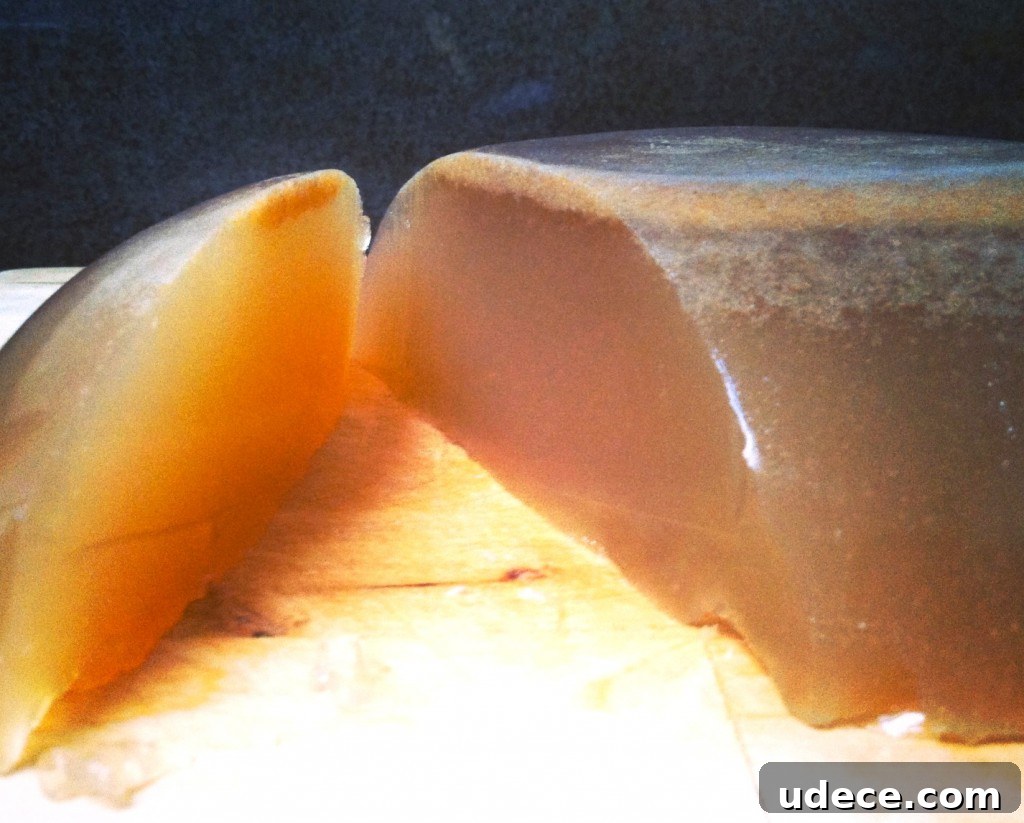
If you want to show off the gel: turn the chilled broth onto a cutting board and slice it with a knife — it should hold shape when properly gelatinous.
That’s the method I use — straightforward, adaptable, and aimed at consistent, rich results.
Basic Bone Broth Recipe
Use this basic recipe as a guide and adjust quantities and aromatics to taste.
- 4 pounds beef, chicken, pork, or lamb bones (or a combination)
- 2 tablespoons apple cider vinegar
- 2 teaspoons sea salt (adjust to taste)
- 10–12 whole black peppercorns
- 1 large onion, unpeeled and quartered
- 2 pounds hearty/root vegetables (carrot, celery, celery root, parsnip), roughly chopped
- 6–8 unpeeled garlic cloves
- 2 sprigs fresh herbs (rosemary, thyme, parsley, or a combination)
Instructions
If using a stock pot:
- Add bones, apple cider vinegar, salt, and peppercorns to a large stock pot. Cover with cool filtered water by a couple of inches (about 3 quarts for the amounts above).
- Bring to a boil and cook uncovered for 10 minutes. Skim and discard any scum that rises to the surface.
- Reduce heat to low and simmer, covered, for 2 hours for chicken and at least 4 hours for beef, lamb, or pork.
- Add the vegetables and herbs; bring to a boil, then simmer uncovered for 1 hour, or until the liquid has reduced by about one-quarter.
- Strain through a fine-mesh strainer, pressing to extract as much liquid as possible. Store in the refrigerator for up to 1 week or freeze for up to 1 year.
If using a pressure cooker / Instant Pot:
- Add bones, apple cider vinegar, salt, and peppercorns to the pot. Cover with 2–3 quarts of cool filtered water, just enough to cover the bones.
- Secure the lid and cook on high pressure: 1 hour for chicken, 90 minutes for beef, lamb, or pork.
- Allow the pressure to release naturally for 10 minutes, then release remaining pressure.
- Add the vegetables and herbs, then use the sauté function (or bring to a boil on the stove-top) and simmer uncovered for about 1 hour to reduce and concentrate the broth.
- Strain, press, and store as above.
If using a slow cooker:
- Place bones, vinegar, salt, peppercorns, and about 2 quarts of cool filtered water into the slow cooker. Cook on low for 8–10 hours for chicken, and up to 24 hours for beef, pork, or lamb.
- Strain, press, and store as directed above.
All measurements and times are flexible — treat this as a template. The key points are using the right bones, adding a splash of vinegar, cooking long enough to extract gelatin and flavor, and reducing to concentrate the broth.