A moldy sourdough starter is every baker’s fear — after days or weeks of care, seeing fuzzy discoloration can feel devastating. Knowing how to spot mold, whether it can be saved, and how to prevent it in future is essential for the safety of you and your household.
Below is clear, practical guidance on what mold is, how it differs from hooch and kahm yeast, what to do if you find it, and steps to reduce the risk of it happening again.
What Is Mold?
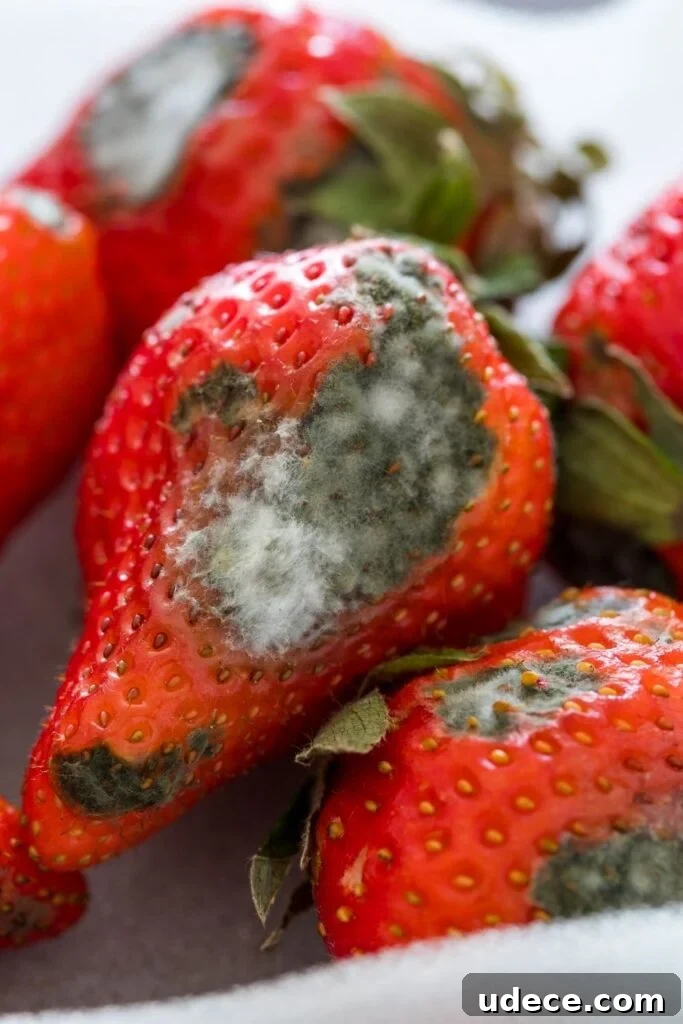
Mold is a type of fungus that grows as thread-like filaments called hyphae. Those hyphae form a network, or mycelium, which can penetrate deep into food — including a sourdough starter — so mold is not limited to the surface.
When mold develops on food it usually appears discolored and fuzzy. That fuzziness is a key identifying feature: if you see a fuzzy patch of any color (white, green, black, grey), treat it as mold.
What If My Sourdough Starter Has Mold?
If you find mold on your sourdough starter, you should discard the entire starter. Mold spores and hyphae can extend throughout the starter even if the visible growth seems limited to the surface, so scraping off the top is not safe.
There’s no reliable way to recover a starter once mold has taken hold, despite occasional claims to the contrary. Always err on the side of safety: throw it away and start fresh.
Because mold can appear unexpectedly, it’s wise to keep a backup of your starter — whether that’s a jar stored in the fridge, a dehydrated starter, or another routine backup method — so you can restart quickly if needed.
Can Bad Sourdough Starter Make You Sick?
Yes. Using a moldy starter — whether raw or baked into bread — can pose health risks. Consuming mold can trigger allergic reactions, respiratory issues, and other illnesses depending on the species present. Do not use a moldy starter for baking or eating.
Why Does Mold Occur on Sourdough Starter?
Mold can develop for several reasons. A mature, well-fed starter with a robust community of beneficial bacteria and yeasts is more resistant to mold. Factors that increase mold risk include:
- Contaminated flour or ingredients.
- Infrequent or insufficient feedings that fail to support the good microbes quickly enough.
- Neglect — leaving a starter unfed for long stretches.
- Contaminated jars, utensils, or poor kitchen hygiene.
Is It Mold or Is It Hooch?
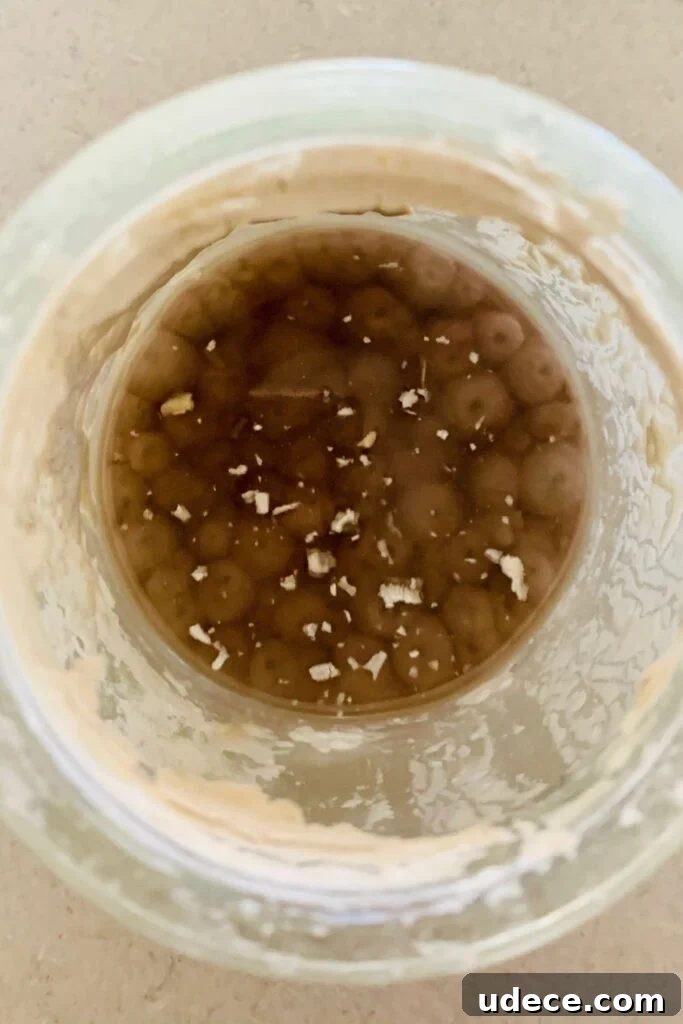
Hooch and mold can look similar at a glance, but they are different. Hooch is a liquid byproduct of fermentation that can be dark in color when a starter has been stored in the fridge or left unfed. Oxidation can also cause surface discoloration. Neither hooch nor oxidation are fuzzy.
Key differences:
- Mold: fuzzy texture, can be white, green, black, or other colors.
- Hooch: liquid layer or stain, not fuzzy; typically reabsorbed or poured off and the starter can often be refreshed.
How To Prevent Mold in Your Starter
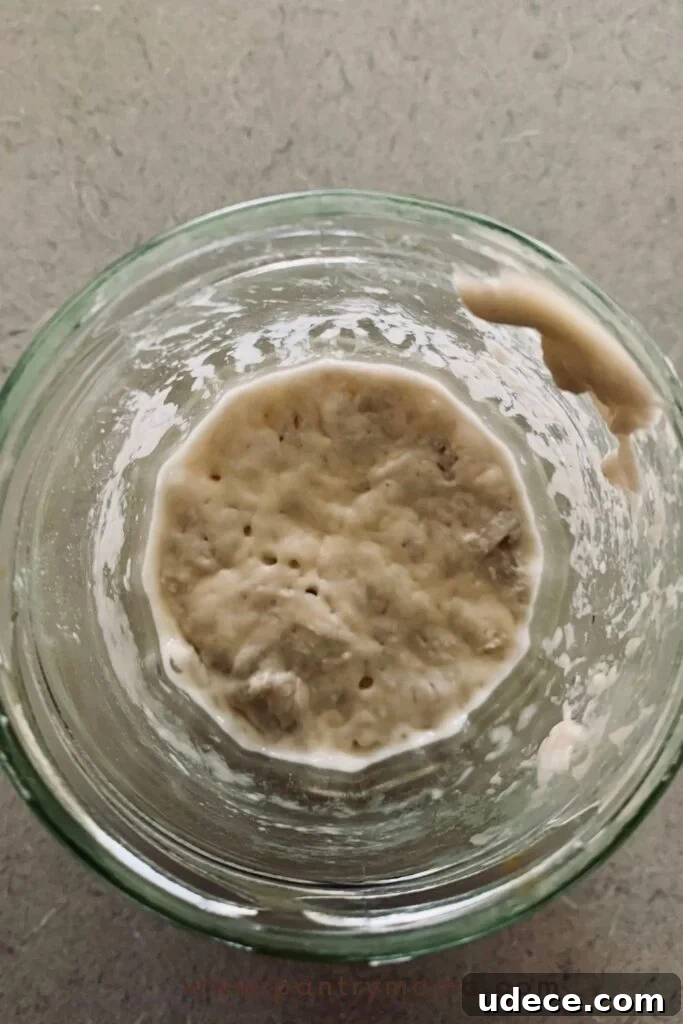
Preventing mold is largely about supporting the beneficial microbes and maintaining good hygiene. Practical steps include:
- Change your flour
If contamination may be coming from the flour, open a fresh bag and try again. - Feed regularly
During the initial establishment phase, feed a room-temperature starter twice daily. Mature starters require less frequent feeding but should still be monitored for signs of weakness or contamination. - Weigh ingredients
Weighing flour and water ensures consistent ratios and adequate food for the microbiome, which helps beneficial bacteria thrive and resist unwanted organisms. - Keep equipment and workspace clean
Thoroughly clean jars, spoons, and measuring tools. Good kitchen hygiene reduces the chance of introducing contaminants.
Is Mold Different To Kahm Yeast?
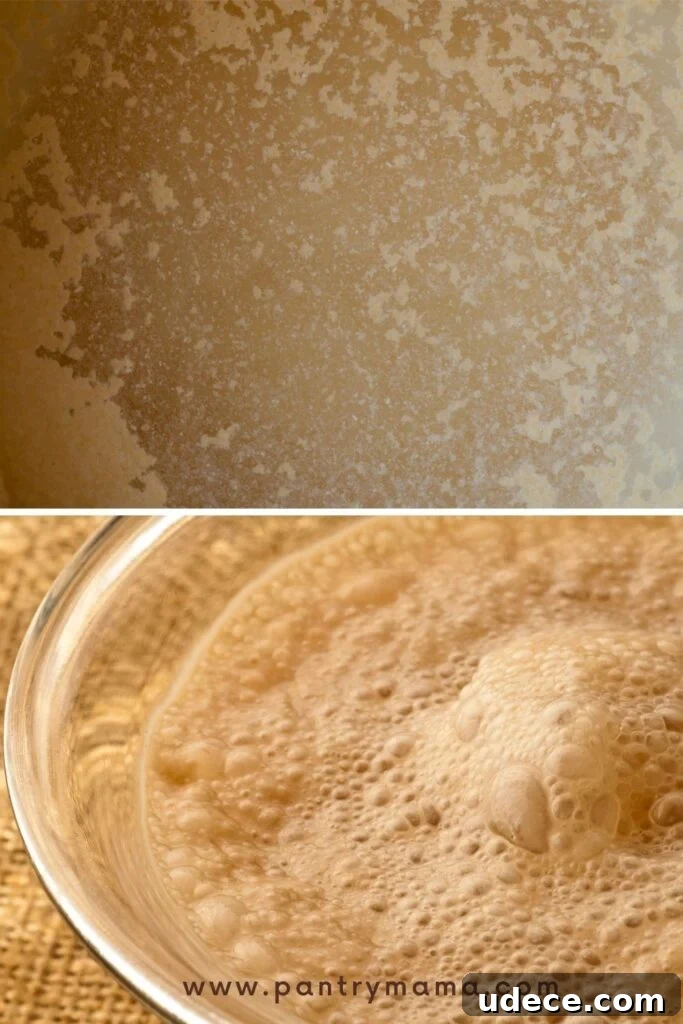
Yes. Kahm yeast is not mold; it’s a wild yeast that can form a white, powdery or filmy layer on the surface. It often gives the starter an off smell and is undesirable, but starters affected by kahm yeast can usually be rescued by refreshing and discarding the contaminated top.
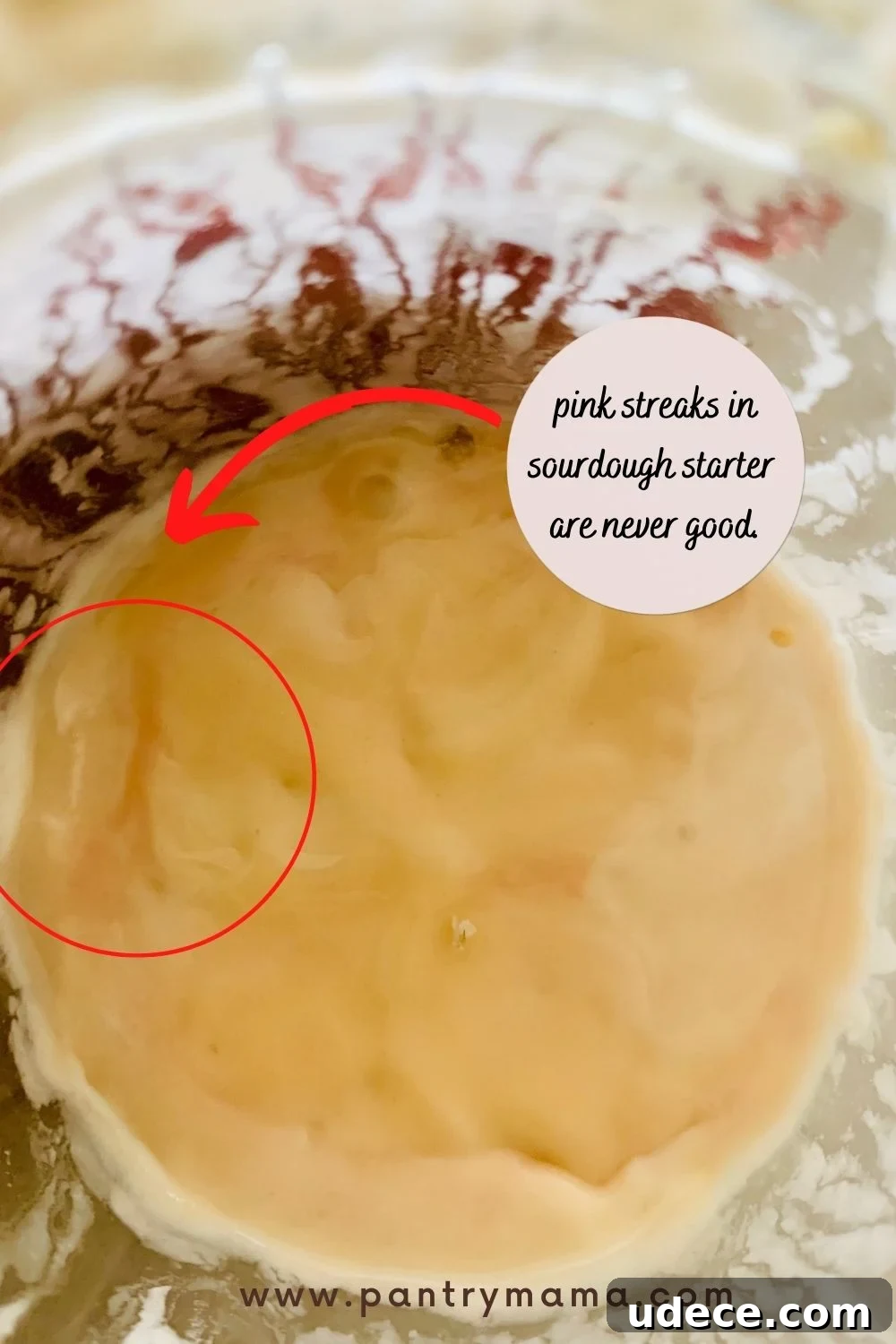
What If There’s Pink Streaks In My Sourdough Starter?
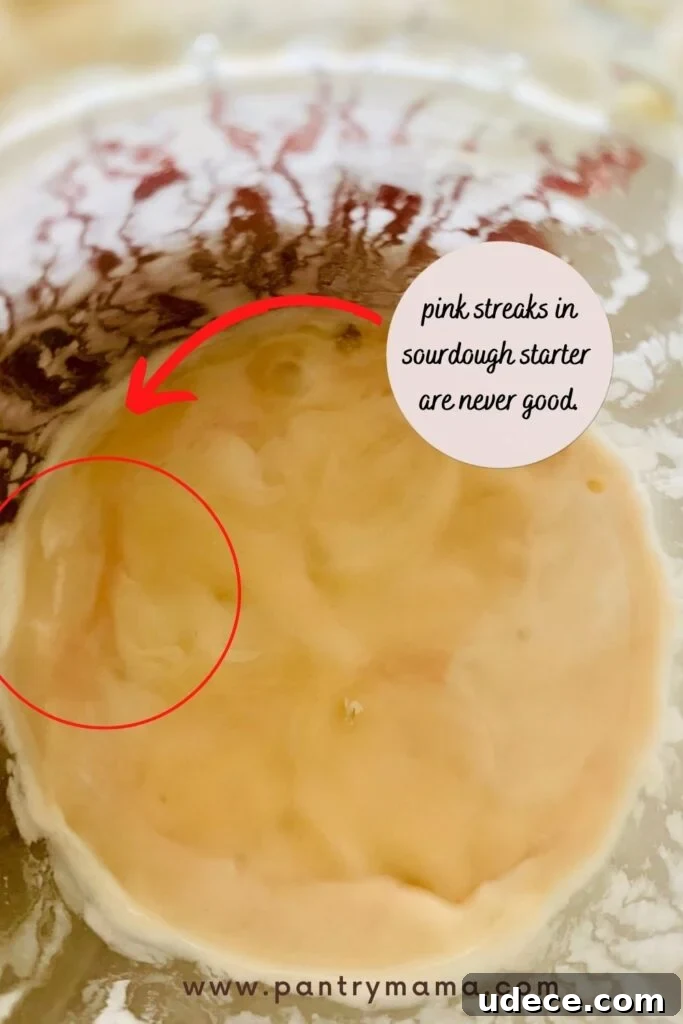
Pink or orange streaks or films are a clear warning sign and mean you should discard the starter. These colors are often caused by harmful bacteria such as Serratia marcescens, which can be hazardous to human health. If you’re unsure, it’s safest to throw the starter out.
Note: some flours, like rye, can occasionally impart a faint pinkish tint in certain conditions; this is different from the streaks caused by harmful bacteria. When in doubt, discard and restart.
Further Reading
If this guide helped you, other useful topics to explore include troubleshooting a stalled starter, keeping bannetons mold-free, tips for cleaner sourdough baking, and ways to strengthen your starter so it’s more resilient.
- Have I Killed My Sourdough Starter?
- How to prevent mold in sourdough bannetons
- Best tips for cleaner sourdough baking
- Ways to boost your sourdough starter to make it more resilient