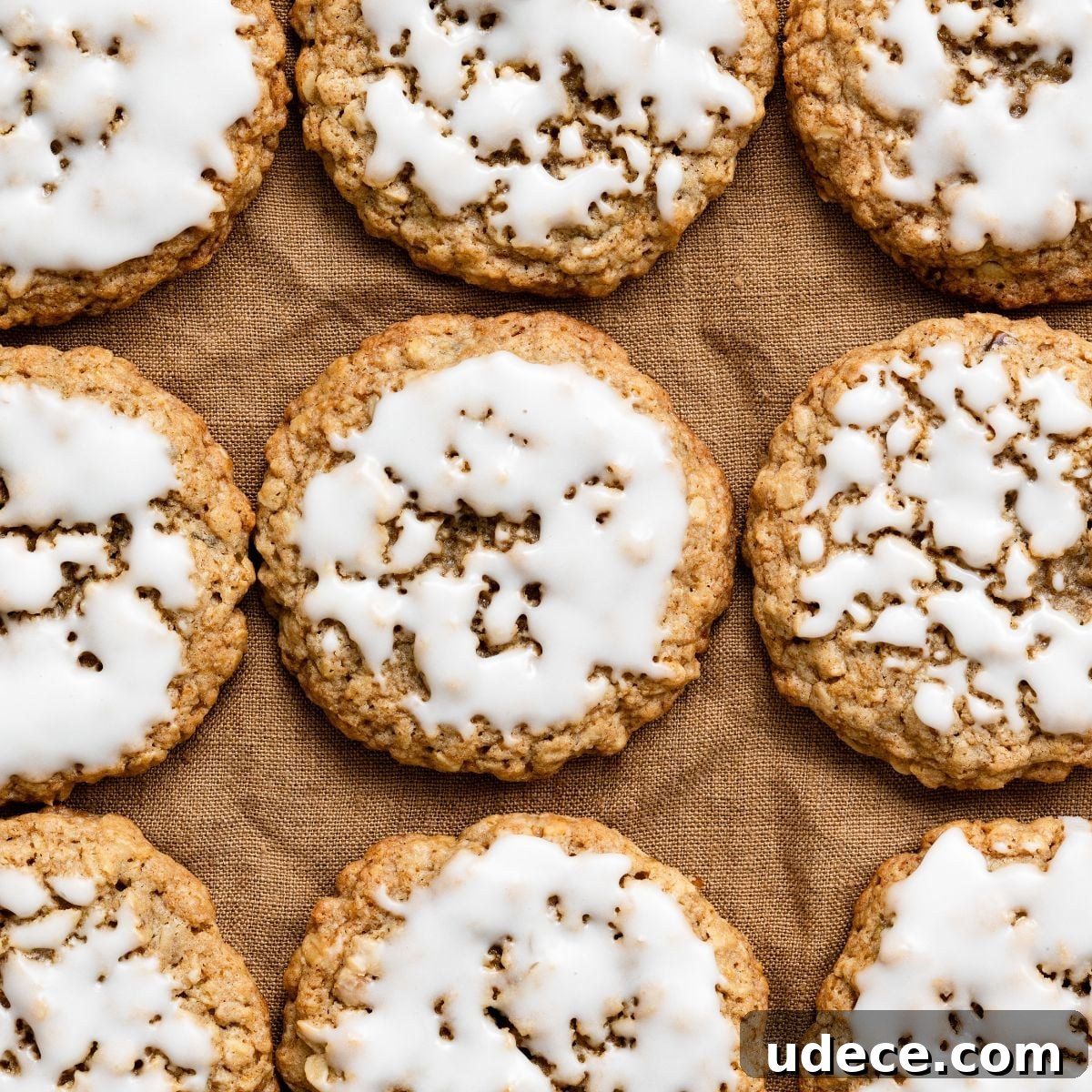
My Lemon Iced Oatmeal Cookies put a sunny, summery spin on the classic oatmeal cookie. Fresh lemon zest and a touch of lemon juice brighten the dough while finely chopped golden raisins add bursts of chewiness. Unlike many thin iced oatmeal cookies, these are medium-thick and satisfyingly chewy thanks to brown sugar and a tender butter-rich dough, finished with a tangy lemon icing that cracks prettily on top.
Key Ingredients
- Old-Fashioned Whole Oats: Provide the hearty, chewy texture that defines oatmeal cookies.
- Unsalted Butter: European-style butter with higher butterfat gives extra richness and a tender crumb.
- Light Brown Sugar: Adds moisture and chew while letting the lemon flavor remain prominent.
- Lemon Zest and Juice: Fresh zest and juice bring a bright citrus note to both cookie and icing.
- Confectioners’ Sugar: Sifted powdered sugar combines with lemon juice and vanilla to make a thick, glossy icing.
- Golden Raisins: Finely chopped so they disperse evenly through the dough without large pockets of sweetness.
Helpful Tips
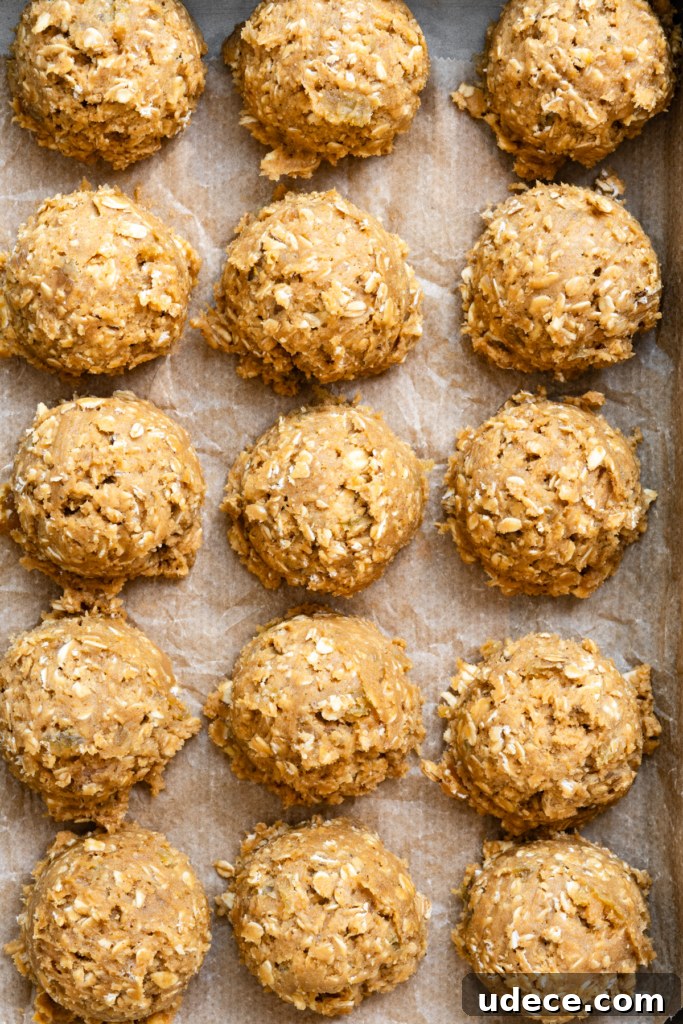
- Pre-scoop the dough: Use a 3-tablespoon scoop to portion dough into equal balls before chilling. Scooping chilled dough is difficult and can damage the scoop.
- Chill thoroughly: This soft dough needs at least 2 hours in the refrigerator — overnight is ideal. Cold dough spreads less and yields thicker cookies.
- Pack into tall mounds: Before baking press the scooped balls into taller domes for a bakery-style shape.
- Don’t overbake: Remove cookies when edges are golden but centers still look puffy; they will set as they cool for a chewy texture.
- Flavor improves with time: The lemon notes often come through more the next day, so save a few to enjoy later.
“Cookie Scoot” for Perfectly Round Cookies
One simple trick I use for picture-perfect cookies is the Cookie Scoot. Right after the cookies come out of the oven and are still warm, place a round cookie cutter or a glass (slightly larger than the cookie) over each cookie and give it a gentle swirl to smooth any uneven edges. This small step creates uniformly round, bakery-style cookies.
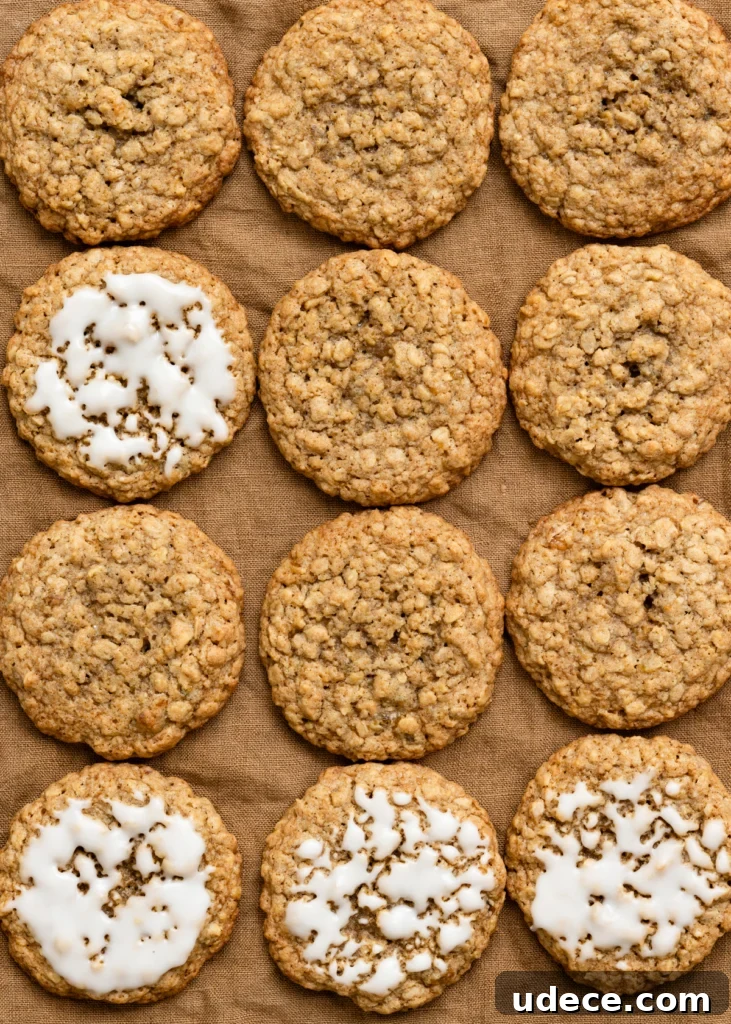
Cookies will appear puffy straight from the oven and then settle as they cool; the Cookie Scoot helps them finish with a neat shape.
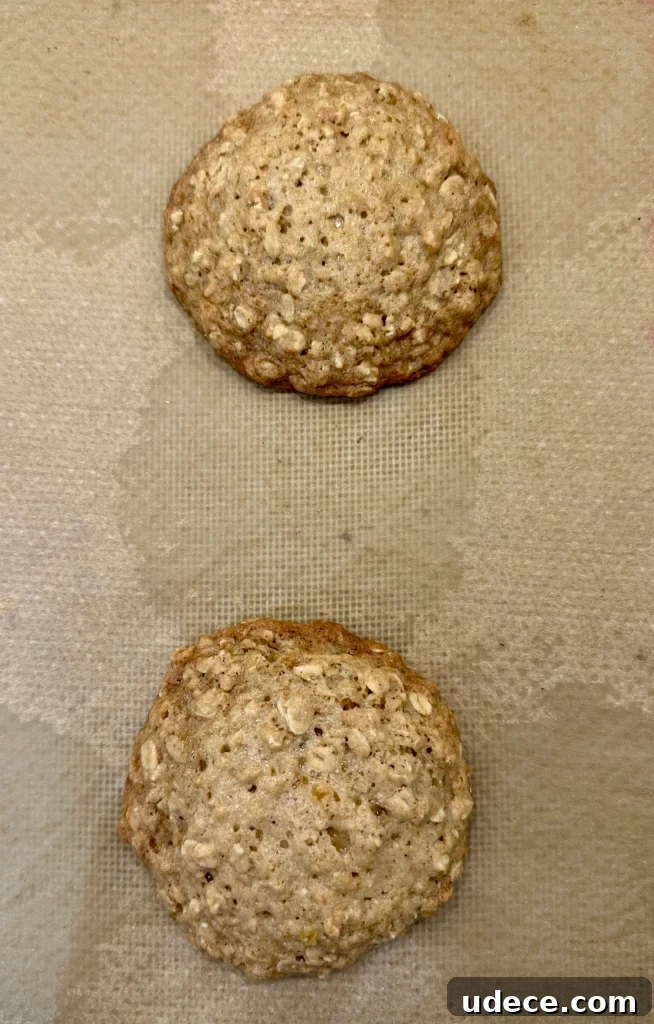
- Fresh from the oven: golden edges and puffy centers.
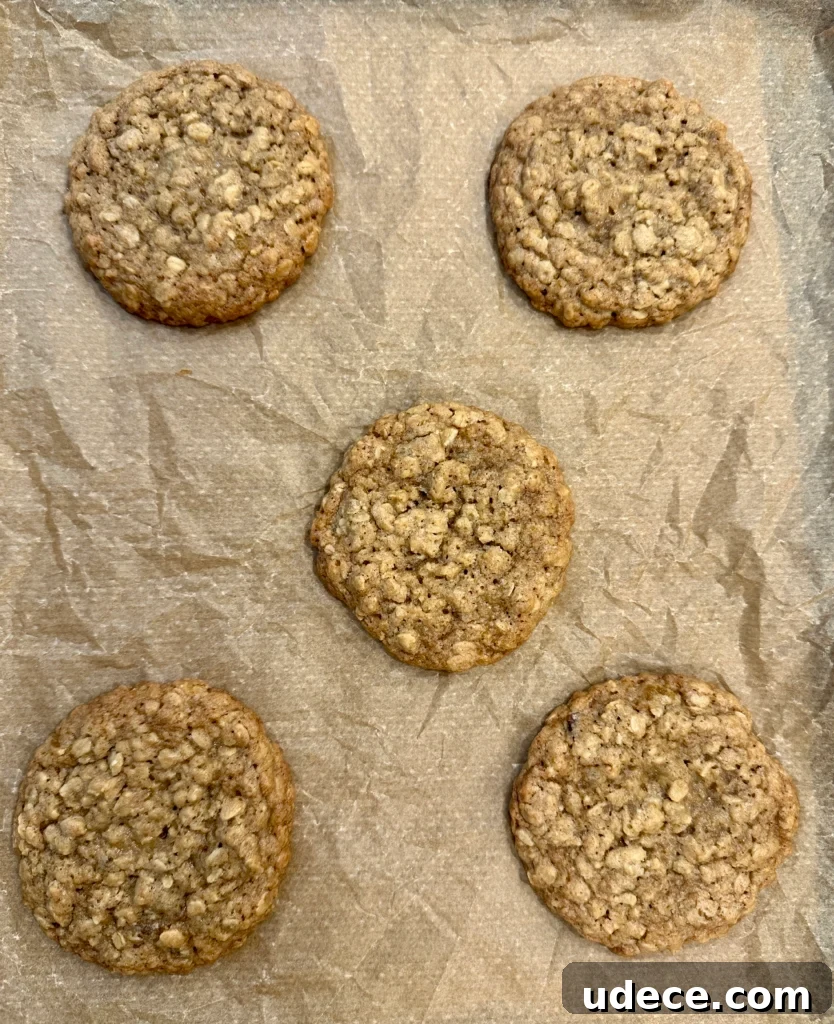
- After cooling: centers deflate slightly and edges remain golden and crisp.
How to Ice the Oatmeal Cookies
Two key points for icing:
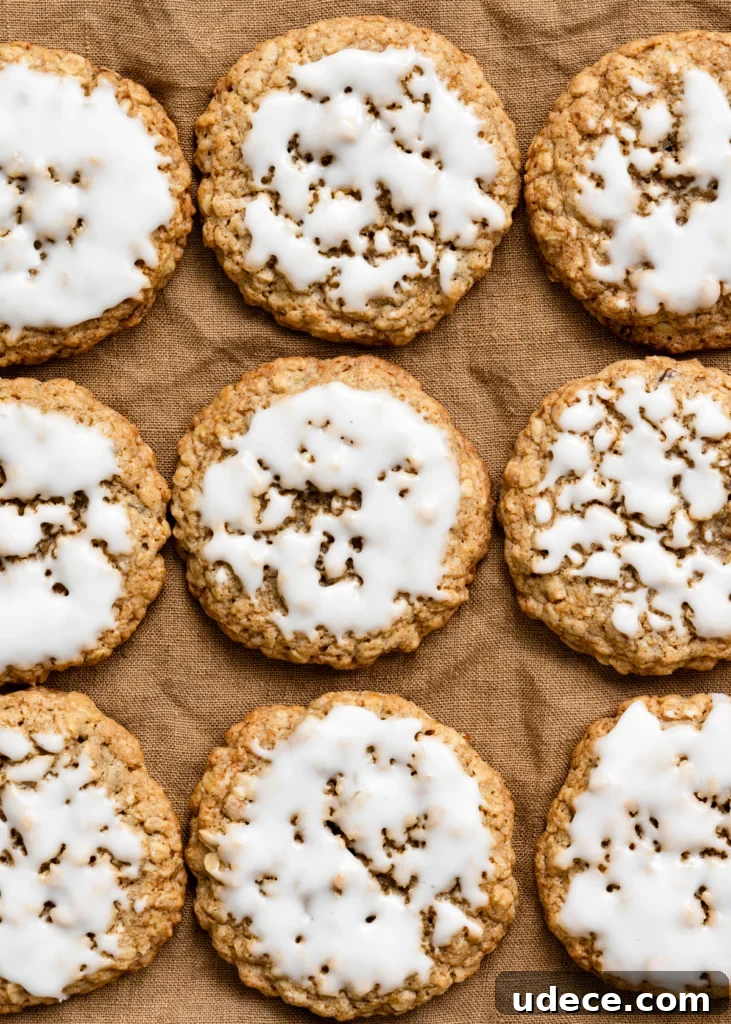
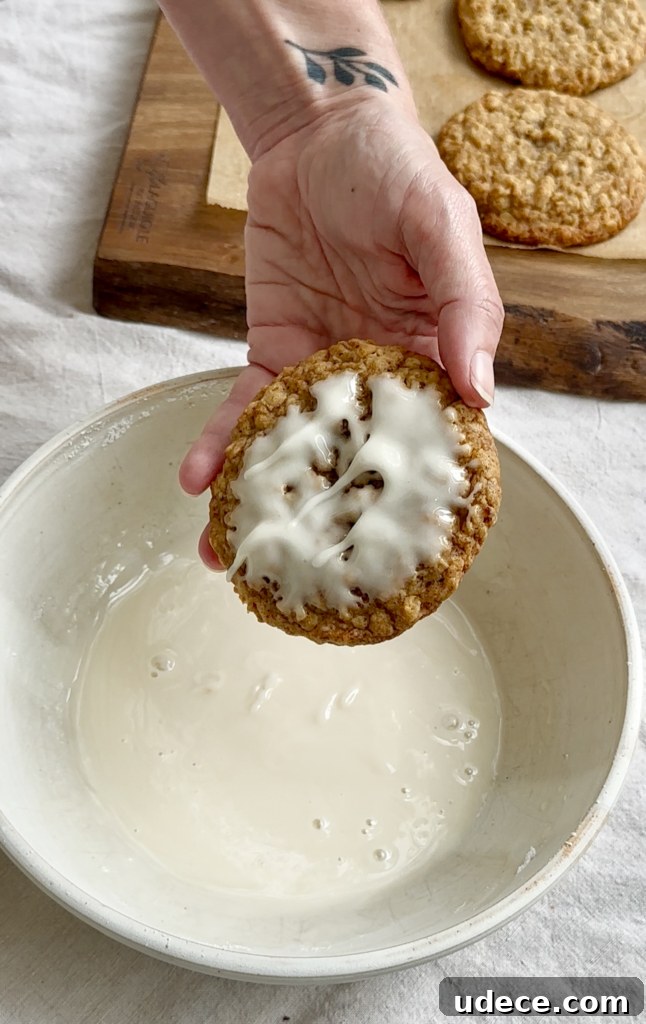
- Keep the icing thick. Start with sifted confectioners’ sugar, vanilla, and 2 tablespoons of lemon juice. Whisk until smooth and add a touch more lemon if needed. Aim for a thick, creamy texture that holds shape on the cookie.
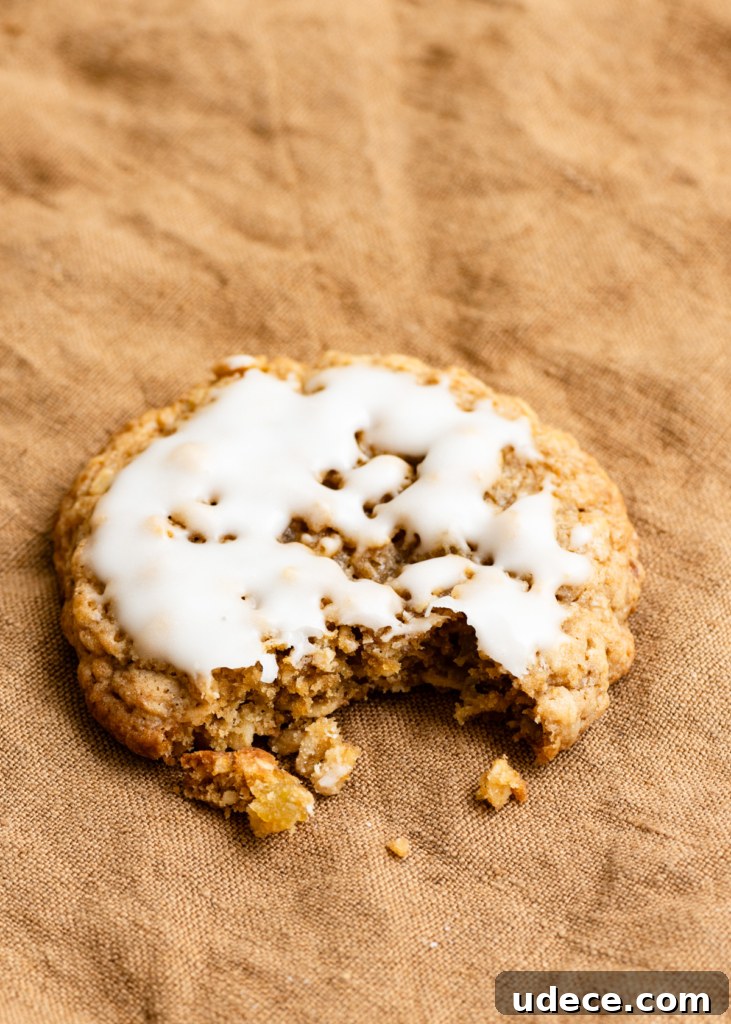
- Dip lightly. For a pretty crackled top, gently dip only the cookie tops rather than fully dunking. Let excess drip off before setting the cookie upright to dry.
Storage Recommendations
- Store baked and fully set iced cookies in an airtight container for up to one week.
- Make sure the icing has dried before stacking. Place parchment or wax paper between layers to prevent sticking.
- Make ahead: Cookie dough can be refrigerated for up to 2 days before baking; keep it covered tightly.
- Freeze: Freeze shaped dough balls in an airtight container for up to three months. Add a few extra minutes to the baking time when baking from frozen.
★★★★★ Please leave a star rating and review below if you make this recipe! THANK YOU!!
Lemon Iced Oatmeal Cookies

Equipment
-
electric hand mixer or stand mixer
-
#20 cookie scoop (3 Tbsp)
Ingredients
Lemon Oatmeal Cookies
- 266 g (2 cups + 2 Tbsp) all-purpose flour (10.5–11% protein)
- 240 g (3 cups) old-fashioned whole oats
- ½ tsp baking powder
- ½ tsp baking soda
- ½ tsp fine sea salt
- 50 g (¼ cup) granulated sugar
- 2 Tbsp fresh lemon zest (zest of two lemons)
- 275 g (1 ¼ cups) light brown sugar
- 227 g (1 cup) unsalted European-style butter, softened
- 1 Tbsp fresh lemon juice
- 1 tsp vanilla bean paste or pure vanilla extract
- 2 large eggs, room temperature
- 128 g (1 cup) golden raisins, finely chopped
Lemon Icing
- 165 g (1 ½ cups) confectioners’ sugar, sifted
- ½ tsp vanilla extract
- 2 Tbsp fresh lemon juice (more if needed)
Instructions
Lemon Oatmeal Cookies
- Whisk together flour, oats, salt, baking powder, and baking soda in a medium bowl. Set aside.
- In a stand mixer bowl, rub the granulated sugar and lemon zest together to release oils. Let sit a couple minutes. Add the brown sugar and softened butter and beat with the paddle on medium until smooth (1–2 minutes). (You can use an electric hand mixer in a large bowl.)
- Mix in the lemon juice and vanilla, then beat in the eggs one at a time, scraping the bowl as needed.
- With the mixer on medium-low, slowly add the flour and oat mixture just until a thick dough forms.
- Scrape dough from the paddle with a small spatula, then fold in the chopped golden raisins with a few short spins of the mixer to distribute.
- Pre-scoop dough using a 3 Tbsp scoop and place the balls on parchment-lined trays or in an airtight container. Chill in the refrigerator for at least 2 hours or overnight to firm.
- Preheat oven to 350°F (180°C). Line a rimmed baking sheet with a silicone mat and parchment.
- Bake a few cookies at a time on cooled pans (cookies spread), packing each chilled dough ball into a taller mound and spacing about 2 inches apart.
- Bake on the middle rack 14–15 minutes, rotating the tray halfway through.
- Remove when edges are golden and centers still look puffy. Cool on the pan 5 minutes, then transfer to a wire rack to cool completely before icing. If any cookie spreads unevenly, reshape while warm using a slightly larger round cutter or glass.
Icing the Cookies
- Whisk sifted confectioners’ sugar, vanilla, and 2 Tbsp lemon juice in a shallow bowl until thick and smooth. Add a little more lemon if needed for the right consistency.
- Hold a cooled cookie between thumb and forefinger and gently dip only the top into the icing. Lift, let excess drip off, then place face up to set.
- Allow icing to dry fully before stacking or storing.
Notes
- Flour: Recipe tested with a flour around 10.5–11% protein (1 cup = 125 g by weight).
- Butter: European-style unsalted butter (about 82% butterfat) was used for best texture.
I weigh flour for accuracy. The gram amounts shown are how the recipe was tested; if you convert using cup measures, expect slight variation depending on your method and the flour brand.