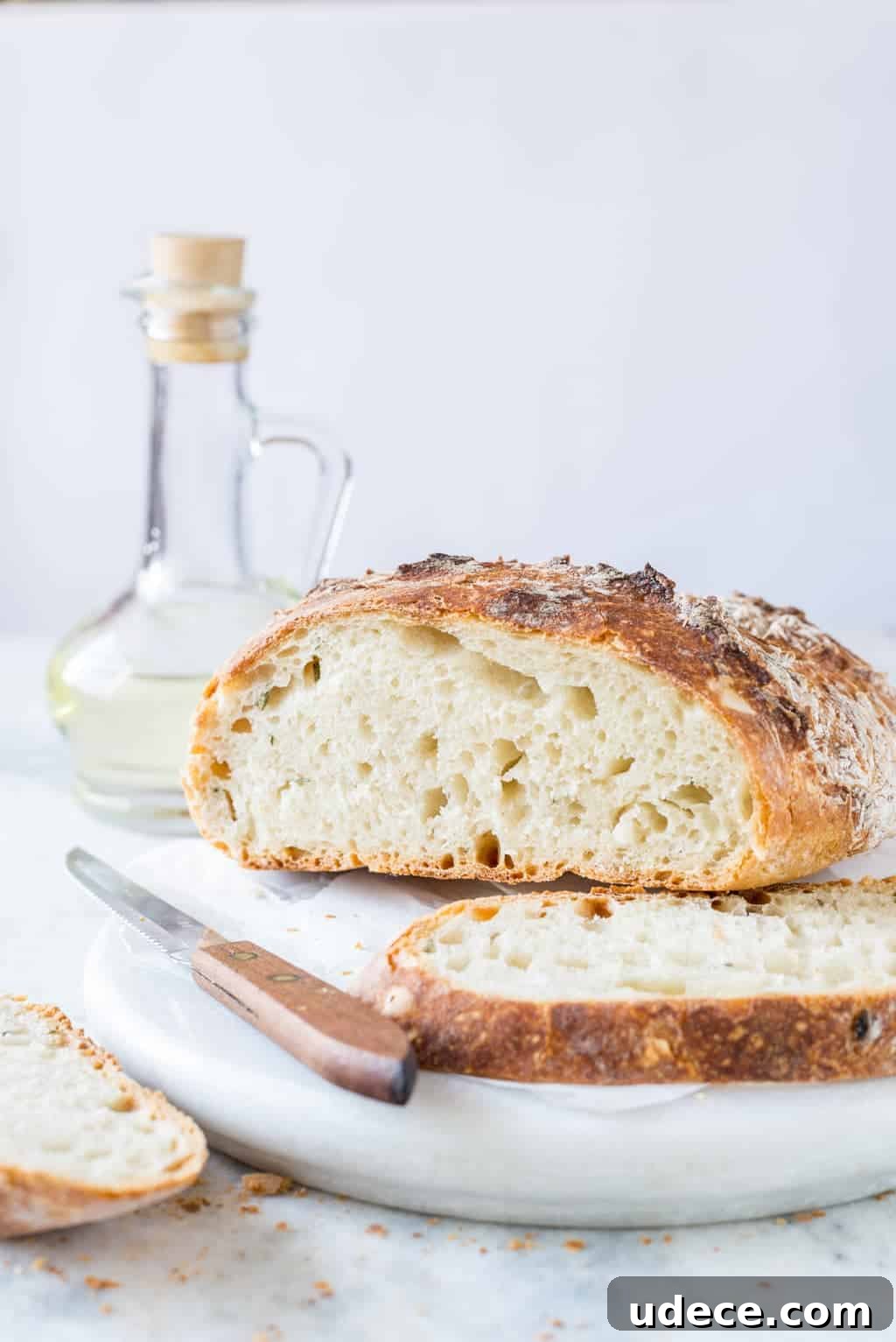
An easy, effortless bread you can bake at home. This no‑knead loaf develops a wonderful open crumb and crisp crust. Read on to learn how to make this rustic white bread with just a few ingredients.
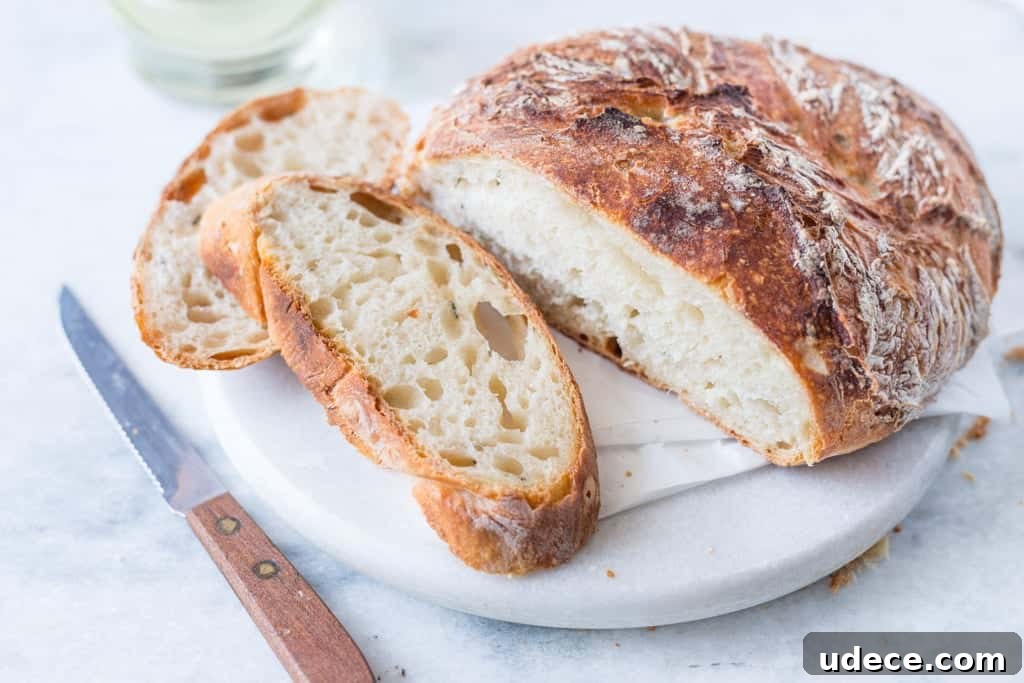
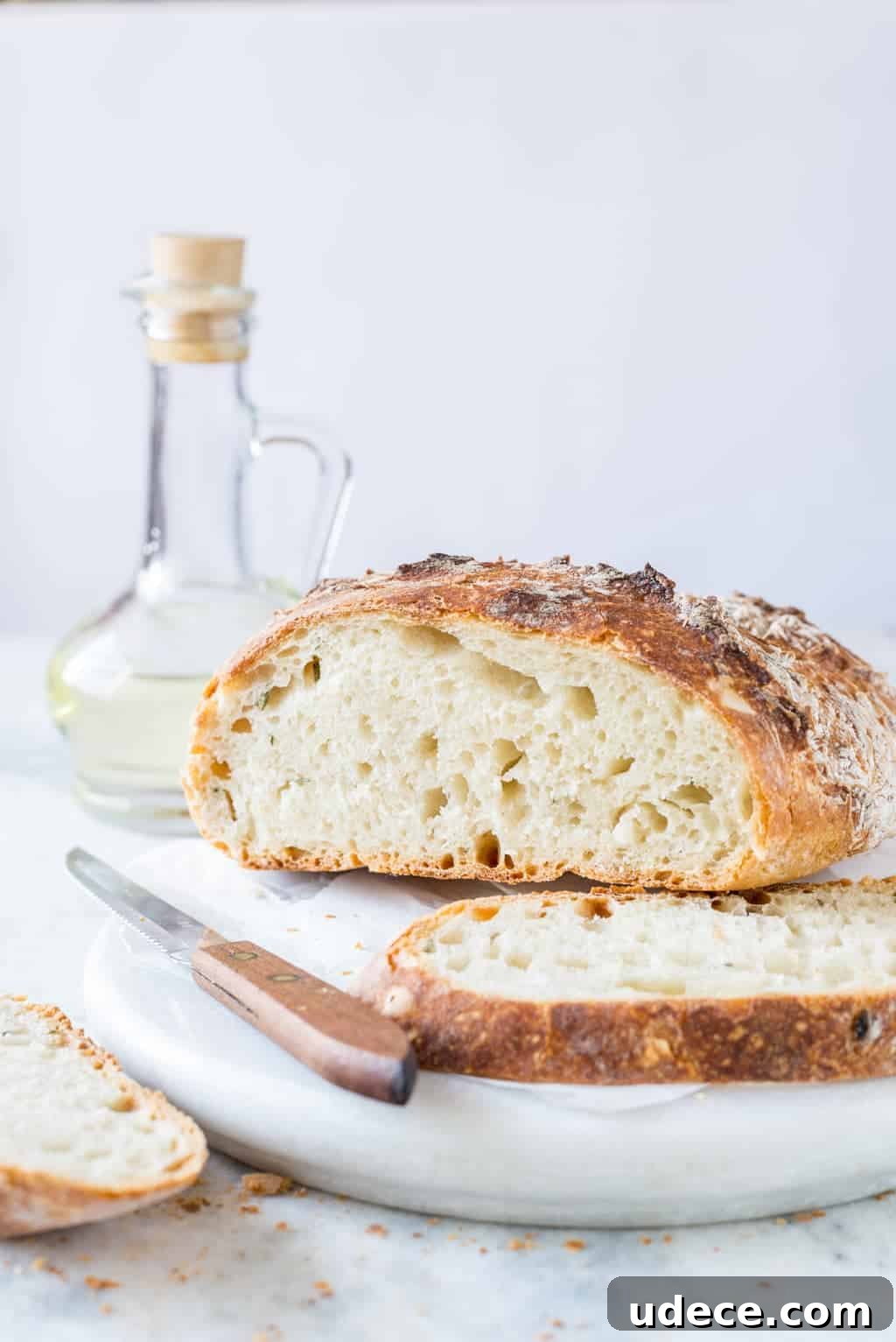
You may have already glanced at the photos and wondered how a no‑knead bread can have such an attractive texture. It’s true: this rustic white loaf is made without kneading and the dough comes together in minutes.
No messy hands, no strenuous kneading — only patience. Letting the dough rest slowly develops flavor and the gluten structure, producing a chewy interior and a crisp, golden crust that makes the wait worthwhile.
I do enjoy kneading when the recipe calls for it — breads like my strawberry focaccia or Turkish lamb pide benefit from hands‑on work — but when you want fresh bread with minimal effort, a no‑knead method is perfect.
What is No‑knead bread?
No‑knead bread relies on time and hydration rather than physical kneading to develop gluten. The technique is old and simple: a wet, shaggy dough rests for many hours (often overnight), allowing natural fermentation to build flavor and structure.
Because the dough is very hydrated and rests for a long time, it becomes elastic and full of air pockets. You use less yeast than in quick breads, but extended fermentation gives the loaf its characteristic lightness and depth of flavor.
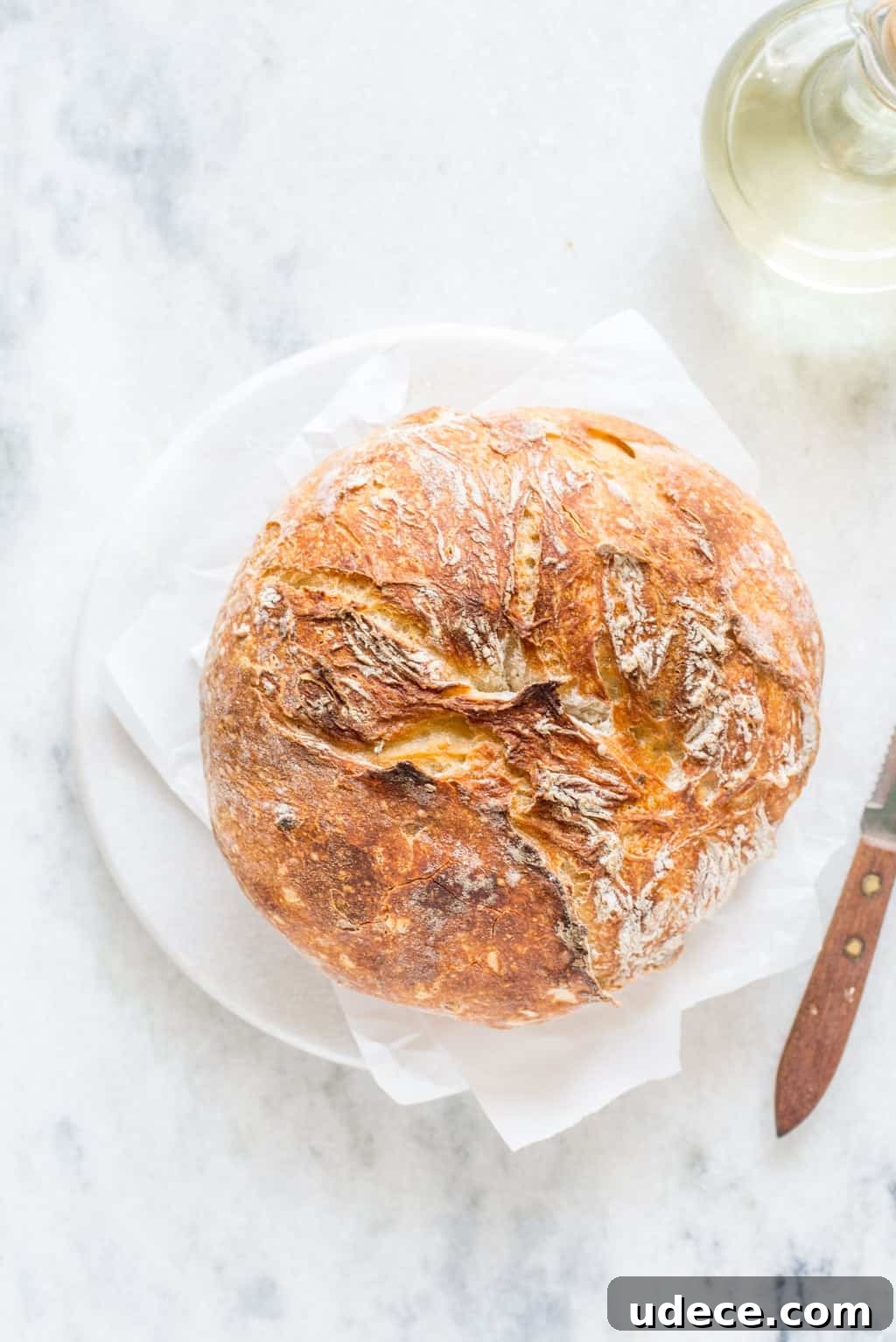
Ingredients
This recipe needs only a few pantry staples to produce that delightful texture:
- Instant or active dry yeast
- All‑purpose flour
- Salt
- Water (lukewarm)
- Sugar (optional)
The dough will be quite wet. Because the dough rests for many hours, the small amount of yeast is enough for a good rise. If the dough feels tight rather than stretchy after resting, add a touch more water next time to increase hydration.
Equipment to use
- Dutch oven (preferred)
- Ovenproof casserole or heavy‑bottomed pot
Use a pot of at least 4 qt so the bread has space to expand and steam can circulate. A heavy pot with a tight‑fitting lid traps steam and promotes a crisp, crackly crust, so a Dutch oven works especially well.
How long to rest the dough?
After an overnight rest the dough will be bubbly and slightly flattened on top — that’s normal. It’s tempting to shape it after 6–8 hours, but I recommend an overnight ferment (10–16 hours) for the best flavor and open crumb.
Tips to shape the dough
If the dough is sticky and hard to shape, chill it in the refrigerator for a couple of hours. Cold dough is much easier to handle: dust your hands with flour, form a loose loaf, then let it sit on a well‑floured surface to come to room temperature before baking.
This refrigeration trick works well for many artisan breads; try it if your dough feels too slack to shape easily.
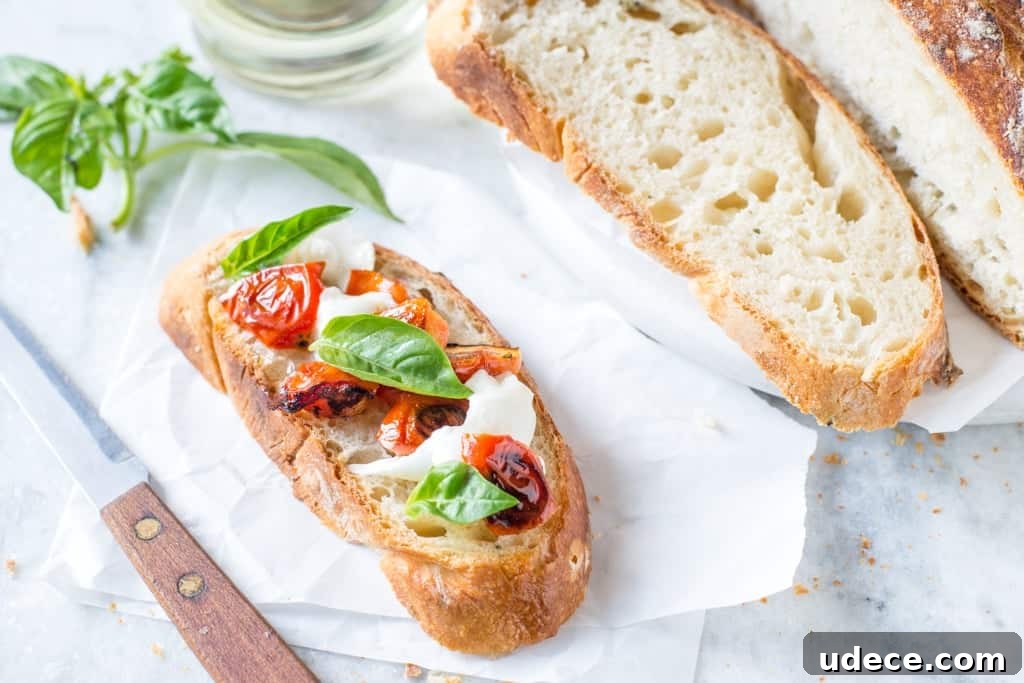
To serve with
This loaf is delicious simply sliced and served with olive oil, or topped for bruschetta with roasted tomatoes, fresh basil and mozzarella. It also toasts beautifully for sandwiches or breakfast.
If you have any questions while baking, feel free to ask — I’m happy to help.
No‑Knead Bread
Equipment
Ingredients
- 3 cups All purpose flour
- 1.5 tspns Salt
- ½ tspns Active dry yeast
- 1 ½ cups Water Lukewarm
- ½ tspn Sugar (optional)
For rosemary and garlic flavour
- 1 tbsp Fresh rosemary
- 2–3 pods Roasted garlic
Instructions
-
In a large bowl, stir together the flour, salt and yeast. If using rosemary, lightly crush it and add. Add crushed or roasted garlic if desired. Pour in the lukewarm water and mix with a spoon until combined.
-
The dough will be wet and shaggy. Avoid overworking it — the less you handle it, the airier the final loaf will be.
-
Cover the bowl and leave it on the counter for 8–12 hours, or preferably overnight. The dough will rise and become bubbly.
-
When ready to bake, preheat the oven to 220°C (425°F). Place an ovenproof pot with a lid (Dutch oven or heavy baking dish) inside to heat for about 20 minutes.
-
While the pot heats, turn the dough onto a well‑floured surface using floured hands. Shape it gently into a loaf or boule without deflating it.
-
Carefully remove the hot pot from the oven. Line it with parchment or brush with oil to prevent sticking if you prefer.
-
Transfer the shaped dough into the pot, cover, and bake for 30 minutes. Remove the lid and bake an additional 10–15 minutes until the crust is deep golden and crisp.
-
Remove the loaf from the oven and let it cool to room temperature before slicing.